How Much Is The Ferry To Toronto Island?
The Toronto Island ferry costs $9.57 Canadian for an adult round trip, with lower fares for youth, seniors and children. Here is the full fare picture, what it covers, and how it fits with a bike.
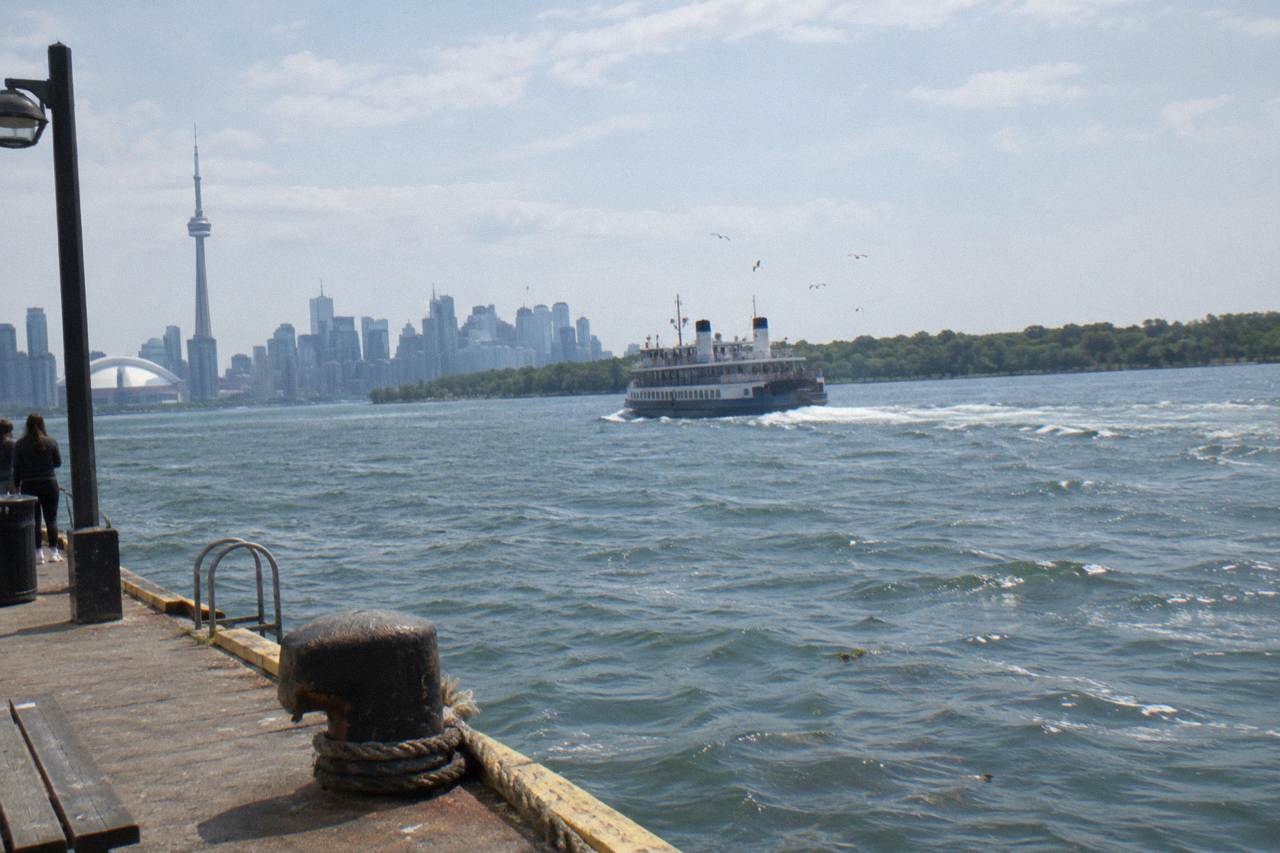
The Jack Layton Ferry Terminal is the single gateway to Toronto Island Park, and the fare is fixed, published and refreshingly simple: an adult round trip costs $9.57 in Canadian dollars. There is no one-way discount, no island entry fee stacked on top, and no charge for walking aboard with a bicycle. The complications live elsewhere, in the seasonal schedule, in the winter switch to a single dock, and in the question of whether a guided ride that bundles the crossing makes more sense than queueing at the terminal yourself. This page works through the fare table line by line, then looks at what the ticket actually buys and where the money traps are.
An adult round trip costs $9.57 in Canadian dollars, and older adults, youth aged 15 to 19 and juniors aged 2 to 14 pay $6.15, $6.15 and $4.51 respectively, while infants under two sail free. Every ticket is a round trip; there is no one-way fare. Tickets are valid at any dock for the return crossing, and online tickets stay valid to the end of the year.
Those figures come straight from the City of Toronto's ferry ticket page, and the City runs the ferry as a public service rather than a tourist attraction, which is why the pricing tiers follow age brackets rather than demand. A family of two adults and two school-age children simply adds the individual fares together, two adults at $9.57 each and two juniors at $4.51 each, and the total lands on the gentle end of the scale for a boat outing anywhere in a major city. There is no family pass and no group rate, so the arithmetic really is that plain.
| Passenger | Age range | Round-trip fare (Canadian dollars) |
|---|---|---|
| Adult | 20 to 64 | $9.57 |
| Older Adult | 65 and over | $6.15 |
| Youth | 15 to 19 | $6.15 |
| Junior | 2 to 14 | $4.51 |
| Infant | Under 2 | Free |
The full fare details are published on the City of Toronto ferry ticket page, which is also where monthly pass options live. A monthly adult pass costs $121.64 and is sold only at the terminal itself, not online, which tells you who it is really for: island residents and daily commuters rather than visitors. Casual visitors should stick to single round-trip tickets, since a pass only pays for itself with dozens of crossings.
One point that trips up international visitors: this fare is in Canadian dollars, while every guided tour price discussed later on this page is shown in US dollars, as the tour listings state. Do not mix the two when budgeting a day out. Ten dollars Canadian and ten dollars American are not the same bill, and a day plan that quietly treats them as interchangeable will be off by a meaningful margin once tickets, snacks and rentals pile up. A quick note on where the ferry fits into a bigger island plan lives in our guide to how much time you need at Toronto Island.
Age brackets are worth a second look if your group sits near a boundary. A 19 year old counts as youth at $6.15, while a 20 year old pays the full adult fare. A 14 year old pays the junior rate and a 15 year old does not, and anyone under two rides at no charge at all, with no ticket needed. It is one of the few fare structures where the difference of a single birthday changes the price of the day.
If your real goal is cycling the islands rather than simply standing on them, a guided ride changes the arithmetic, because the crossing is folded into the tour.
What The Fare Includes And What It Does Not
The ferry fare covers the return crossing only. There is no island admission fee on top of it, and walking a regular bicycle aboard costs nothing extra. What the fare does not cover is food, bike rental on the island, Centreville amusement park, or any guided activity; those are all separate purchases once you step off the boat.
Toronto Island Park itself is free to enter and free to roam. The network of paved and gravel trails, the beaches and the lawns carry no gate, no wristband and no timed entry. That makes the ferry effectively the whole cost of a budget island day, provided you bring your own lunch and your own bike. The City's rules on bringing bikes aboard are explicit: bicycles, strollers, wagons and paddle crafts are welcome, and you walk your bicycle when boarding and disembarking. Walking it keeps the deck orderly and the loading fast, and it applies in both directions.
The exception is Bike Share. The City states plainly that Bike Share bicycles are not permitted on the ferries, so a day plan built around hopping a dock bike across the water does not work. Bike Share stations do exist on the islands themselves, but the mainland bikes stay on the mainland. Our comparison of Bike Share versus a guided ride covers where the shared bikes genuinely help and where they stop at the water's edge.
E-bikes sit in a grey zone worth knowing before you pay. The City allows them at the discretion of staff, requires them fully powered off on board, permits no charging on the ferry or at the terminal, and may direct riders with larger e-bikes, roughly 40 kilograms and over, to the vehicle ferry instead. If you are booked on an e-bike tour, the operator handles this; if you are riding your own, ask before the queue.
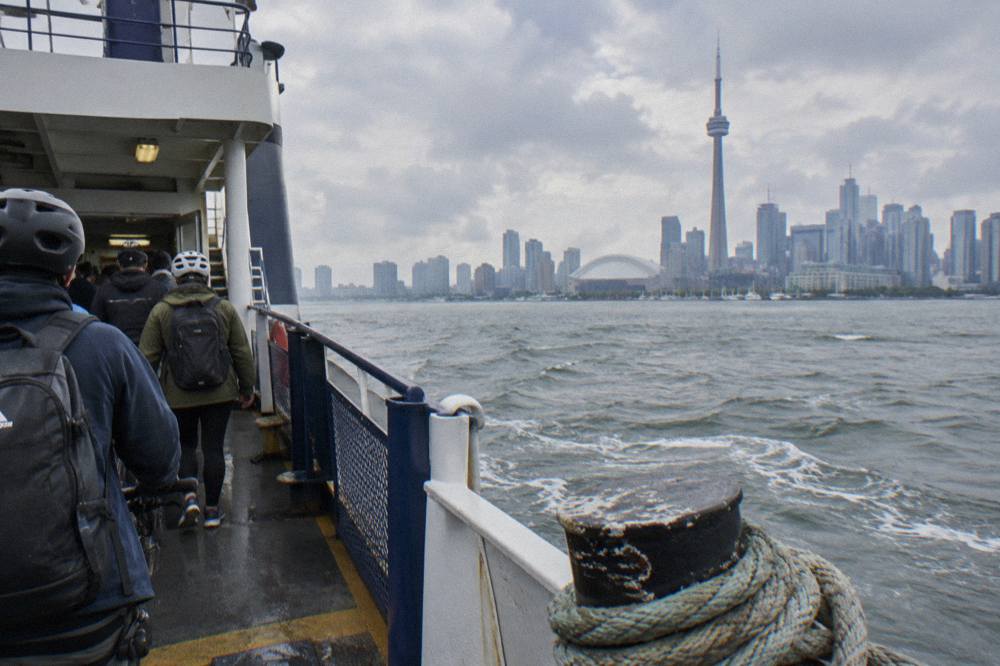
For riders who would rather not think about any of this, the operator of the Waterfront and Islands guided bicycle tour folds the crossing into a 3.5 hour ride that also covers the mainland waterfront. The listing describes guide, bike and snacks included, which means the ferry queue is the operator's problem, not yours.
When The Ferry Runs: Seasons, Routes And Schedules
The ferry runs year round, but only from mid May to mid September do all three routes operate, to Centre Island, Hanlan's Point and Ward's Island. Reduced three-route service fills spring and fall, and from 14 October the winter schedule serves Ward's Island only, continuing until mid April. Fares do not change with the season.
That seasonal shape matters more than most visitors expect, because it decides which island you can actually reach, not just when. Sail in July and you can pick your dock; sail in February and Ward's Island is the only option, though the winter crossings are frequent, with the first departure from the city around 6:30 a.m. and the last around 11:45 p.m., roughly every 15 minutes through the day. Ward's is the residential island, quieter and leafier, and perfectly pleasant to cycle even in a coat and gloves.
| Season | Dates | Routes operating | Notes |
|---|---|---|---|
| Winter | 14 October to mid April | Ward's Island only | Frequent sailings, roughly every 15 minutes |
| Spring | Mid April to mid May | All three, reduced | Service ramps up after the winter switch |
| Summer | Mid May to mid September | Centre, Hanlan's, Ward's | Full schedule, longest queues on hot weekends |
| Fall | Mid September to mid October | All three, reduced | About one month of reduced service before winter |
The schedules are published on the City's ferry routes and schedules page, and that page is the one to confirm before any winter trip, since sailing times can shift with weather and mechanical issues. Our write-up of whether the island is open year round goes deeper on what a winter visit actually feels like.
New ferries are on the horizon, which may ease crowding in coming seasons. The City has named its first new vessels in over sixty years, the Lady of the Quays, arriving late 2026, and the Toronto Islander, expected in 2027, both electric. Charging infrastructure at the terminal is targeted for completion by the end of 2026, with the first vessel entering public service in spring 2027 after testing. August 2026 set a record of more than 423,000 monthly ferry trips, helped by free senior and youth rides that month, so the demand is real and the new capacity is not a moment too soon.
Do You Pay Extra To Take A Bike On The Ferry?
No. A regular bicycle rides the ferry free of charge, on top of nothing, because the passenger fare is the whole fare. You walk the bike on and off. E-bikes are accepted at staff discretion, must be powered off on board, cannot be charged anywhere at the terminal, and larger e-bikes around 40 kilograms and over may be directed to the vehicle ferry.
There is no bike ticket, no bike surcharge and no rack fee. The City's ticketing page treats a bicycle the same way it treats a stroller or a wagon: welcome, walked on and off, no line item on the receipt. So the honest answer to the cost question for cyclists is that the bike adds exactly zero dollars to the crossing. That stands in welcome contrast to many island and lake ferries elsewhere, which charge a per-bike fee on top of the passenger fare. The rest of the planning pages sit on Bike Tours Toronto.
The two catches are the ones already named. Bike Share bikes are banned from the ferries outright, and heavy e-bikes can be refused on the passenger boats. Riders under 18 must wear an approved helmet under Ontario law, and Ontario's e-bike rules require riders to be 16 or older, helmeted, and limited to 32 km/h assisted speed. Our longer primer on Toronto cycling rules, helmets and e-bike law lays out the full equipment list, including the bell, lights and reflective tape the province expects.
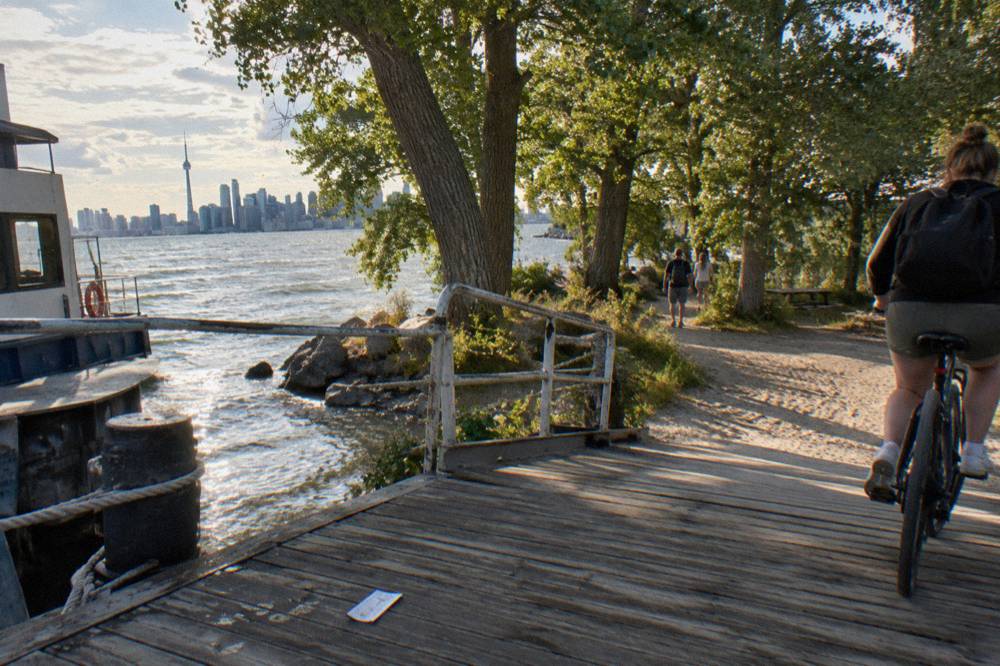
If you would rather not own any of these edge cases, guided tours supply the bike. The sunrise breakfast ride, for instance, includes the bicycle and a morning meal in one package, and the operator manages the crossing. Riders who want the earliest possible start on quiet island paths tend to book it for exactly that reason; check the booking page for the current price and the meeting details.
Is The Ferry Cheaper Than A Guided Islands Ride?
On ticket price alone, yes, always. A $9.57 Canadian return is less than any guided ride, which is priced in US dollars and adds a guide, a bike and route planning. But the comparison is only fair per person: a family of four stacks up individual fares before any bike rental, food or navigation, and a tour replaces most of those line items with one booking.
The honest framing is that the ferry and a guided ride are not really selling the same thing. The ferry sells passage. A tour sells a plan: where to ride, what to look at, when the light is best, and what to do when a wing of the island is busier than expected. Riders who know the islands well gain little from the plan and should absolutely just buy the ticket. First-time visitors who want the islands decoded in three and a half hours gain more, and the price difference is effectively the cost of not spending a day figuring it out.
Bike rental is the hidden middle term in the equation. Renting on the island or the mainland adds a per-hour or per-day cost that a guided ride already absorbs, since the tours list the bicycle as included. Once you add rental to ferry fare, the gap between doing it yourself and booking the ride narrows considerably. Where that balance tips is covered in detail in our guide to island bike rental versus a guided ride.
One structural note: the Waterfront and Islands guided tour pairs the crossing with mainland riding too, so the ferry becomes one leg of a loop rather than the whole outing. If your interest is the downtown neighbourhoods rather than the islands, the Heart of Downtown ride covers that ground without a boat at all, snacks included per its listing, and you can compare both on their booking pages before committing. The morning and twilight Islands ride covers similar ground to the mainland-and-islands loop but keeps its focus on the islands alone, with a choice of departure time; where one beats the other is mostly a question of how much downtown riding you want in the same afternoon.
Tips For Paying And Beating The Queue
Buy online and off-peak. Online tickets skip the terminal ticket line, remain valid to year-end, and round-trip tickets can return from any dock. Sail before 10 a.m. or after the lunch rush on summer weekends, expect the longest queues on hot Saturday afternoons, and remember that from mid October the winter schedule means Ward's Island only until mid April.
The single best move is buying online in advance. It removes the ticket-window queue, which on a peak July weekend can be the longest part of the whole island trip, and it carries no expiry risk since tickets hold their value to the end of the calendar year. At the terminal itself, card and contactless payment is standard, so cash planning is unnecessary. An unused online ticket is not a stranded purchase either; it simply waits for your next visit within the same year.
Timing matters as much as payment method. Summer mornings before roughly 10 a.m. see the shortest queues at the Jack Layton Ferry Terminal, and the same is true of early evening return sailings once the day-trip crowd thins. The record ridership of summer 2026 is a useful signal: when the boats are this busy, the people who sail at 8 a.m. have a materially calmer day than the people who arrive at 1 p.m. Our guide to how long the island ferry wait is works through the queue patterns season by season.
Weather should shape your timing too, though the ferry sails in nearly all of it. Toronto's climate normals show July and August averaging daytime highs of 27.0 C and 26.1 C with 76.5 mm and 71.9 mm of rain respectively, and roughly eight days per month with a millimetre or more of precipitation, so a morning sailing in high summer buys you the cooler hours on the island paths. May and June are slightly cooler and similarly showery; September, averaging a 22.0 C high with 7.7 wet days, is the connoisseur's month, warm on the water and past the peak crowds.
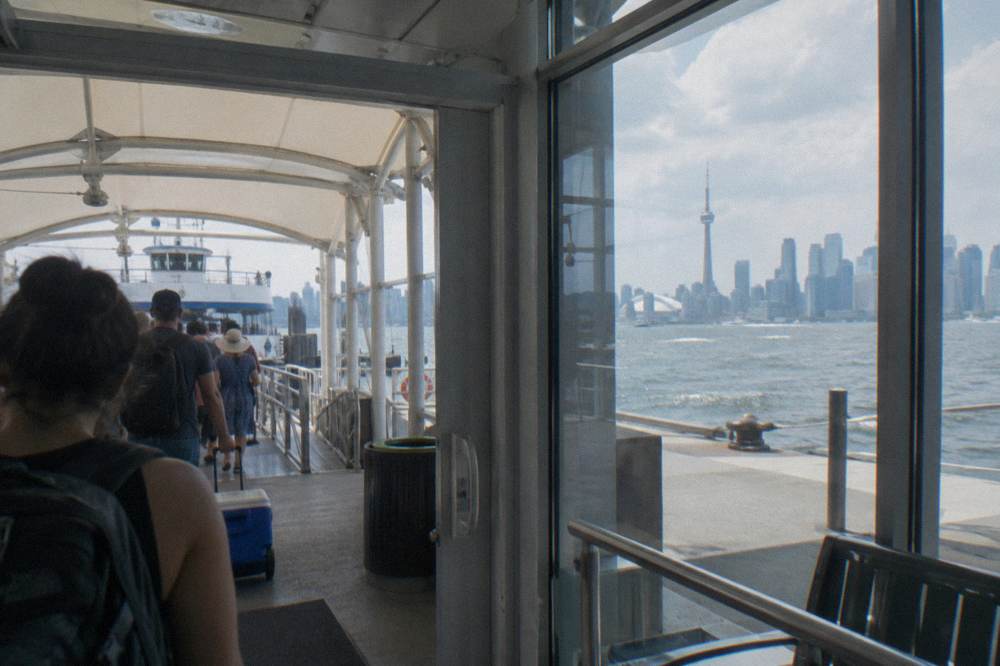
A last practical point: the return leg is flexible. Because round-trip tickets are honoured at any dock, you can sail out to Centre Island, ride west along the island roads, and return from Ward's or Hanlan's without paying again, provided the route is running that day. In winter, when Ward's is the only dock served, plan the whole visit around that single crossing point. For everything else the fare does not settle, the booking page of whichever ride you are considering is the place to confirm details.
Common Questions About Toronto Island Ferry Costs
How Much Is The Ferry To Toronto Island?
An adult round trip costs $9.57 in Canadian dollars. Older adults and youth pay $6.15, juniors aged 2 to 14 pay $4.51, and infants under two ride free. Every ticket covers the return crossing, and there is no island admission fee on top.
Is The Ferry Fare One Way Or Round Trip?
Round trip only. There is no one-way fare, and the return half is valid from any island dock, so you can sail to Centre Island and come back from Ward's Island on the same ticket.
Does A Bike Cost Extra On The Ferry?
No. Regular bicycles ride free, walked on and off. Bike Share bicycles are not permitted on the ferries at all, and e-bikes travel at staff discretion, powered off, with larger e-bikes around 40 kilograms and over possibly directed to the vehicle ferry.
Can I Buy Ferry Tickets Online?
Yes, and it is the recommended move. Online tickets skip the terminal ticket queue and stay valid to the end of the year. Monthly passes, aimed at regular users, are sold only at the terminal.
Do Kids Pay Full Fare?
No. Juniors aged 2 to 14 pay $4.51, youth aged 15 to 19 pay $6.15, and infants under two travel free. Families simply add the individual fares together; there is no separate family pass.
Does The Ferry Cost More In Summer?
No. The fare is the same all year. What changes with the season is the schedule: full three-route service runs mid May to mid September, and from 14 October the winter schedule serves Ward's Island only until mid April.