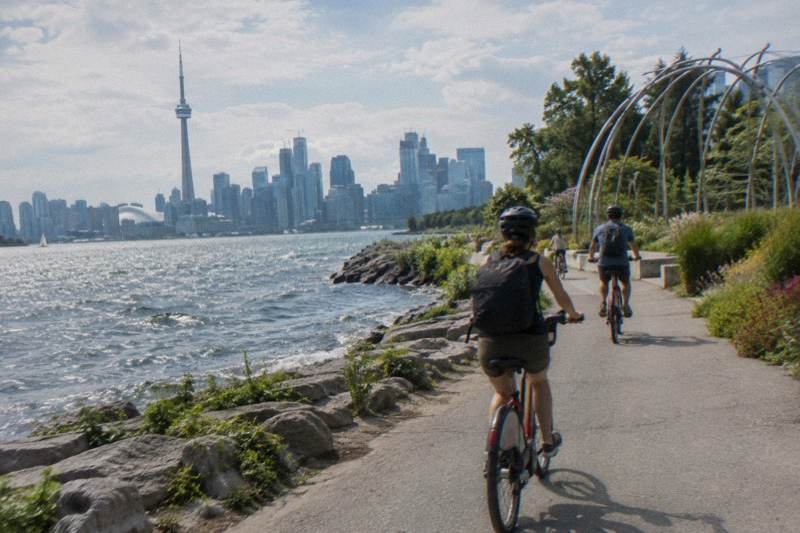
Bike Share Toronto Or A Guided Ride?
Bike Share Toronto is built for short hops between docks; a guided ride is built for a half day of neighbourhoods, waterfront and stories you would otherwise ride straight past.
Short answer
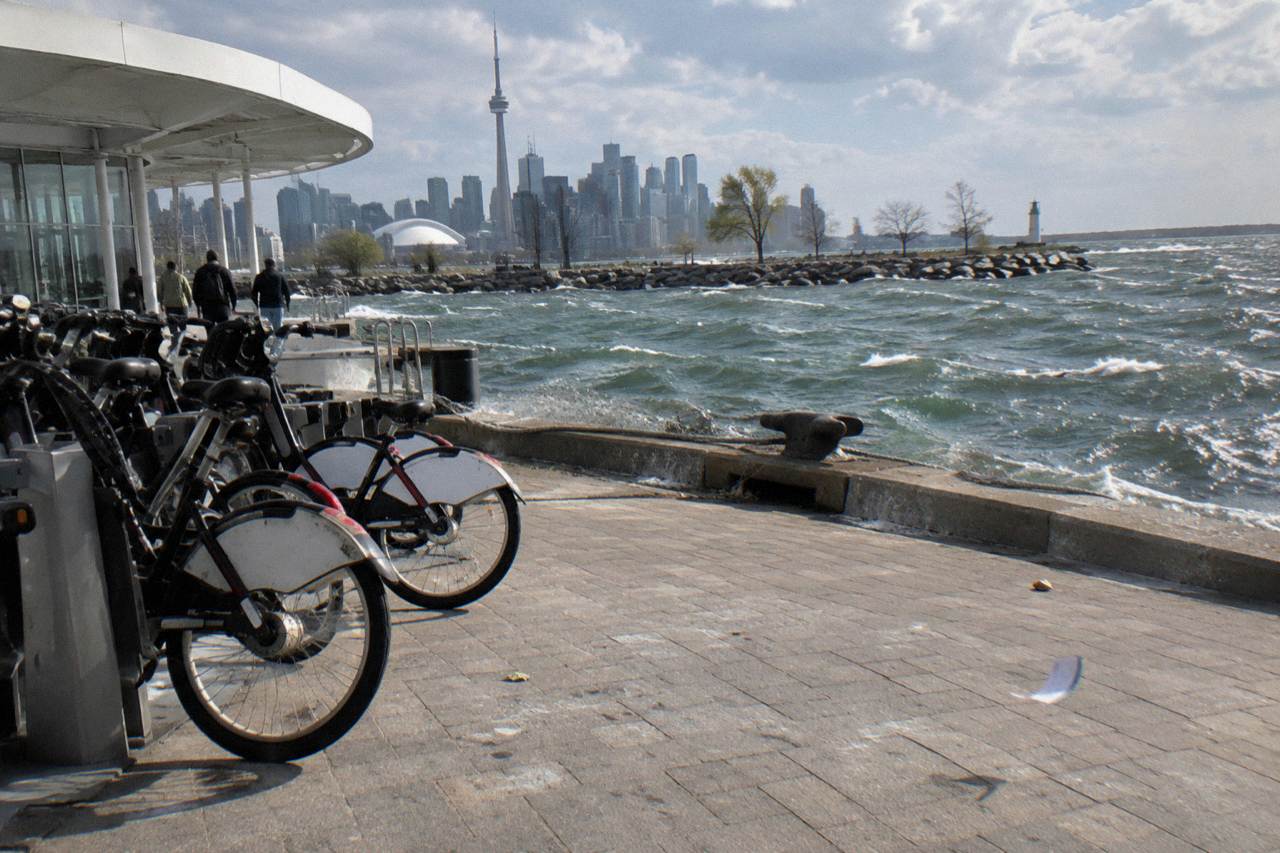
Bike Share suits riders making short trips of an hour or two between docks, using reported day-pass pricing of $15 for unlimited 90-minute classic rides. A guided ride suits visitors who want one arranged half day of roughly 3.5 hours with a bike, a guide and snacks included. The ferry does not carry Bike Share bikes, so the Islands need a guided ride or a rental.
What Is Bike Share Toronto And How Does It Work?
Bike Share Toronto is the city's public docking-station system: you unlock a bike at one dock, ride it, and return it to any other dock in the network. It is built for point-to-point trips measured in minutes, not for a looped sightseeing day. Reported plans for 2026 add 200 e-bikes, 750 regular bikes and roughly 1,200 solar-powered docking stations, so coverage keeps growing.
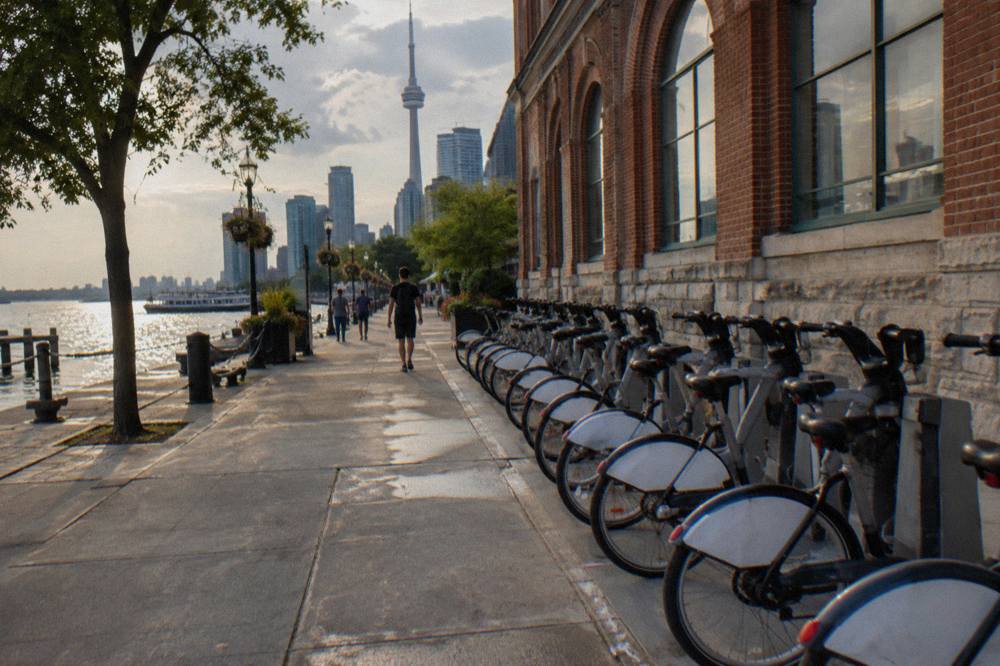
The mechanics are simple once you see them. Stations sit on sidewalks and in parks across the central city and beyond. You pay to unlock, the meter runs while you ride, and the trip ends when you slot the bike back into a dock and the light turns green. Classic bikes and e-bikes are priced differently, with e-bikes billed at a per-minute rate on top of the unlock fee under the reported pay-as-you-go structure.
Two caveats matter before you plan a day around it. First, the pricing figures circulating in news coverage are reported, not confirmed on the operator's own site, so treat every number below as a planning range and check the Bike Share Toronto site before you ride. Second, docking is the constraint: your route is only as good as the docks near where you want to stop, and a full dock at your destination means hunting for another.
What the system does brilliantly is the short hop. Ride from your hotel to a market, dock it, walk around, undock another bike for the next leg. For that pattern, nothing else in the city competes on convenience. For a planned half day of sightseeing with a route already chosen, the calculus changes, and that is where a guided ride enters.
| Bike Share option | Reported pricing | What it covers |
|---|---|---|
| Pay-as-you-go classic | Unlock fee plus per-minute rate | Single trips, dock to dock |
| Pay-as-you-go e-bike | $1 unlock plus $0.20 per minute | Assisted riding, per minute |
| Day pass | $15 | Unlimited classic rides of up to 90 minutes each |
| Annual 30 membership | $105 per year | 30-minute rides, e-bike rate discounted to $0.10 per minute |
| Annual 45 membership | $120 per year | 45-minute rides, same e-bike discount |
Reported mid-2026 coverage also notes the system projected 8.6 million trips for the year, with e-bikes, roughly one fifth of the fleet, generating more than twice as many trips per day as regular bikes. That popularity is worth knowing: popular docks near waterfront attractions can empty out on weekend afternoons.
When Does Bike Share Beat A Guided Ride?
Bike Share wins when your day is made of short, self-directed hops: a market in the morning, a museum at noon, a park before dinner. If each leg is under 90 minutes and you are happy choosing your own route, the reported $15 day pass is the cheapest way to ride all day. It also wins for spontaneous one-way trips, since you never return to where you started.
The pattern to picture is a dot-to-dot day. You are not trying to see everything; you are moving between three or four places you already chose. The bike is transport, not the activity. Dock-to-dock freedom means the wind can be at your back all day and the bike never has to come home with you.
It also wins on flexibility of timing. There is no start time, no meeting point, no group to keep up with. If you decide at 8 a.m. that today is a riding day, you can be rolling by 8:15. If rain rolls in at noon, you dock the bike and take the subway, and the day pass has cost you less than a sandwich.
Where it struggles is the moment the ride itself is the point. A visitor who wants to understand the neighbourhoods they are passing through, or who does not want to study a map before every turn, gets little help from a dock system. There is no one to say which side street hides the good terrace, and no one carrying the snacks.
That distinction, transport versus activity, is the honest dividing line. Riders who only need transport should stop reading and buy a day pass. Riders who want the activity should keep going, because the next section is about what a guided ride actually adds.
What Does A Guided Ride Give You That Bike Share Cannot?
A guided ride gives you a planned route, a local guide narrating it, a bike and snacks included, and a set meeting point, all in one booked half day of roughly 3.5 hours. Bike Share gives you a bike and nothing else. The gap is not the bicycle, it is everything wrapped around it: route, pacing, stories and logistics.
The featured option here is the Heart of Downtown guided ride, a shared 3.5-hour classic-bike tour with snacks included. The listing states the duration and inclusions; the price and current availability are on the booking page, and free-cancellation terms are worth checking there when you book, since operators commonly offer them. What you are buying is a compressed downtown education: the guide picks the streets, sets the pace and fills the stops with context.
The second thing a guide buys you is efficiency of attention. On a Bike Share hop you see a neighbourhood; with a guide you learn why the neighbourhood looks that way, which buildings matter and which laneway to come back to on foot. For a first visit, that density of information is hard to assemble alone in the same number of hours.
The third is the removed friction. The bike is provided and adjusted for you. Snacks are carried for you. The route has been ridden dozens of times, so the guide already knows where the awkward crossings are and where to regroup. None of this is a promise about traffic or weather, both of which vary, but the planning burden genuinely moves off your plate.
Visitors weighing one arranged day against a week of small hops often land on a hybrid: book one guided ride early in the trip to learn the geography, then use Bike Share for the rest of the stay with a much better mental map. It is a sensible sequence and Bike Tours Toronto exists largely for the first half of it.
How Do The Costs Compare For A Half Day?
On reported pricing, a Bike Share day pass is $15 for unlimited 90-minute classic rides, while e-bike use bills extra at the pay-as-you-go rate. A guided ride costs more, with the price on each booking page, but includes the bike, the guide and snacks. The honest comparison is cost per hour against cost per experience, and they are different purchases. If the experience side of that comparison appeals to you, our walkthrough of booking a private guided bike ride in Toronto covers who private rides suit and what to ask before you commit.
Run the arithmetic on a sightseeing half day. Four separate hops of an hour each, all on a classic bike within the 90-minute window, come to the single $15 day pass plus nothing else, provided you re-dock between legs. That is close to unbeatable as pure transport. Add an e-bike leg and the per-minute rate starts stacking, which is where the budget can quietly drift.
The guided ride is priced per person, and the figure belongs on the booking page rather than here. What the price buys is different in kind: the bike is in it, the snacks are in it, and so is the guide's time. If you value the commentary and the arranged route, the per-hour gap narrows fast. If you do not, no discount makes a guide worth it, and the day pass is the right tool.
| Cost item | Bike Share (reported) | Guided ride |
|---|---|---|
| Base cost | Day pass $15, or unlock plus minutes | Per-person price on the booking page |
| Bike | Included, dock to dock | Included, fitted at the meeting point |
| E-bike option | Extra per-minute rate applies | Separate e-bike tours exist |
| Snacks and water | Bring your own | Listed as included on snack-inclusive rides |
| Guide and route | None | Included |
| Islands trip | Bikes not permitted on the ferry | Islands tours include the crossing logistics |
One cost people forget on the Bike Share side is overage risk: keep a classic ride past the included window and the meter continues at the overage rate, which is exactly the trap a wandering sightseer hits. Set a timer. On the guided side, the comparable trap is booking the wrong format, say a downtown tour when what you wanted was the waterfront, so match the route to the day you actually have planned.
For riders who like the assisted option, an e-bike guided ride such as the E-Bike City And Neighbourhoods tour folds the premium bike into one price instead of a ticking per-minute meter. The listing describes a 3.5-hour shared ride through several neighbourhoods; its current price and rating are on the booking page.
Can You Take A Bike Share Bike To The Toronto Islands?
No. Bike Share bicycles are not permitted on the island ferries, per the City's own ferry ticketing page, so a Bike Share bike cannot cross to the Islands at all. To ride the Islands you need a guided Islands tour, a rental bike from an island operator, or your own bike walked on and off the ferry.
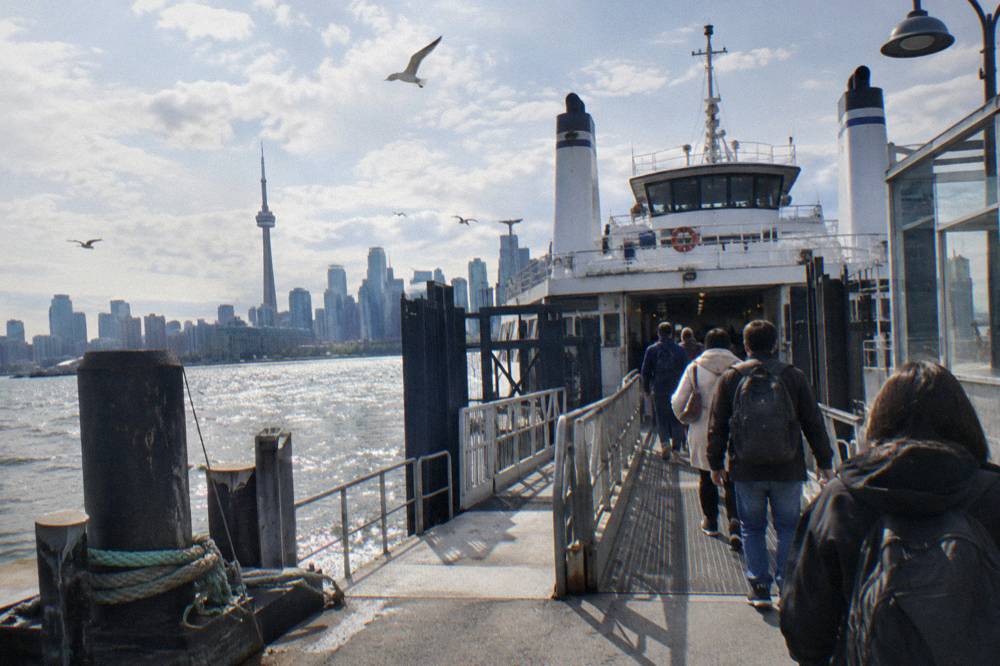
This is the single hardest wall between the two options, and it decides the question for many visitors. The ferry rules, verified on the City's page, welcome bicycles on board if you walk them when boarding and disembarking, but Bike Share bikes are excluded outright. E-bikes travel at staff discretion, must stay powered off, cannot be charged on board or at the terminal, and larger e-bikes of roughly 40 kilograms or more may be directed to the vehicle ferry.
The ferry itself costs money that Bike Share riders sometimes forget to budget. Round-trip fares in Canadian dollars are $9.57 for adults, $6.15 for older adults and youth, $4.51 for juniors, and free for infants. The full breakdown, including seasonal schedules, lives in our separate guide to taking the island ferry with a bike.
Season shapes the crossing too. Winter service from 14 October 2026 runs to Ward's Island only, until mid-April 2027, with full three-route service returning mid-May to mid-September and reduced schedules in the shoulder seasons. Confirm sailings on the City's ferry pages before any winter Islands plan.
The clean way across is a guided Islands tour. The 3.5-Hour Waterfront And Islands Ride pairs the mainland waterfront with the island park in one booked block, bike included, so the ferry rules and docking questions simply disappear into the operator's logistics. That is the whole argument for a guide in one sentence: the constraints become someone else's problem.
Which Parts Of Toronto Suit Each Option?
Bike Share suits the dense downtown core, the waterfront trail and any day built around short hops between docks. Guided rides suit the Islands, multi-neighbourhood arcs like downtown plus the Distillery District, and any first day when you want the city explained rather than just traversed. The waterfront splits the difference: both work, and the trail is free to ride either way. Whichever you pick for the bike, the fuller car-free guide to Toronto's transit, ferries and waterfront trail covers the trips two wheels can't handle.
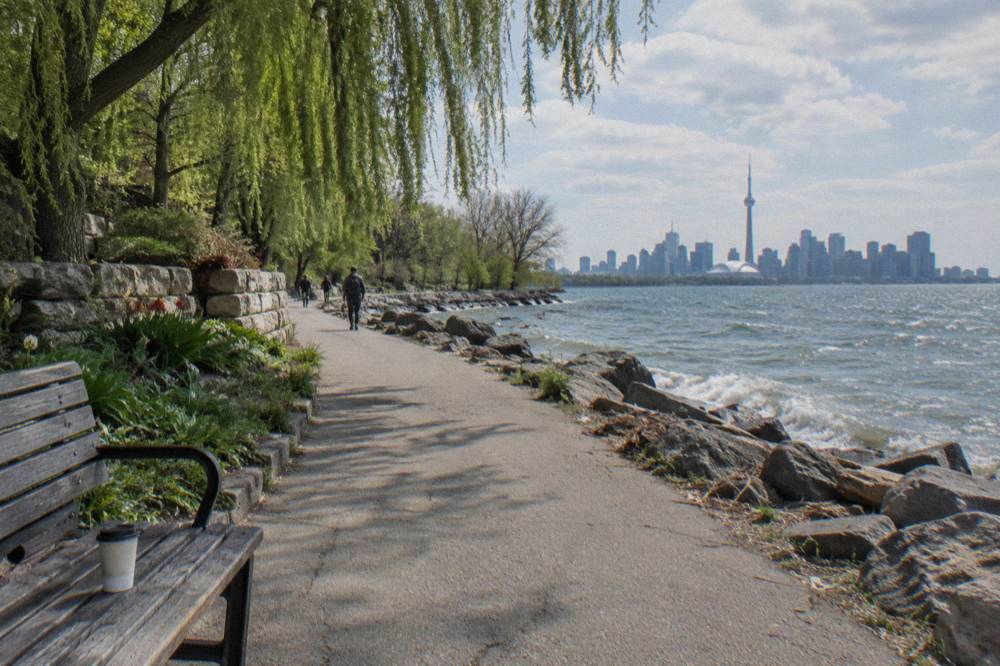
Start with the trail itself, because it is the free skeleton under everything. The Martin Goodman Trail completes a 20-plus-km waterfront route from the western to the eastern beaches, part of a network of over 300 km of trails inside the city. Riding it costs nothing, on a Bike Share bike or any other. One current wrinkle: the trail on Parliament Street is closed from 22 April to 31 December 2026 for the Queens Quay East realignment, with a temporary two-way protected lane carrying riders through, so expect a shifted alignment there.
Downtown, the dock system shines. Distances between the financial district, the market neighbourhoods and the waterfront are short, docks are dense, and a 90-minute window is generous. The trade-off is that downtown riding asks for attention: one-way streets, streetcar tracks and turning traffic reward riders who know where they are going, which is precisely the knowledge a guide supplies on day one.
The Islands, as established, belong to guided tours and rentals. The Distillery District and the eastern neighbourhoods sit in between: reachable by dock, richer with a guide, and covered in depth elsewhere on this site. If your interests run to neighbourhood depth over distance, a multi-neighbourhood guided arc covers ground in 3.5 hours that would take a self-directed rider twice as long to route.
For riders who want the islands at their calmest, the Morning Or Twilight Islands Ride offers both ends of the day on a classic bike. Timing details and availability are on the booking page.
What About Seasons, Weather And The Rules?
Both options ride the same weather, but the obligations differ. Guided rides run on operator schedules and supply the bike; Bike Share rides year-round but leaves clothing, routing and legality to you. Ontario law requires helmets only under 18, bans sidewalk riding for adults, and caps e-bikes at 32 km/h assisted speed, rules that apply identically to both.
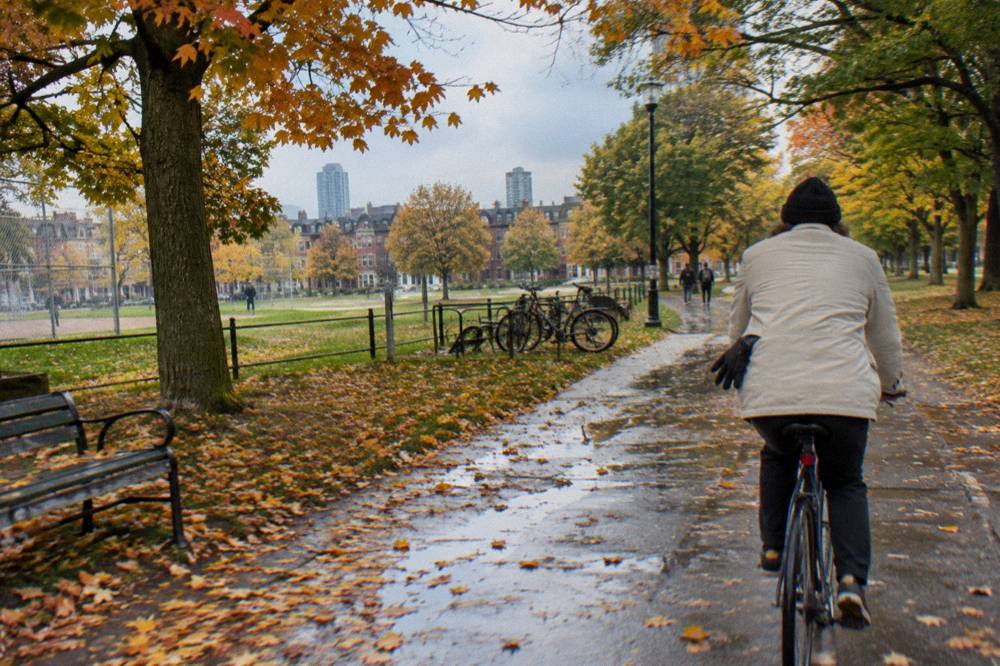
The climate record argues for planning around the calendar. The 1991 to 2020 normals for Toronto City put July's average high at 27.0 C and January's at minus 0.3 C, with June the wettest of the summer months at 81.6 mm of precipitation across 8.4 days of a millimetre or more. May through September is the comfortable core of the riding year; November, averaging 8.1 C high and 2.3 C low with nine wet days, belongs to the committed. None of this is a forecast, just the long-run pattern.
The law is the same whichever bike you swing a leg over. Riders under 18 must wear an approved helmet; every bike needs a bell or horn, and at night a white front light and a red rear light or reflector. Adults may not ride on sidewalks, with an exception for children under 10. E-bike riders must be 16 or older, helmeted, and limited to 32 km/h assisted speed and a 500-watt motor.
Weather cuts differently against each option. A guided ride in rain still runs or reschedules per the operator's policy, worth checking on the booking page; a Bike Share day pass in rain just sits unused while the clock runs on your travel day. Conversely, a heat wave makes the e-bike option, whether a docked e-bike or a guided e-bike tour, the difference between a pleasant afternoon and a slog.
How Do You Choose Between Them?
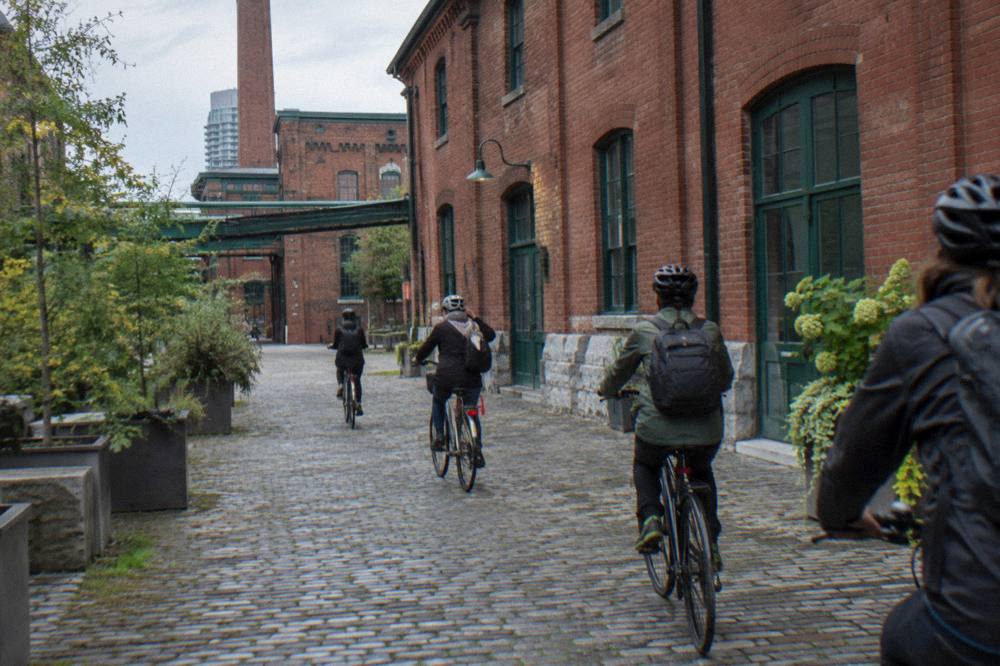
Choose Bike Share for short hops, one-way trips and days you want to control hour by hour at reported day-pass cost. Choose a guided ride for a first day, for the Islands, for any half day you would rather have narrated and arranged, and for the snack-inclusive formats that remove planning entirely. Many visitors sensibly do both, in that order.
The cleanest frame is to ask what the bike is for. If it is transport between places you already chose, buy the day pass and enjoy the freedom. If the riding itself is the activity, and you want stories with it, book the guide. The two purchases barely compete once the question is put that way.
| Your situation | Better fit | Why |
|---|---|---|
| Short hops between chosen stops | Bike Share | Dock-to-dock freedom, reported $15 day pass |
| First day in the city | Guided ride | Learn geography and context in one block |
| Toronto Islands | Guided ride | Bike Share bikes cannot board the ferry |
| One-way trips | Bike Share | Never return to your start point |
| Multi-neighbourhood half day | Guided ride | Route, pacing and snacks arranged |
| Assisted riding without a meter | Guided e-bike tour | E-bike folded into one per-person price |
| Spontaneous evening ride | Bike Share | No booking or start time needed |

Two combinations deserve a special mention. Families with teens split cleanly: the guided format keeps a group together at one pace, while docked bikes suit confident teens making their own short trips under the helmet law. And anyone here partly for the Islands should weigh the sunrise breakfast ride, which folds an early crossing and breakfast into one booked morning; its rating pool is small, so judge it on the itinerary rather than the score. For a fuller walkthrough of the whole decision, see which guided ride to book in Toronto.
However you split it, ride the city more than once. The first ride, guided or not, teaches the shape of the place; every ride after that is cheaper in attention, whichever system is under you.
Common Questions About Bike Share Versus A Guided Ride
Is Bike Share Toronto Cheaper Than A Guided Ride?
On reported pricing, yes for pure transport: a $15 day pass covers unlimited classic rides of up to 90 minutes. A guided ride costs more per person, with prices on the booking pages, but includes the bike, a guide, a set route and, on snack-inclusive tours, refreshments.
Can You Use Bike Share To Visit The Toronto Islands?
No. Bike Share bicycles are not permitted on the island ferries, per the City's ferry rules. To ride the Islands, book a guided Islands tour, rent from an island rental operator, or bring your own bike and walk it on and off the ferry.
Do You Need A Helmet For Bike Share Or A Guided Ride?
Ontario law requires an approved helmet for riders under 18 on any bicycle, including shared and rental bikes. Adults are not legally required to wear one. Operators state their own helmet arrangements on their booking pages, so check there.
How Long Is A Guided Ride Compared With A Bike Share Trip?
Guided rides on the current options run about 3.5 hours each, per their listings. A Bike Share trip lasts exactly as long as you want it to, which is the point: the system suits trips measured in minutes, not a structured half day.
Are The Reported Bike Share Prices Reliable?
The figures in the table, including the $15 day pass, come from 2026 news coverage rather than the operator's own site and should be treated as reported planning numbers. Confirm current pricing and pass details on the Bike Share Toronto site before riding.