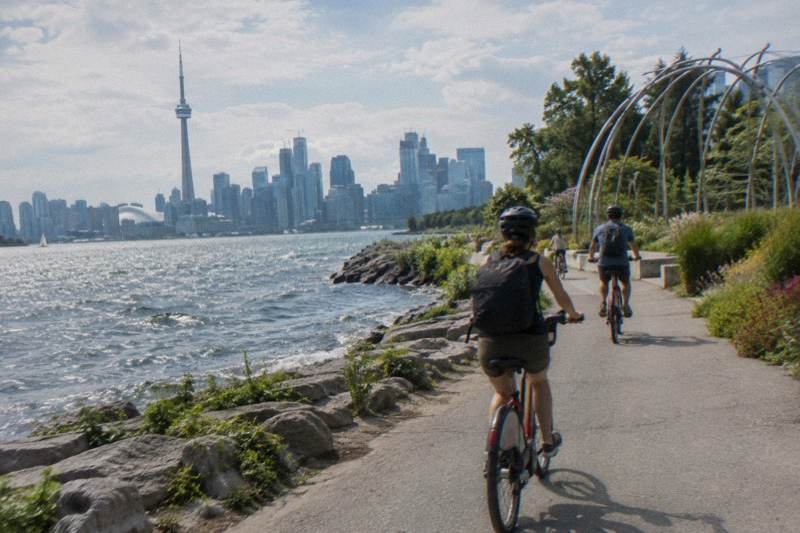
Toronto Island Ferry With A Bike: Tickets, Queues And Where To Board
Everything a cyclist needs before boarding the island ferry: what a ticket costs, which rules apply to bikes and e-bikes, when each route sails, and when it is simpler to let a guided ride take the crossing off your plate.
Short answer
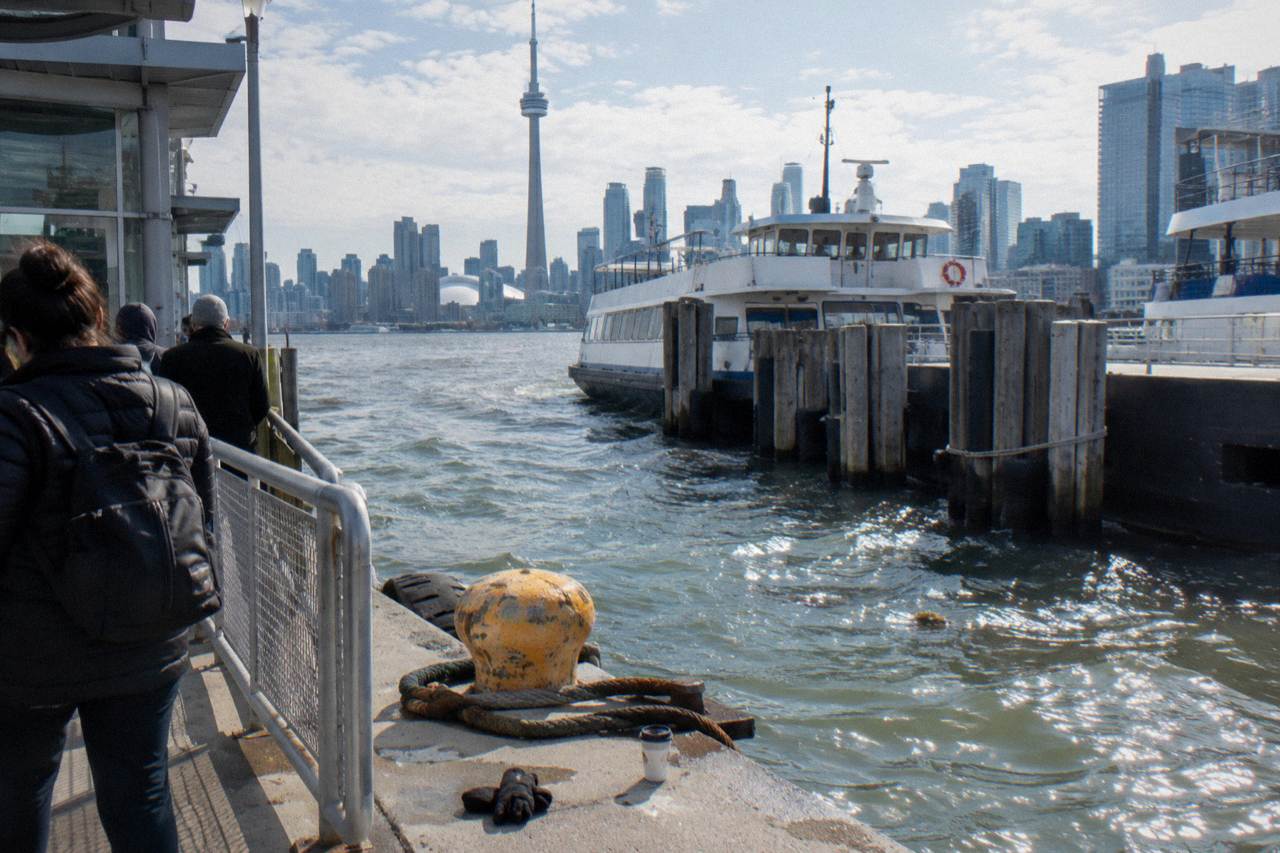
The round-trip ferry costs $9.57 for adults, $6.15 for older adults and youth, $4.51 for juniors and nothing for infants, in Canadian dollars. Bikes board free of a separate verified charge, you walk them on and off, and from 14 October 2026 only Ward's Island is served until mid-April 2027.
Getting a bicycle across to the Toronto Islands is the one logistical step between you and the best car-free riding in the city, and it is simpler than it looks once you know the rules. The ferry is a City service, the fares are fixed and published, and bikes are explicitly welcome on board. The catches are seasonal: which island you can sail to changes in October, Bike Share bikes are barred from the boats, and e-bikes ride at the crew's discretion. Once you know the ferry rules, the natural next question is how long it actually takes to bike around the island, since the crossing and your pace together shape the whole day.
This page walks through the whole crossing from the cyclist's side: where you board, what a ticket costs, the bike and e-bike rules, the seasonal schedule, realistic queue timing, and when it is worth letting a guided ride arrange the crossing instead. Where a detail is not published by the City or the operators, it says so rather than guessing. Start with Bike Tours Toronto for the wider picture of riding in the city, then use this page on the morning you ride down to the dock.
Where Does The Toronto Island Ferry Leave From?
Every sailing leaves from the Jack Layton Ferry Terminal at the foot of Bay Street and Queens Quay, on the downtown waterfront, and the bike infrastructure leading there is part of a waterfront trail network of more than 300 km inside the city. The terminal is the single mainland departure point for all three island routes, Centre Island, Hanlan's Point and Ward's Island, so you never have to choose a dock on the city side, only on the island side.
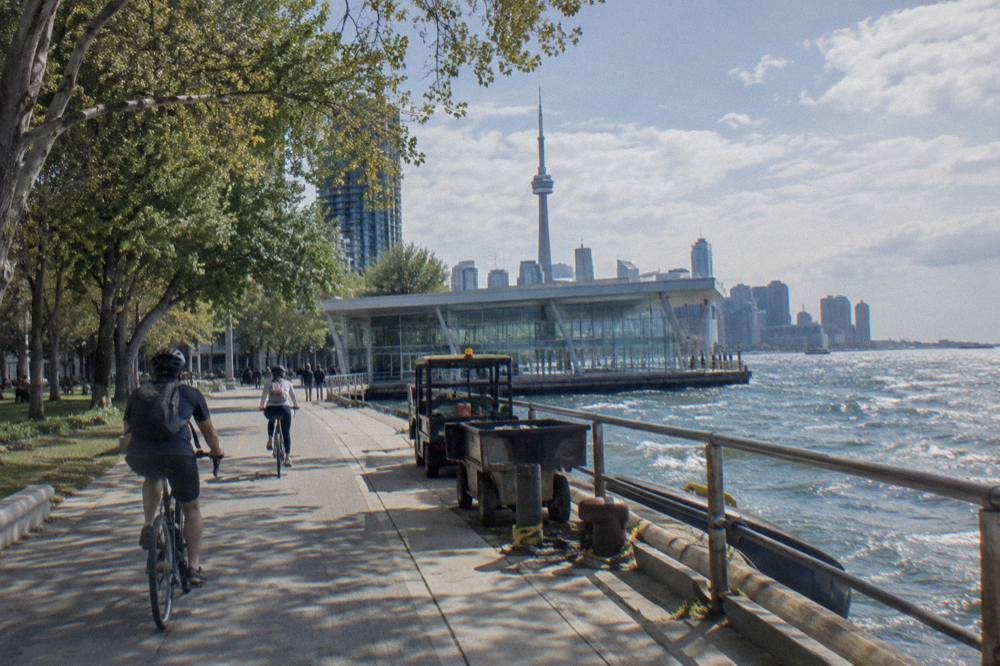
Riding to the terminal is straightforward on the Martin Goodman Trail, the waterfront multi-use path that the City describes as running more than 20 km from the western to the eastern beaches. Coming from the east, note one 2026 change: the trail on Parliament Street, between Merchants' Wharf and Lake Shore Boulevard East, has been closed since 22 April 2026 for the Queens Quay East realignment, with a temporary two-way protected lane carrying cyclists past the work. That closure runs to 31 December 2026. Coming from the west or along Queens Quay itself, you arrive at the terminal with the water in front of you and the ticket line to your right.
The terminal sits beside the Westin Harbour Castle and a short ride from Union Station, so it is reachable by transit with a bike in a pinch, though transit fares and bike rules on the TTC are outside what this page can verify. If you are planning the ride in from a hotel, the where to stay for a cycling trip guide maps the neighbourhoods that put you closest to the waterfront trail and the dock.
One thing worth knowing before you go: the City is revitalizing all three island landings, and a public survey on the Ward's, Centre and Hanlan's ferry dock improvements closed on 1 November 2026. Construction at the landings is a live possibility through the next few years, so a quick look at the City's island park projects page the week you ride is cheap insurance.
How Much Does The Toronto Island Ferry Cost With A Bike?
A round-trip adult ticket costs $9.57, older adults and youth pay $6.15, juniors aged two to fourteen pay $4.51, and infants under two ride free, all in Canadian dollars. The City publishes no separate verified bicycle charge, so the bike itself adds nothing to the fare you can confirm today, and tickets are sold as round trips valid from any island dock. Once the fare is settled, the bigger question is whether the day out there actually delivers, and our full breakdown of whether Toronto Island is worth the trip walks through the seasons, the cycling rules, and what a guided ride adds.
| Passenger | Round-trip fare (Canadian dollars) |
|---|---|
| Adult (20 to 64) | $9.57 |
| Older adult (65 and over) | $6.15 |
| Youth (15 to 19) | $6.15 |
| Junior (2 to 14) | $4.51 |
| Infant (under 2) | Free |
Those fares come straight from the City's ferry ticket information page, which is the authority on prices. Note the currency point carefully if you are comparing against tour prices on this site, which are listed in US dollars: the ferry is a City service priced in Canadian dollars, and mixing the two without thinking makes tours look more expensive than they are relative to a DIY day. Monthly passes exist but are sold only at the terminal, at $121.64 for an adult, which only makes sense for commuters.
Online tickets are valid to the end of the year, which matters if you are buying ahead for a summer trip. There is no reserved sailing, a ticket puts you in the queue for the next boat, not a seat on a specific one. For the full mechanics of arriving with a bike, the rules are strict and worth learning before you roll up.
Can You Take Any Kind Of Bike On The Ferry?
Regular bicycles are welcome on board at no verified extra charge, but you must walk them when boarding and disembarking, Bike Share bicycles are not permitted on the ferries at all, and e-bikes travel at staff discretion, fully powered off, with no charging on board or at the terminal. Larger e-bikes, roughly 40 kg and over, may be directed to the vehicle ferry instead.
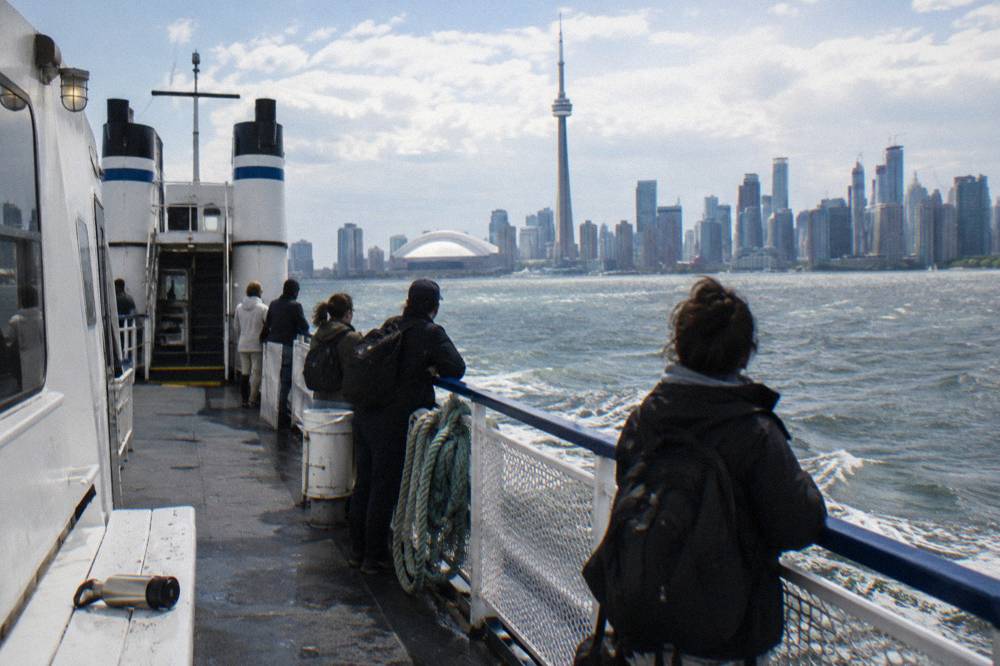
The Bike Share ban is the rule that catches visitors most often. If your plan was to unlock a Bike Share bike downtown and pedal it onto the boat, that plan ends at the gangway; the City's own ticket page states it plainly. Bike Share stations do exist on the islands themselves, so the workaround is to walk on empty-footed and unlock over there, or to ride a rental or your own bike across. The Bike Share or a guided ride guide works through that trade-off in full.
E-bike riders should read the fine print twice. The ferry rules allow e-bikes at the discretion of staff, require them fully powered off for the crossing, forbid charging anywhere on board or at the terminal, and send bikes around 40 kg or heavier to the vehicle ferry. On the island side, the park rules add that e-bikes over 40 kg are not allowed in Toronto Island Park at all. Ontario law separately requires e-bike riders to be 16 or older, helmeted, and capped at a 32 km/h assisted speed, per the province's e-bike rules page. If that sounds like more negotiation than you want on holiday, the guided e-bike option later in this page sidesteps it.
The walk-on rule is enforced in both directions and exists because the loading ramp and deck get crowded. Cyclists queue in the same lines as everyone else, then board on foot beside the bike. Ontario's equipment rules still apply on the island roads and trails: riders under 18 must wear an approved helmet, and every bike needs a bell or horn plus lights or reflectors after dark, all laid out on the province's bicycle safety page. The cycling rules, helmets and e-bike law guide covers the rest.
If reading rules is not how you pictured the morning, this is where a guided ride earns its keep.
All three of those rides make the crossing part of the guided day rather than a problem you own. The operator handles the flow of tickets, boarding and bikes, and you spend the wait talking to the guide instead of counting sailings.
When Does The Ferry Run Through The Year?
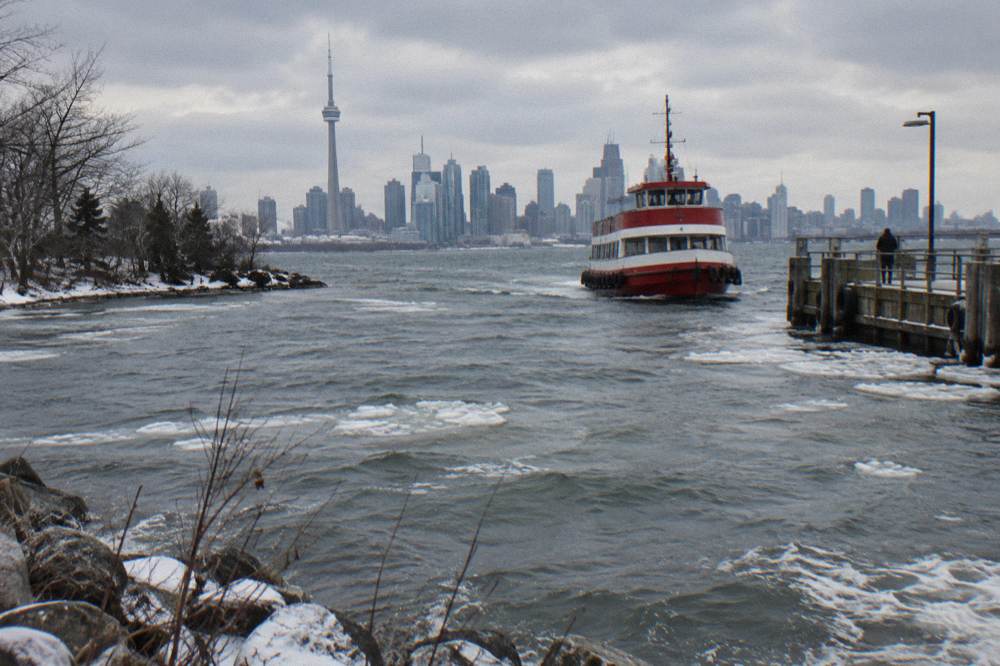
The ferry runs year-round from the Jack Layton terminal, but the routes rotate: full three-route service to Centre Island, Hanlan's Point and Ward's Island runs mid-May to mid-September, reduced three-route service fills spring and fall, and from 14 October 2026 to mid-April 2027 only Ward's Island is served, with the first city departure around 6:30 a.m. and the last around 11:45 p.m.
| Season | Routes sailing | What it means for cyclists |
|---|---|---|
| Mid-May to mid-September | Centre Island, Hanlan's Point, Ward's Island | Full choice of docks; busiest queues on summer weekends |
| Spring (to about mid-April) and fall (from about mid-September) | All three routes, reduced frequency | Fewer sailings per day; check times before locking a plan |
| 14 October 2026 to mid-April 2027 | Ward's Island only | Winter service; Centre and Hanlan's docks closed |
Those seasonal patterns are cluster facts rather than a fetched schedule, so the City's ferry routes and schedules page is the place to confirm today's sailing times before you set out. The winter pattern matters more than visitors expect: from mid-October, only Ward's Island receives boats, and it stays that way until roughly mid-April. Ward's is the residential east-end island, quiet and lovely in the off-season, but it is not Centre Island's amusement area, and if you arrive at the terminal in January expecting the Centre Island dock you will be re-planning on the spot. The is Toronto Island open all year round post unpacks what is actually open in each season.

Summer riders should also know that August 2026 broke the all-time monthly record with more than 423,000 ferry trips, helped by a month of free senior and youth rides. The crowds that record implies are concentrated on weekend afternoons in July and August, which leads directly to the timing question.
How Long Is The Queue And When Should You Arrive?
No verified crossing time or queue length exists for this ferry, so treat any specific number you read elsewhere with suspicion; the practical approach is to arrive well before your intended sailing on summer weekends, target off-peak boats on weekday mornings, and check the City's sailing page the day you ride for service alerts, weather holds or mechanical cancellations.
The honest answer is that the wait depends on the day, and the City does not publish a queue estimate. What is verifiable: sailings are frequent in summer across three routes, winter Ward's boats run from roughly 6:30 a.m. to 11:45 p.m. from the city side, and boats fill on a first-come basis since tickets carry no reserved sailing. Cyclists board with the general crowd, walking the bike on.
A few habits make the wait shorter. Buy tickets online in advance, they are valid to year-end, so the machine queue is one you skip entirely. Ride down early: morning boats before about 10 a.m. are the calm ones even in July, and the islands reward the early arrival anyway. Avoid the last return boats of a summer Sunday, when the whole island surges home at once. And keep a weather eye out, since crossings suspend in rough weather and the schedule page reflects it. The how long is the ferry wait post collects the timing question in one place.
If queuing with a bike sounds like the least appealing part of your trip, a guided morning ride front-loads the whole problem. The Islands morning and twilight ride runs 3.5 hours and the operator manages the sailing as part of the day.
Which Island Should You Sail To With A Bike?
Sail to Centre Island in summer if you want the classic park, gardens and the amusement area, to Hanlan's Point for the beach and the quiet west end, and to Ward's Island in the off-season because from mid-October to mid-April it is the only dock receiving boats at all, a residential island of cottages, boardwalks and calm car-free lanes.
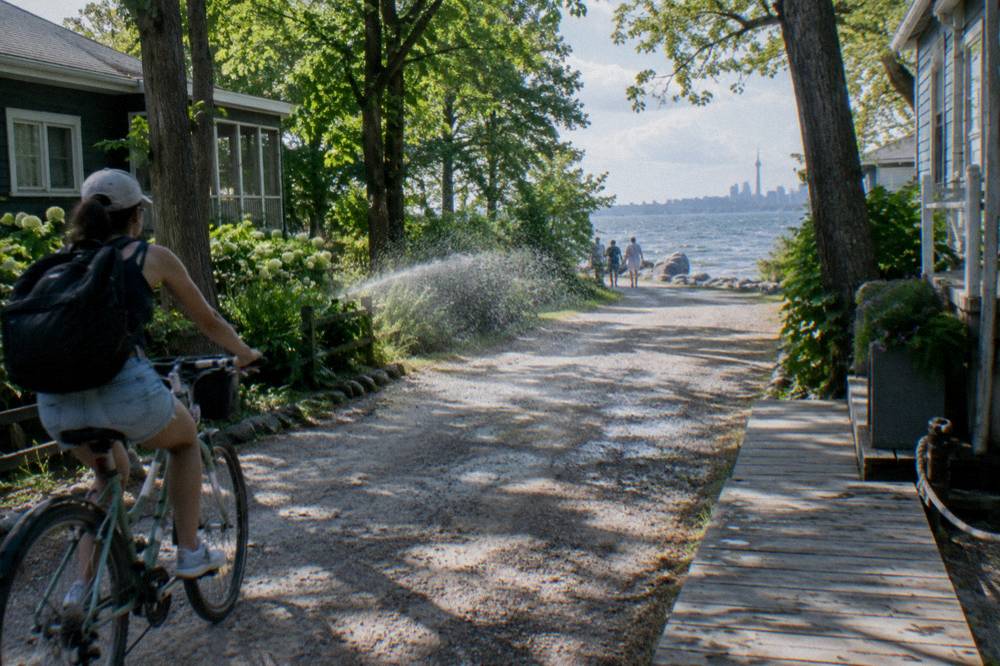
In the full summer season the choice is real. Centre Island is the family pick, with the biggest green space and the most facilities. Hanlan's Point sits closest to the airport fence and the clothing-optional beach at its far end, and tends to be the quietest sail. Ward's Island, the year-round island, has the boardwalk along the eastern shore and the cottage community, and its dock is a short ride from the Don Roadway side of the archipelago. Because round-trip tickets are valid from any dock, a favourite move is to sail out to one island and return from another, riding the network of paved and gravel trails between them. The City lists the Centre to Ward's distance at 2.9 km, roughly a 35 minute walk, or a short ride. If you're still weighing which dock to aim for, our guide to picking the right Toronto Island compares the three stops and explains how the ferry schedule and a guided bike ride can shape your day.
The which Toronto Island should you go to post compares the three from a visitor's angle, and the island rental or guided ride guide covers what to do once your wheels are on the sand. For a first visit, the deciding fact is seasonal: between mid-October and mid-April, Ward's is not one option among three, it is the option.
How Does A Guided Ride Handle The Crossing For You?
A guided islands ride folds the ferry into the itinerary: the operator's day includes the sailing, the guide manages tickets and boarding, and the ride itself covers the waterfront on the city side plus the island trails in one 3.5 hour block, which is the main reason visitors choose it over assembling the same day from a rental and a ferry ticket on their own.
The flagship option is the 3.5-Hour Waterfront and Islands Ride, which pairs the mainland waterfront with the island crossing, so you ride the trail, sail the channel and ride the islands without ever consulting a timetable. Check availability if that shape of day appeals. Its price and rating sit on the listing, along with what the tour includes, since those figures refresh and belong on the booking page rather than repeated here. What the listing flags is the practical part: bike and snacks come with the tour, which removes the rental question and the ferry logistics in one booking.
| Ride | Length | Bike type | Where it goes |
|---|---|---|---|
| 3.5-Hour Waterfront and Islands Ride | 3.5 hours | Regular bike | Waterfront trail, ferry crossing, island trails |
| Morning or Twilight Islands Ride | 3.5 hours | Regular bike | Islands only, morning or evening departures |
| Sunrise Ride, Breakfast Included | 3.5 hours | Regular bike | Islands at sunrise, with breakfast |
| E-Bike City and Neighbourhoods | 3.5 hours | E-bike | City neighbourhoods, no ferry crossing |
The morning and twilight islands rides concentrate on the islands themselves, which suits a visitor already staying near the waterfront. The sunrise version adds breakfast and an early dock call, and with only a handful of reviews so far it carries no rating claim here, just the itinerary. The e-bike option stays on the city side, touring the neighbourhoods rather than the islands, and sidesteps every ferry e-bike rule in the process; it is the pick for anyone who was deterred by the powered-off, staff-discretion fine print above.
For riders weighing pedal-assist against the crossing, the e-bike or regular bike on a tour guide runs the comparison properly, and the e-bike city ride is the assisted option if the island rules tip the balance.
Note that several listings in the table are the same operator products sold under separate listings; treat small price differences between them as listing differences, not operator differences. The which guided ride should you book guide sorts the whole field.
What Is Riding To The Islands Like In Each Season?
July and August are the peak, with average highs of 27.0 C and 26.1 C and only about eight days of meaningful rain each, while the November to April window averages below 9 C with roughly nine to ten wet days a month, and the off-season's reward is a near-empty archipelago served only by the Ward's Island boat.
| Month | Avg high C | Avg low C | Days with 1 mm+ precip |
|---|---|---|---|
| May | 18.8 | 10.0 | 9.3 |
| June | 24.2 | 15.3 | 8.4 |
| July | 27.0 | 18.1 | 8.2 |
| August | 26.1 | 17.7 | 7.2 |
| September | 22.0 | 13.8 | 7.7 |
| October | 14.6 | 7.7 | 8.3 |
| November | 8.1 | 2.3 | 9.0 |
Those are Environment Canada's 1991 to 2020 climate normals for Toronto City, the statistical baseline rather than any forecast, and they frame the season choice neatly. June through September is the sweet spot: warm, comparatively dry, and served by the full three-route ferry. Late October flips the switch, the Ward's-only schedule began on 14 October 2026 this cycle, and from then until mid-April the islands belong to hardy locals and winter riders. October 2026 even closed with a late warm spell that broke a 1946 daily record at Pearson, a reminder that the calendar and the weather do not always agree. The best time of year to cycle in Toronto guide extends this table across the full year.
Whatever the season, the same packing rules hold: Ontario's helmet law for riders under 18, lights after dark, and no sidewalk riding on the city side, with the under-10 exception. The what to bring on a Toronto bike ride checklist covers the rest.
Common Questions About The Toronto Island Ferry With A Bike
How Much Does The Toronto Island Ferry Cost With A Bike?
A round-trip adult ticket is $9.57 in Canadian dollars, older adults and youth pay $6.15, juniors $4.51, and infants ride free. The City publishes no separate verified charge for the bicycle itself.
Can I Take A Bike Share Bike On The Ferry?
No. The City's ticket rules state that Bike Share bicycles are not permitted on the ferries. Bike Share stations exist on the islands, so you can walk on and unlock a bike over there instead.
Can I Take An E-Bike On The Ferry?
Yes, at the discretion of staff. The e-bike must stay fully powered off on board, charging is not permitted on the ferry or at the terminal, and larger e-bikes of roughly 40 kg or more may be directed to the vehicle ferry. E-bikes over 40 kg are not allowed in Toronto Island Park.
Does The Ferry Run In Winter?
Yes, year-round from the Jack Layton Ferry Terminal, but from 14 October 2026 to mid-April 2027 only the Ward's Island route sails, roughly 6:30 a.m. to 11:45 p.m. from the city side. Confirm current times on the City's sailing page.
Do I Need To Walk My Bike Onto The Ferry?
Yes. Cyclists must walk their bicycles when boarding and disembarking. You queue with the general passengers and board beside the bike.
Is It Easier To Book A Guided Ride That Includes The Ferry?
For many visitors, yes. Guided islands rides include the crossing, the bike and snacks per the listing, and the operator handles tickets and boarding, which removes the schedule and queue from your morning.
If you would rather hand the crossing to someone who does it weekly, these are the rides that include it.