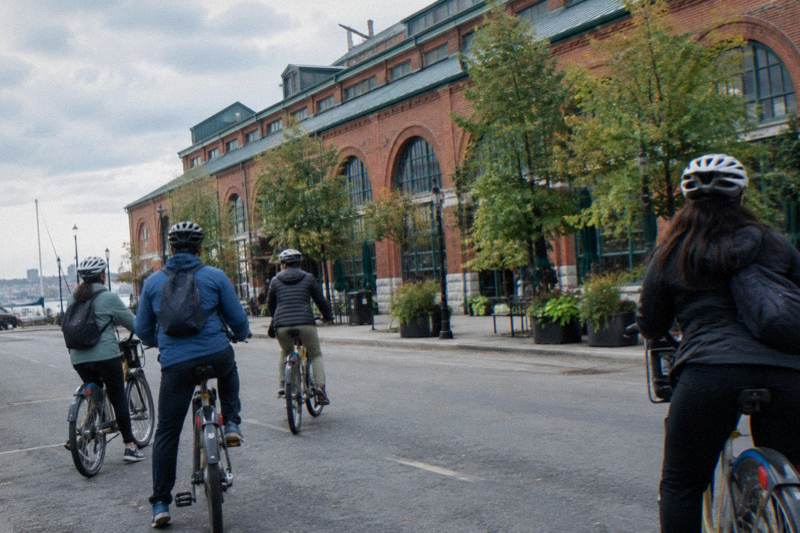
Where To Stay In Toronto For A Cycling Trip
The right base for a Toronto bike trip is the one that puts you minutes from the trail, the ferry or your ride's meeting point, not one that looks central on a subway map.
Short answer
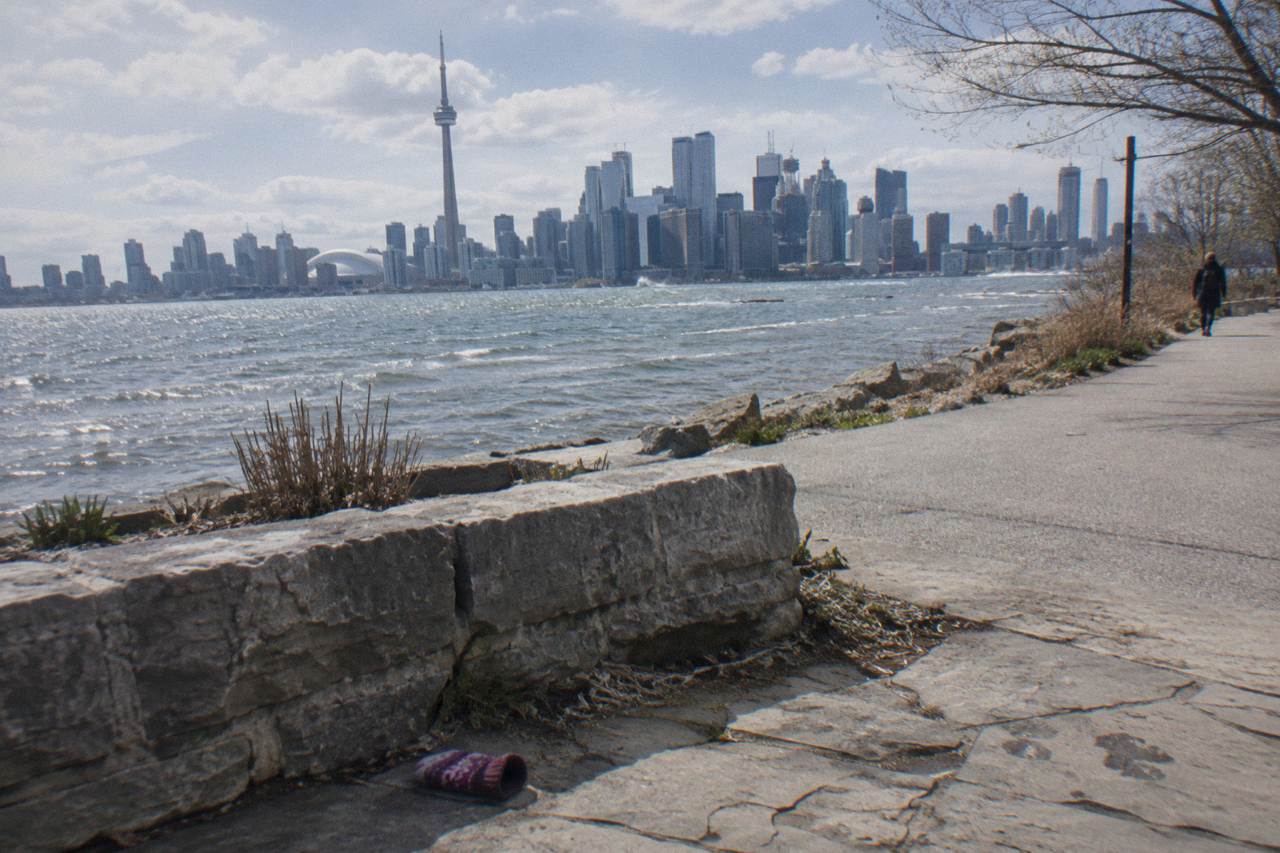
For a cycling trip, stay near the waterfront between the ferry terminal and the Distillery District, or in the downtown core close to the meeting points the guided rides use. The Martin Goodman Trail links more than 20 km of waterfront, ferries to the Islands leave from the foot of Bay Street, and every guided ride in the city starts downtown or at the harbour.
Toronto rewards cyclists who pick their base with the same care they pick their route. The city's riding assets line up along one edge: the waterfront trail, the island ferry terminal at the foot of Bay Street, and the downtown neighbourhoods where the guided rides gather. A hotel two blocks from the harbourfront puts all three within a short spin; a cheaper room up by the highway puts none of them there.
The city also moves fast, and a base that felt right last year may not fit this season's infrastructure. Ontario completed removing the 1.2 km stretch of protected bike lanes on Bloor Street West in Etobicoke on 30 October 2026, and a provincial request for proposals covering roughly 19 km of Bloor, Yonge, University and Avenue Road lanes closed toward the end of November 2026. None of that touches the waterfront trail, which is exactly why this guide keeps pointing you to the water. This site, Bike Tours Toronto, is built around one idea: where you sleep decides how much you ride.
Where Should Cyclists Stay In Toronto?
For most riders the best base is the central waterfront, from the ferry terminal at the foot of Bay Street east through the Harbourfront into the Distillery District. There the Martin Goodman Trail runs past your door, the island ferry is a short ride away, and guided ride meeting points sit within easy reach; visitors preferring neighbourhood character over convenience do well in Kensington Market or Leslieville, at the cost of a longer ferry hop.
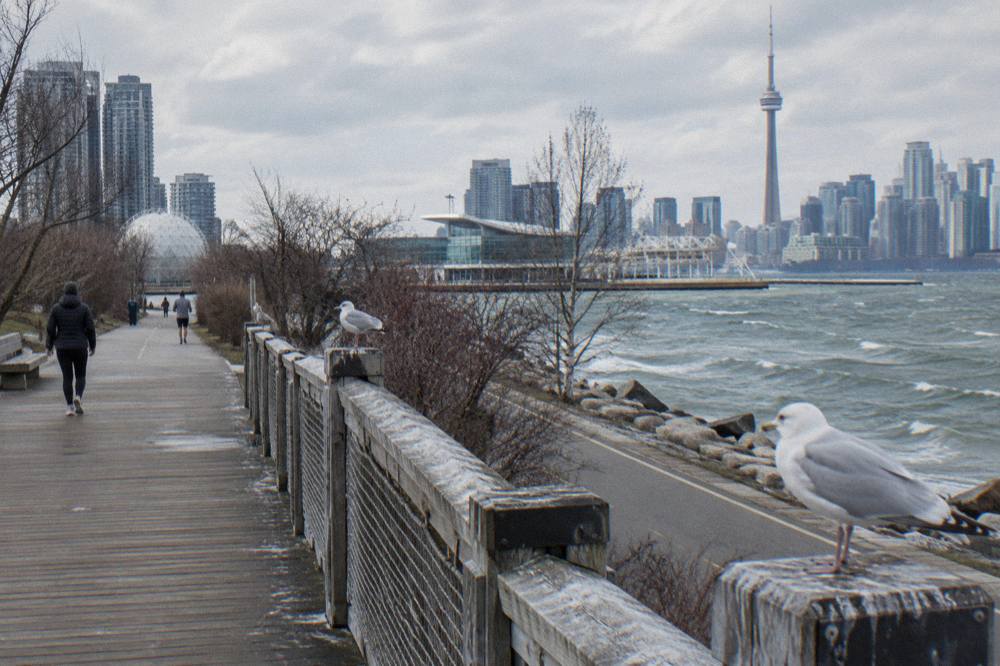
Three zones matter to a cyclist, and they sit close together. The Harbourfront strip along Queens Quay is the closest thing Toronto has to a cyclist's hotel district: the trail runs beside it, the Jack Layton Ferry Terminal sits at its west end, and the guided rides that explore the waterfront and the Islands leave from the harbour area. Behind it, the downtown core, roughly bounded by University Avenue, Front Street and the Don Valley, holds the meeting points for the neighbourhood rides and the biggest supply of rooms at every price level. Once you've picked a base, the guide to Toronto's best cycling routes covers the waterfront trail, the Islands, the downtown neighbourhoods and the Don Valley, with notes on closures and ferry fares.
The third zone is the east end, Leslieville and the Beaches, where the trail continues along the eastern beaches and the riding turns relaxed and residential. It trades ferry proximity for a quieter street feel and a straightforward ride in on the trail. For a first trip with a mix of guided rides and independent kilometres, the central waterfront wins on geometry alone: you can reach the ferry, the Distillery District, the trail and the downtown canyons without ever crossing a hostile arterial.
| Zone | Best for | Riding at your door | Trade-off |
|---|---|---|---|
| Harbourfront and Queens Quay | Ferry access, Islands rides, trail days | Martin Goodman Trail, ferry terminal | Busy in summer, pricier |
| Downtown core | Neighbourhood guided rides, shortest walk to meeting points | Street riding, connections to trail | Less scenic immediate riding |
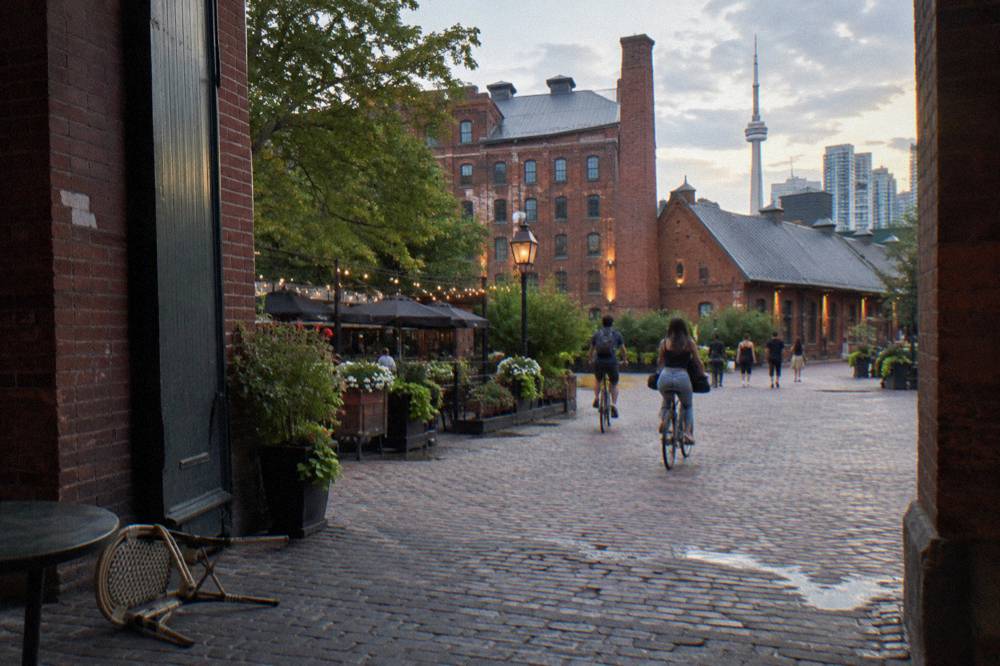
| Distillery and East Harbour | Distillery District, east trail | Trail, Distillery lanes | Fewer hotel options |
| Kensington Market area | Market streets, west-end riding | Neighbourhood streets | Ferry and harbour are a longer ride |
| Leslieville and the Beaches | Quiet base, eastern beaches trail | Trail east of downtown | Longest ride to the ferry |
Hotel names and rates sit outside what this guide can honestly recommend: properties come and go, and rates in this city proved volatile during the FIFA World Cup summer of 2026, when CBRE data showed downtown June occupancy down 7 percent against 2025 while average daily rates rose 21 percent. Treat any specific hotel suggestion as a starting point, not a verdict, and check current rates and bike storage directly with the property before booking.
Which Neighbourhood Puts You Closest To The Guided Ride Meeting Points?
The downtown core and the harbour edge do. The guided rides on this site's pages gather at central downtown and harbourfront locations, which means a room anywhere between Front Street and the lake keeps the start of your ride to a short pedal or a brief walk. Meeting point addresses for each ride are printed on the booking page, so confirm the exact spot for your chosen date before you fix your hotel.
The rides cluster in two places. The downtown neighbourhood rides, including the 3.5-hour Heart of Downtown ride with snacks included, work through the core's streets, Chinatown, Kensington-adjacent lanes and the financial district canyons, which makes any central hotel convenient. The Islands and waterfront rides assemble at the harbour before crossing to the Islands or following the shoreline, so for those the Harbourfront hotels have a small but real edge: you can roll out of the lobby and be at the dock without touching a busy street.
That geometry is worth money. A rider based in the Harbourfront can book a morning Islands ride, be back by early afternoon, and still have the trail, the Music Garden and the Distillery District within the same day's pedalling. A rider based in midtown spends the first and last half hour of every riding day getting to the water. If your trip is two or three days of riding rather than a week of everything, base yourself where the rides start and let the city come to you.
For matching a ride to your base, the comparison piece on which guided ride to book breaks the options down by format and time of day.
Is The Waterfront The Best Base For A Bike Trip?
For most visitors, yes. The waterfront is where Toronto's separated, continuous, car-free riding lives: the Martin Goodman Trail completes a 20-plus km route along the shore from the western to the eastern beaches, and it runs directly past the Harbourfront hotel strip. Staying beside it means your easiest ride of the trip starts outside your door, no navigation and no traffic stress required.
The trail is part of a network of more than 300 km of trails within the city, and it is the spine every visitor ride hangs from. From a Queens Quay base you can ride west toward Ontario Place and the Humber Bay parks or east past Sugar Beach, the Distillery District and the port lands, almost entirely on separated path. The busiest stretch runs between the Harbourfront and Ontario Place, which is precisely the stretch your hotel will sit on.
One 2026 wrinkle matters to east-end riders. The Martin Goodman Trail on Parliament Street, between Merchants' Wharf and Lake Shore Boulevard East, has been closed since 22 April 2026 and stays closed through 31 December 2026 for the Queens Quay East realignment, with a temporary two-way protected lane carrying cyclists past the work. The detour is signed and separated, but it is a reminder that the trail is a living construction site at its edges. The central waterfront sections your hotel borders had no reported closures in 2026.
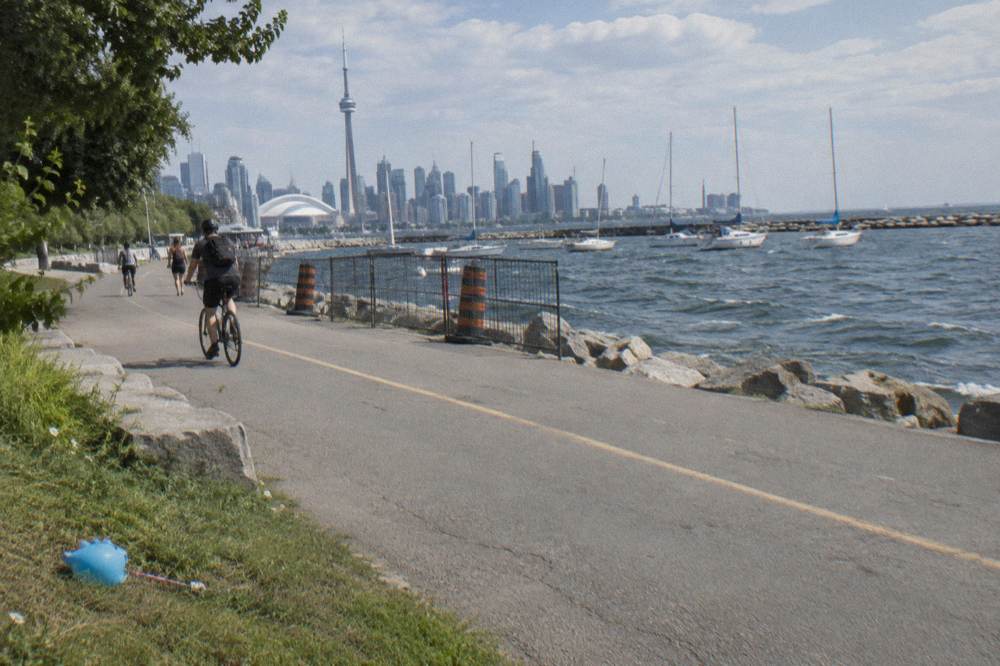
The deeper route planning lives in the Martin Goodman Trail cycling guide, and the full shoreline picture in the Toronto waterfront trail by bike piece.
Weather should shape your waterfront booking dates as much as location does. Toronto's 1991 to 2020 climate normals give July a mean daily high of 27.0 C with June at 24.2 C and August at 26.1 C, and precipitation averaging 76.5 mm across July spread over roughly eight days with a millimetre or more. May and September, at 18.8 C and 22.0 C mean highs, trade a few degrees of warmth for thinner crowds on exactly the trail your hotel borders. The city logs about 104 days a year with measurable precipitation, so a rain plan matters even in the banner months.
Where Should You Stay To Ride The Toronto Islands?
Stay near the Jack Layton Ferry Terminal at the foot of Bay Street, which in practice means the Harbourfront or the lower downtown core. Every trip to the Islands starts with the ferry from that single terminal, and winter service runs to Ward's Island only, so off-season visitors benefit even more from being close. A Harbourfront room makes an early ferry sailing a five-minute roll rather than a commute.
The ferry is cheap but not free, and it runs on a seasonal rhythm. Round-trip fares, in Canadian dollars, are $9.57 for adults, $6.15 for older adults and youth, $4.51 for juniors and free for infants under two, per the City's ferry ticket information page. Bicycles ride free and are welcome on board, walked on and off; Bike Share bicycles are not permitted on the ferries at all, a rule that catches visitors every summer. E-bikes board at staff discretion, must be powered off, and larger e-bikes, roughly 40 kg and over, may be directed to the vehicle ferry.
| Ferry fact | Detail |
|---|---|
| Round-trip adult fare | $9.57 (Canadian dollars) |
| Older adult and youth | $6.15 |
| Junior (2 to 14) | $4.51 |
| Infant (under 2) | Free |
| Personal bikes | Welcome, walked on and off |
| Bike Share bikes | Not permitted on ferries |
| Winter service (from 14 October 2026) | Ward's Island only, until mid-April 2027 |
| Full three-route service | Mid-May to mid-September |
The seasonal schedule matters more than most visitors expect. From 14 October 2026 the ferry runs to Ward's Island only, with first departures around 6:30 a.m. from the city and service continuing to late evening, and that pattern holds until mid-April 2027. Full service to Centre Island and Hanlan's Point returns mid-May and runs to mid-September, with reduced three-route schedules in the shoulder weeks either side. Confirm sailings on the City's ferry routes and schedules page before you lock in a hotel date, because an Islands-centred trip planned for a Ward's-only week plays out very differently.
Guided Islands rides solve most of this planning for you, and the meeting points sit harbour-side where the ferry conversation starts. The full logistics, including what to expect at the dock, are covered in taking the island ferry with a bike.
What Does A Riding Day Look Like From Each Base?
A riding day differs sharply by base: from the Harbourfront you wake with the trail at your door, cross by ferry or join a guided ride by mid-morning, and finish east at the Distillery or west at Ontario Place. From the downtown core, a short street ride to a meeting point leads into a day spent inside the neighbourhoods, while Leslieville days begin and end on the eastern trail, with the ferry a deliberate excursion.
Say you book the morning Islands format. A Harbourfront base means a relaxed breakfast, a short ride or walk to the harbour meeting point, and you are on the water before the queues build. The morning and twilight versions of the 3.5-hour Islands ride let you pick the light you prefer, and both fit comfortably inside a day that can still hold an afternoon on the trail. Downtown-based riders do the same with a slightly earlier alarm.
A downtown base shines for the neighbourhood formats. The e-bike rides through the city's dynamic neighbourhoods and the classic downtown rides both work the core's grid, so a central room turns the meeting point into a five-minute roll. The trade is that your free riding, the kilometres outside the guided block, start on streets rather than paths until you reach the water.
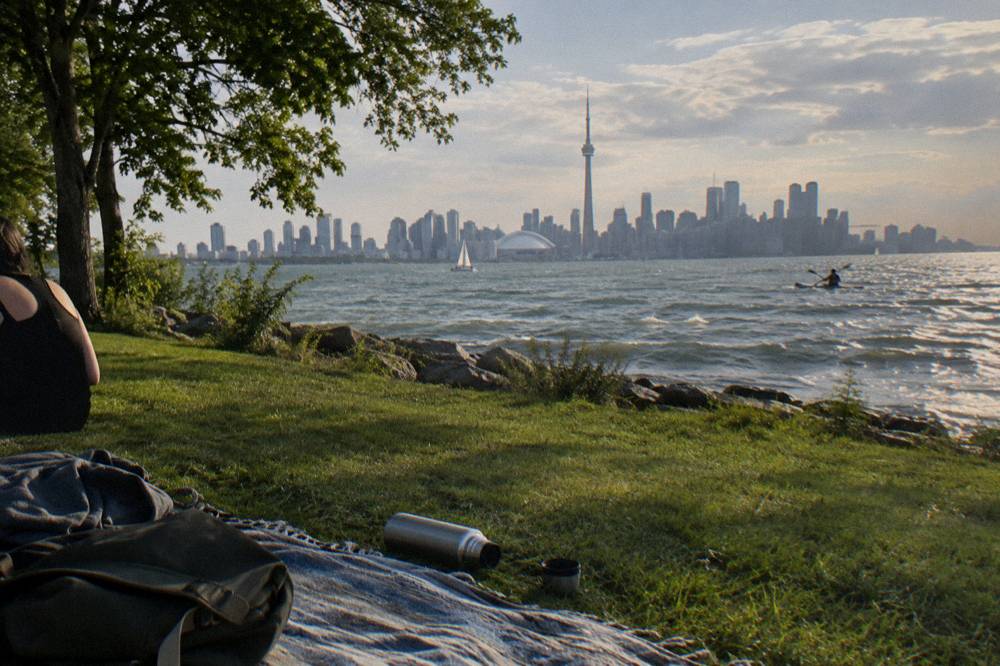
The Islands themselves are the payoff either way. Centre to Ward's is 2.9 km, about a 35-minute walk, which on a bike is minutes, and the car-free island roads are the safest novice cycling in the city. Ride durations, inclusions such as snacks, and bike type for each tour are listed on the booking page, so match the day's shape to your energy rather than guessing.
Do You Need A Car At Your Hotel?
No, and for a cycling trip a car is usually a liability. Toronto's on-street cycling network stood at 346 km in December 2025, with another 399.3 km of multi-use trails, and the airport is connected to downtown by rail links; the trail, the ferry and the downtown meeting points are all reachable on a bike or on foot from the recommended bases. Parking a car downtown costs money every night just to sit unused while you ride.

Arriving by air, you can be at a waterfront hotel without a vehicle, and from there the geometry of this guide takes over. The case for going car-free, transit links included, is laid out in getting around Toronto without a car. If you do drive in, ask your hotel about secure bike storage and check whether the property sits on the trail side or the canyon side of the core, because that single detail shapes every ride you start from it.
Riding rules are provincial and simple to respect. Ontario law requires riders under 18 to wear an approved helmet, and requires a bell or horn plus lights or reflectors after dark, per the province's bicycle safety page. Riding on sidewalks is not allowed, with an exception for children under 10. E-bike riders must be 16 or older, helmeted, and limited to 32 km/h assisted speed. None of this affects where you sleep, but it affects the gear you pack for the hotel.
| Base | Car needed? | Airport to hotel | Best first ride from the lobby |
|---|---|---|---|
| Harbourfront | No | Rail to downtown, short transfer | Martin Goodman Trail west |
| Downtown core | No | Rail to downtown | Ride to the harbour meeting points |
| Distillery area | No | Rail plus streetcar or short ride | Trail east through the port lands |
| Kensington area | No | Rail plus streetcar | Market streets, then west end |
| Leslieville | Optional | Rail plus streetcar | Eastern beaches trail |
When Is The Best Season To Book A Cycling Hotel?
Book May through September for full riding weather and the complete ferry network, with the sweet spots in late May, June and September when the trail is quieter. July and August bring the warmest normals, highs near 27.0 C, but also the busiest ferry queues and trail traffic. Winter stays possible on the trail itself, though island access narrows to Ward's Island only from mid-October to mid-April.
The climate normals argue for shoulder-season confidence. September's mean high of 22.0 C with about 7.7 days of measurable precipitation makes it arguably the best cycling month in the city, and May's 18.8 C is close behind with 9.3 wet days. June, July and August all sit between 24 and 27 C mean highs with 7 to 8 wet days each; the riding is superb, but you share the trail and the ferry dock with the summer peak. November, at an 8.1 C mean high and 9.0 wet days, belongs to the committed.
Demand follows events as much as weather. The FIFA World Cup summer of 2026 showed what a mega-event does to this city: roughly 250,000 fans attended six matches at Toronto Stadium, more than 350,000 people visited the 23-day Fan Festival, and Destination Toronto later reported international visits up 17 percent for May through July against the prior year, with UK visits up 46 percent and German visits up 59 percent. Hotel rates in such weeks punish late bookers, so if your dates collide with a festival, book the room before the ride.
Seasonal depth, including month-by-month normals, is in the best time of year to cycle in Toronto, and the broader visit-timing question in the best time to visit Toronto.
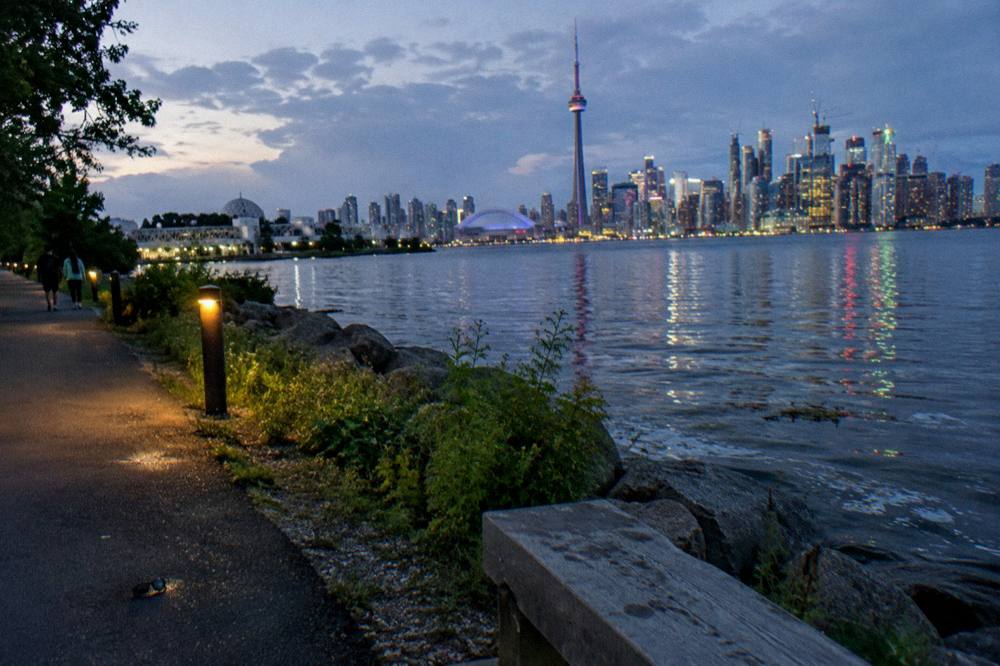
Whatever the month, the base rule holds: sleep beside the riding, not beside the attractions. A room on the waterfront converts every spare hour into trail kilometres and puts the ferry, the guided ride meeting points and the Distillery within one continuous car-free corridor. A room elsewhere converts those hours into commuting.
Common Questions About Where To Stay In Toronto For A Cycling Trip
Where Should Cyclists Stay In Toronto?
Most riders do best on the central waterfront between the ferry terminal and the Distillery District, or in the downtown core just behind it. That strip puts the Martin Goodman Trail, the Jack Layton Ferry Terminal and the guided rides' meeting points all within a short ride.
Which Neighbourhood Is Closest To The Guided Ride Meeting Points?
The downtown core and the harbour edge. Downtown neighbourhood rides gather centrally, and the waterfront and Islands rides assemble at the harbour. Confirm each ride's exact meeting point on its booking page before choosing a hotel.
Do I Need A Car For A Cycling Trip In Toronto?
No. The city's cycling network totalled 346 km on-street plus 399.3 km of multi-use trails as of December 2025, rail links connect the airport to downtown, and the trail, ferry and meeting points are all reachable by bike or on foot from the recommended bases.
Is The Waterfront The Best Area To Stay For Biking?
For most visitors, yes. The Martin Goodman Trail runs more than 20 km along the shore from the western to the eastern beaches and passes directly by the Harbourfront hotels, giving you car-free riding outside the lobby.
Can I Take A Rental Or Bike Share Bike To The Islands?
Personal bikes ride the ferry free and are welcome, walked on and off. Bike Share bicycles are not permitted on the ferries, and the islands have their own Bike Share stations and rental operators.
When Should I Book A Hotel For A Toronto Bike Trip?
Target May through September for full ferry service and warm riding, with late May, June and September as the quieter sweet spots. Book early if your dates overlap a major festival or event, as the World Cup summer of 2026 showed rates and demand can spike sharply.