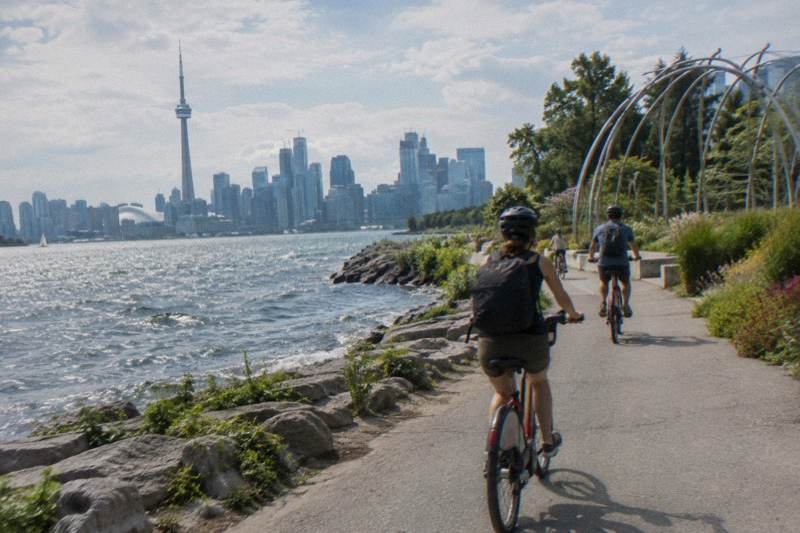
How Do You Spend A Day On Toronto Island?
A full-day plan for Toronto Island: catching the ferry with a bike, what the rules are, how to split the day between the trails, the beaches and the skyline views, and when a guided ride makes sense.
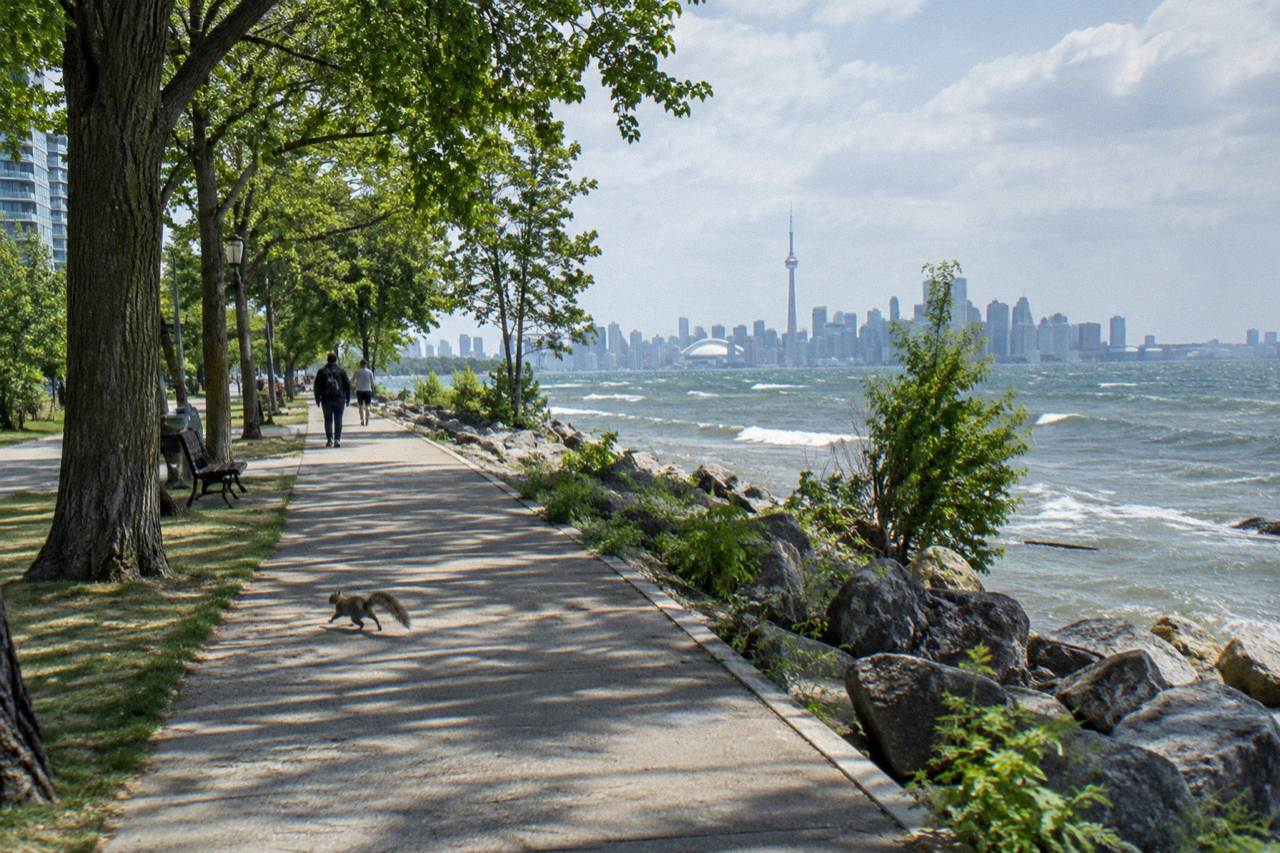
A good day runs like this: catch an early ferry from the Jack Layton Ferry Terminal, spend the morning riding the car-free island paths, pause for lunch midday, walk the beaches and gardens in the afternoon, and take a late-afternoon boat back while the skyline is still lit. The ferry round trip costs $9.57 Canadian for an adult, bikes ride along free, and there are no cars to plan around. For the full picture on two-wheeled travel, see our breakdown of bike fares and ferry rules for the island crossing.
That skeleton works in every season, but the details shift with the ferry calendar. From 14 October 2026 through mid-April 2027, boats run to Ward's Island only, with no service to Centre Island or Hanlan's Point, so a winter day looks different from a July one. In summer, mid-May to mid-September, all three routes run at full frequency and the islands fill up by late morning. The day plan below assumes the summer pattern, with notes on the shoulder seasons where they change the math.
The single biggest decision is whether you bring your own wheels, rent on the island, or join a guided ride that handles the logistics. All three work. A guided option such as the Waterfront and Islands guided bicycle tour folds the crossing into a 3.5-hour outing, which suits visitors who want the highlights without planning the whole day themselves.
It also matters what kind of day you want. Some travellers treat the island as a beach destination with a bike as transport between swims. Others treat it as a ride with a swim attached. The plan below splits the difference, and it bends easily in either direction once you know the ferry times, the trail layout and the rules that govern bikes on the boat.
What Time Should You Catch The Ferry?
Arrive at the Jack Layton Ferry Terminal 30 to 45 minutes before your boat, earlier on summer weekends, because sailing frequency is seasonal and queues build fast on sunny days. The adult round trip is $9.57 Canadian, youth and older adults pay $6.15, juniors $4.51, and infants ride free. Bikes are welcome on board at no extra charge; you just walk them on and off.
Those fares are the verified City figures, and they are round trips, not one ways, so buy once and keep the ticket. Online tickets stay valid to the end of the year. Monthly passes exist but only at the terminal, which rarely matters to a visitor spending a single day. The City's ferry ticket page lists the full fare table.
Timing matters more than most first-time visitors expect. Summer sailings are frequent, but August 2026 set a record with more than 423,000 monthly ferry trips, helped by free senior and youth rides that pushed senior ridership up roughly 60 percent and youth ridership up roughly 44 percent. A crowd like that does not ruin the day, but it does mean the 10 a.m. boat on a Saturday can leave you standing in line while your morning evaporates. Go early, or go after the midday rush, and let the beach crowds have the peak crossings.
The terminal sits at the foot of Bay Street, reachable on foot from downtown hotels and by transit from farther out. Nothing about the crossing itself takes long; the schedule, not the sailing, is the constraint that shapes the day. First departures in the winter pattern leave the city side around 6:30 a.m., with boats running until late evening, so even the reduced season gives you a wide window.
Winter changes the picture entirely. Ward's Island service from 14 October 2026 runs from a first departure around 6:30 a.m. from the city until late evening, roughly every 15 minutes at peak, but there is no Centre Island or Hanlan's Point boat until spring reduced service resumes around mid-April. Check the City sailing schedule before any off-season trip, because the route you planned around may simply not exist.
| Ferry fact | Figure | Notes |
|---|---|---|
| Adult round trip | $9.57 | Canadian dollars, ages 20 to 64 |
| Older adult and youth round trip | $6.15 | 65 and over, or 15 to 19 |
| Junior round trip | $4.51 | Ages 2 to 14 |
| Infant | Free | Under 2 |
| Bicycles on board | Free | Walked on and off |
| Winter routes | Ward's Island only | 14 October 2026 to mid-April 2027 |
| Summer routes | All three | Mid-May to mid-September |
How Does The Bike Situation Work On The Island?
Private bicycles ride the ferry free and are walked on and off; Bike Share bikes from the mainland are not permitted on the ferries, though Bike Share stations exist on the islands themselves. E-bikes come aboard at staff discretion, must be powered off, and riders with larger e-bikes, roughly 40 kg and over, may be directed to the vehicle ferry.
Once you land, the islands are car-free except emergency and commercial vehicles, which is the whole reason a bike day here works so well. Paved and gravel trails connect the three main islands, and the distances are short enough that a relaxed pedaller covers the spine of the chain well within a morning. The City pegs Centre to Ward's at 2.9 km, about a 35 minute walk, so on two wheels that becomes a few easy minutes. Nothing on the island demands speed, and the flat terrain means a single-speed rental or a borrowed bike copes fine.
Ontario's cycling rules apply. Riders under 18 must wear an approved helmet, bikes need a bell or horn, and night riding calls for a white front light and a red rear light or reflector. Riding on sidewalks is not allowed, though children under 10 may ride the sidewalk. E-bike riders must be 16 or older, helmeted, and the motor cannot assist past 32 km/h; the province caps e-bike motors at 500 watts and machine weight at 120 kg. The province's own bicycle safety page spells out the equipment list in full, and the e-bike rules page covers the powered side.
If you arrive without a bike, rentals operate on the island through Toronto Island Bicycle Rentals, and Bike Share stations stand at key island spots, which is a workable plan B for a spontaneous trip. The mainland trail network is a separate pleasure; the Martin Goodman Trail alone traces more than 20 km of waterfront, part of a network of over 300 km of trails within the city, as our Martin Goodman Trail cycling guide details. Visitors weighing rental against a guided ride may also find our comparison of island bike rental versus a guided ride settles the question, since a guided outing bundles the bike, the crossing and the route into one booking.
Lock the bike when you step away from it, even on a car-free island. Other visitors pass through, and an unattended bike near the ferry dock is an easy thing to wander off with, in the innocent sense or otherwise. A simple cable lock weighs nothing and removes the worry from a two-hour beach stop.
What Does A Realistic Hour-By-Hour Day Look Like?
Start with a ferry around 9 or 9:30 a.m., ride the Centre Island and Ward's Island trails through the late morning, eat around noon near the ferry-side amenities, spend the afternoon on the beaches and the far-west views, and sail back between 4 and 6 p.m. That pace leaves slack for a swim, a long photo stop, or a detour without ever feeling rushed.
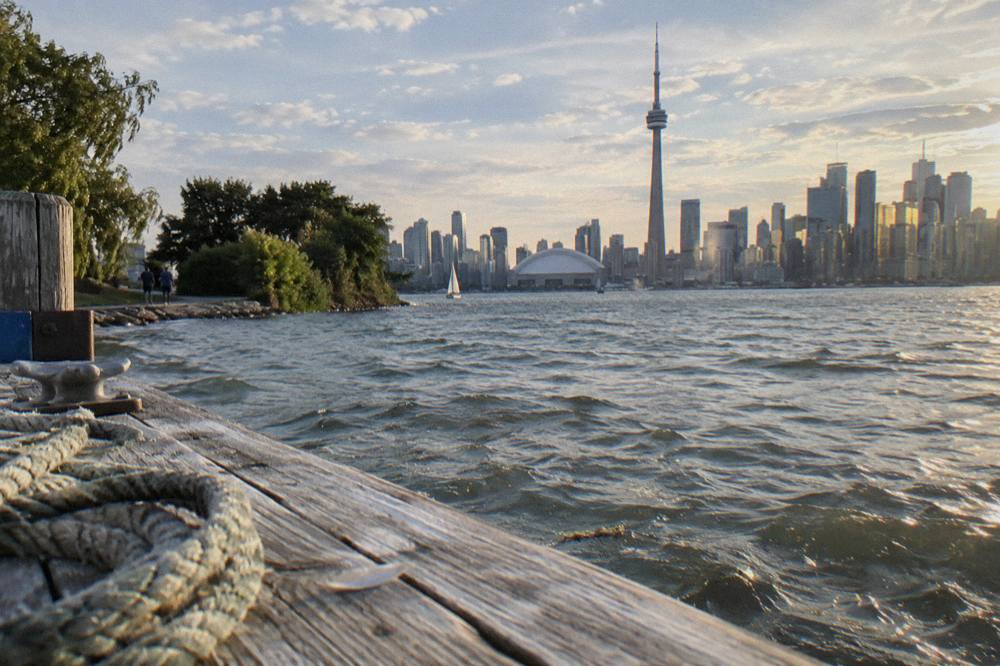
The morning deserves the bike. The islands' flat, car-free paths are at their quietest before the late-morning boats land, and the skyline views from the south-facing shores photograph best before haze builds. A loop that touches Centre Island's gardens, the boardwalk stretches and the channels between islands can fill two unhurried hours, longer if you stop every time the city reappears between trees, which you will. Ride the loop in either direction; westbound toward Hanlan's gives you the open lake first, eastbound gives you the skyline. The full index of guides sits on Bike Tours Toronto.
Midday, trade wheels for walking. Anchor the bikes, find lunch, and let the busiest ferry hours pass while you sit still. The island's food options are seasonal and no specific vendor, hut or café can be promised here, because those details shift year to year; packing a picnic is the never-fails option, and many riders do exactly that. A cooler in a pannier turns any shaded bench into lunch with a harbour view.
The afternoon belongs to the edges. Hanlan's Point side delivers the open-water horizon, the east side faces the harbour and the city, and the beaches sit in between. Washrooms at key spots stay open year-round, per the City's island pages, which is about the only amenity claim that holds in every season. Wind the day down toward the dock by late afternoon so you are not racing the last boat, which in the winter Ward's-only schedule leaves the island side around 11:45 p.m. but rewards nobody who cuts a plan that fine.
Families should budget differently. With juniors along, the ferry fare stays modest at $4.51 each way round trip and infants free, but the day compresses: one good beach, one snack stop, one short ride, done. Trying to complete the full loop with tired children turns a nice day into a negotiation. Pick a base near the dock and let the kids set the radius.
A shoulder-season version of this schedule shifts earlier. From 14 October 2026 until mid-April 2027, service runs to Ward's Island only, and the first boat leaves the city around 6:30 a.m., so early risers get the paths nearly to themselves. Budget the crossing ahead of time: an adult round trip costs $9.57 in Canadian dollars, with older adults and youth at $6.15, numbers that make the ferry the easiest part of the day to plan.
Late-fall riders should pack for the normals, not the forecast alone. November in Toronto City averages a high of 8.1 C and a low of 2.3 C, so layered clothing, a wind shell and a hot drink earn their pannier space next to the picnic. Planners should also watch the fleet news: the electric ferry Lady of the Quays is expected in late 2026 and Toronto Islander in 2027, the first new ferries in over 60 years, so confirm departure times with the City before you lock the schedule.
| Time block | Activity | Why it works |
|---|---|---|
| 8:30 to 9:30 a.m. | Ferry crossing | Beats the late-morning queue |
| 9:45 to 11:45 a.m. | Island trail loop by bike | Quietest, coolest riding window |
| Noon to 1:30 p.m. | Lunch, bikes locked | Peak ferry crowds pass without you |
| 1:30 to 4 p.m. | Beaches and shoreline walks | Slow pace suits the warmest hours |
| 4 to 6 p.m. | Return sailing | Skyline in afternoon light |
When Is A Guided Ride The Better Version Of The Day?
A guided ride earns its cost on a first visit, a short trip, or any day when you would rather not solve the ferry, the route and the bike at once. The 3.5-hour guided bicycle tours covering the waterfront and the islands fold the crossing into the outing, supply the bike, and hand you a route someone else has already tested.
The Waterfront and Islands guided bicycle tour is the natural fit for the single-day visitor: it starts on the mainland trail, crosses to the islands, and returns within 3.5 hours, leaving you the rest of the day to revisit whatever the guide showed you. Pricing and departure details sit on the booking page rather than in a fixed figure here, so check current availability before building your ferry timing around it.
Riders who prefer the islands alone, without the mainland trail portion, have a morning and twilight islands ride that runs the same 3.5-hour length and lets you pick the light you want. A separate morning islands listing covers similar ground; the two are the same operator product sold through different listings, so treat any price gap as a listing difference, not a quality verdict. Either one slots neatly into the first half of the day plan above.
The twilight departure deserves a special mention for photographers. Late light across the harbour changes the character of the skyline completely, and a guided evening ride means you are not watching the clock toward the last sailing on your own. The trade is simple: you give up the flexibility of a self-planned afternoon in exchange for not managing timing, route and equipment at sunset.
For the deeper planning questions, the ferry-and-bike mechanics are covered in full in taking the ferry with a bike, and the seasonal timing trade-offs in sunrise, morning and twilight island rides.
What About Weather And Season?
July and August are the reliable warm months, with average highs of 27.0 C and 26.1 C respectively and lows that barely dip below 17 C, while May, June and September stay pleasant with highs from 18.8 C to 24.2 C. Every summer month still averages seven to nine days with at least 1 mm of rain, so a backup plan beats a forecast-free plan.
Those figures are the Environment Canada 1991 to 2020 climate normals for Toronto City, which describe the long-run pattern, not any particular week. On the ground they mean a summer day plan is safe from cold but not from a shower, and the islands offer limited shelter once you are mid-loop. A light shell in the pannier solves it. June carries the wettest normals of the summer at 81.6 mm, but it also spreads that over only 8.4 days with measurable rain, so odds still favour a dry ride.
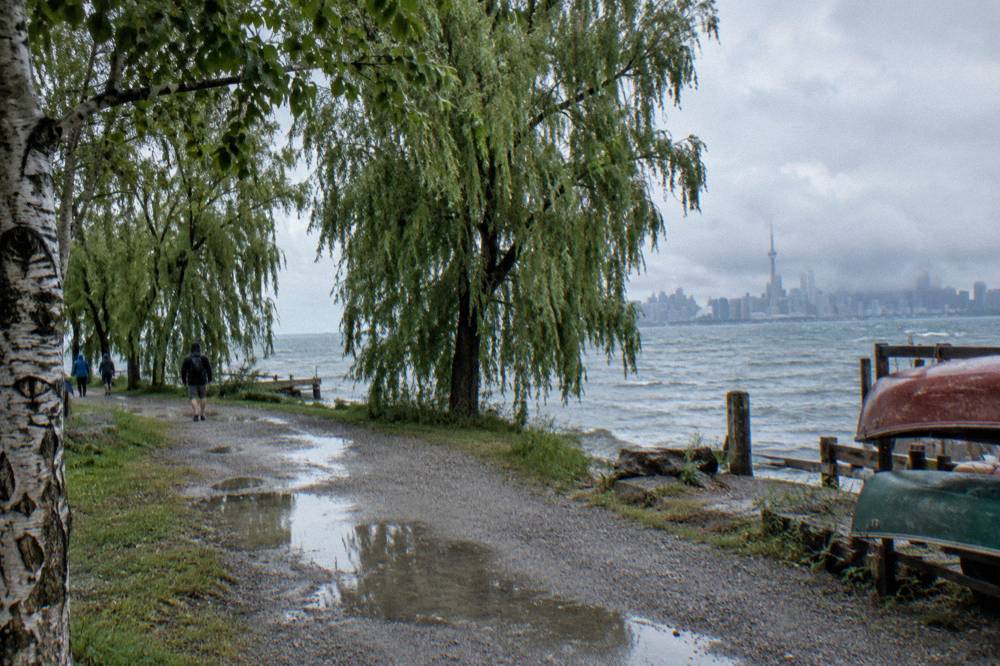
Shoulder seasons reward flexible timing. October's average high of 14.6 C is fine for riding, and late October 2026 even produced a 22.2 C reading at Pearson that broke a 1946 daily record, but from mid-October the ferry drops to Ward's Island only, which rewrites any Centre Island plan. November's 8.1 C average high suits a short, wrapped-up ride more than a full beach day. April warms to an 11.7 C average high but remains in the reduced-spring ferry pattern until mid-May. Our broader month-by-month take lives in the guide to the best time of year to cycle in Toronto. Those ferry swings change which landing suits you, so check our guide to which Toronto Island fits your day before you finalize the route.
Winter visits are a different product altogether: quiet trails, bare trees, a single ferry route, and washrooms at key spots still open. Some visitors love exactly that version of the island, and the Ward's Island neighbourhood itself keeps a year-round community that the winter schedule exists to serve. What no one should do is show up at the terminal in January expecting the Centre Island loop, because that boat is not running until spring.
What Should You Bring For A Full Day?
Bring your bike or plan a rental, a lock, water, a picnic or lunch money, sunscreen, a light rain layer, and the ferry fare in hand. Helmet requirements follow Ontario law, under-18 riders must wear one, and any bike used after dark needs front white and rear red lighting, though a summer day plan finishes well before dark.
Bike Share is not the answer here for mainland riders, since those bikes cannot board the ferry; either bring your own, rent on the island, or let a guided tour supply the equipment. E-bike riders should note the powered-off rule on board and the roughly 40 kg threshold that can send a larger machine to the vehicle ferry, details our page on choosing an e-bike or a regular bike walks through.
Beyond the bike, the packing list is ordinary day-trip gear. The islands have no private vehicles, so everything you carry, you carry or mount on the bike. Comfortable shoes matter if the afternoon swaps riding for beach walking, and a refillable bottle matters because a hot July loop, at a 27 C average high with humidity, drains you faster than the flat terrain suggests. Swimwear, a towel and sunscreen earn their space from June through early September.
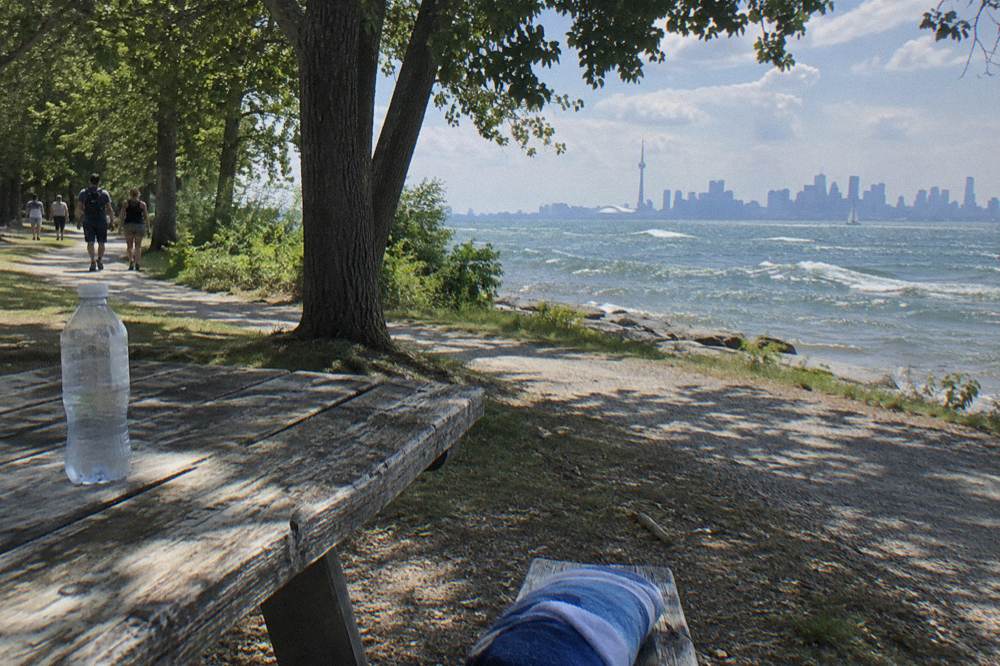
One forward-looking note for repeat visitors: the City's first new ferries in over 60 years are arriving, with the electric Lady of the Quays expected in service after testing into spring 2027 and a second vessel, the Toronto Islander, to follow. Charging infrastructure at the terminal is targeted for completion by the end of 2026. Sailing capacity should improve in time, but nothing about the day plan changes until then. Planning a return trip around fresh boats is reasonable; more on getting around the city on two wheels in cycling in Toronto as a visitor.
Common Questions About A Day On Toronto Island
How Do You Spend A Day On Toronto Island?
Catch an early ferry with a bike, ride the car-free island paths through the morning, break for lunch midday, then spend the afternoon on the beaches and shoreline viewpoints before a late-afternoon boat back. The adult round-trip ferry fare is $9.57 Canadian and bikes board free.
How Much Is The Ferry To Toronto Island?
The round trip costs $9.57 Canadian for adults, $6.15 for older adults and youth aged 15 to 19, $4.51 for juniors aged 2 to 14, and infants ride free. Bicycles are carried at no charge.
Can I Take A Bike On The Toronto Island Ferry?
Yes. Bicycles are welcome on board and ride free; you walk them on and off. Bike Share bikes from the mainland are not permitted, and e-bikes travel at staff discretion, powered off, with larger e-bikes of roughly 40 kg or more possibly directed to the vehicle ferry.
How Much Time Do You Need At Toronto Island?
A full day is comfortable and a half day is workable. The islands are small and car-free, so a relaxed rider covers the main trail network in a morning, but beaches, gardens and skyline stops easily fill the afternoon.
Is Toronto Island Open All Year Round?
Yes, but winter service from 14 October 2026 runs to Ward's Island only until mid-April 2027, with no boats to Centre Island or Hanlan's Point. Full three-route service returns mid-May and runs to mid-September.