How Much Does It Cost To Take A Bike On A Ferry In Toronto?
Bikes ride free on the Toronto Island ferry and passengers pay by age in Canadian dollars. Here is every fare, the bike rules, and what a guided islands ride adds.
In Toronto the bicycle itself is free to bring on the Island ferry: the City's ticket page lists passenger fares only, charged by age and paid in Canadian dollars for the round trip. An adult pays $9.57, an older adult or youth pays $6.15, a junior aged two to fourteen pays $4.51, and an infant rides free. There is no separate bicycle line on the published fare table. If you're wondering whether the island itself justifies the crossing, our guide to whether Toronto Island is worth the trip weighs the ferry cost against what you actually get once you land.
That single fact surprises a lot of visitors who arrive expecting a bike surcharge similar to the ones charged on some intercity and overseas ferry services. Toronto's Island ferries are a municipal transit service run by the City, and the City prices the crossing per person, not per item. Strollers, wagons and paddle craft travel under the same policy, and the ticket page states plainly that bicycles are welcome on board.
The fares above are round trip, in Canadian dollars, and the same ticket is valid at any island dock for the return sailing, which matters because the winter schedule serves only one island landing. Tickets bought online stay valid to the end of the year, so an unused return leg is not lost money if your plans shift. The authoritative source for the numbers is the City's own ferry ticket and passenger information page, and it is worth a final check there before you travel, since municipal fares can change.
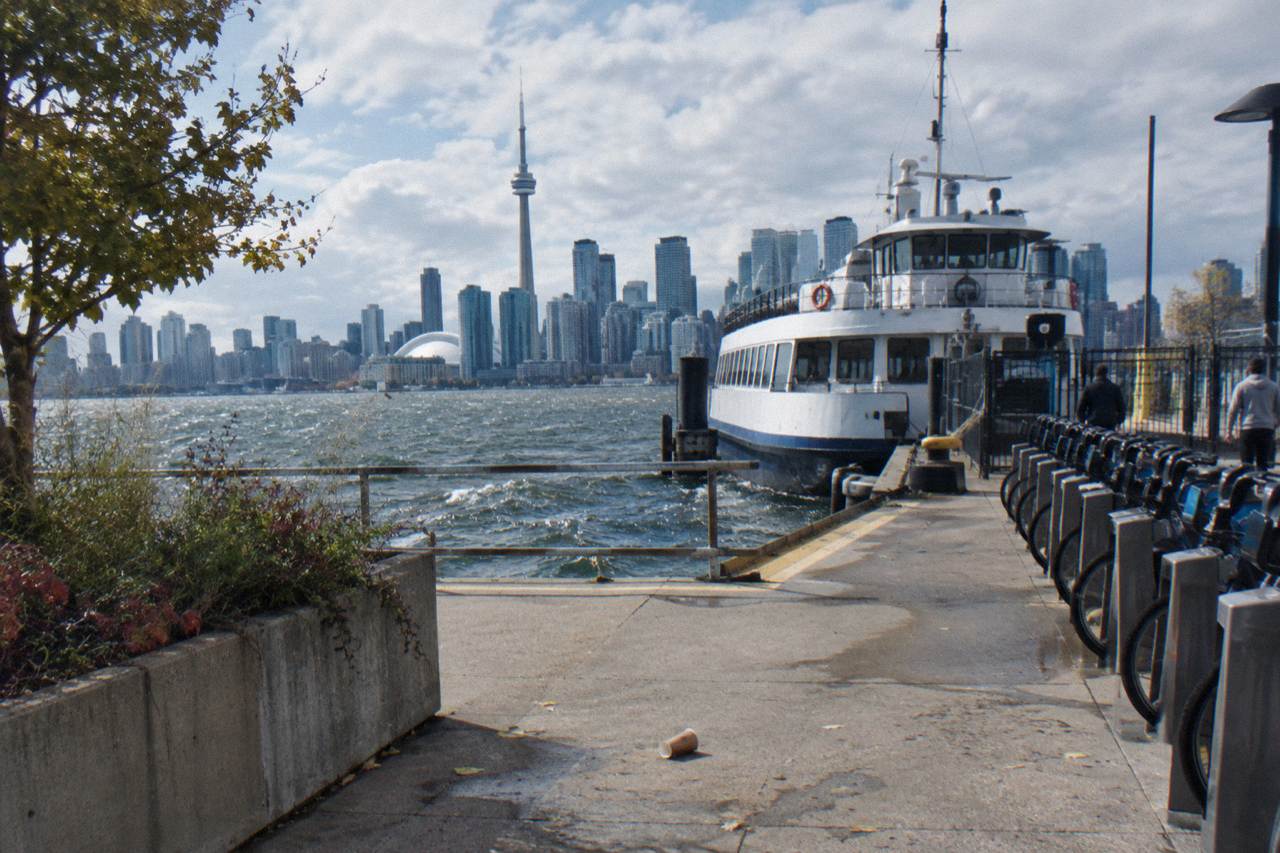
There is a reason the City can keep the bicycle line off the fare table at all. The ferries are short-haul walk-on vessels designed around foot traffic and rolled items rather than vehicles, and the only motor vehicles on the islands are emergency and commercial ones. That design makes boarding a bicycle about as complicated as boarding with a stroller: you queue, you walk it on, you lean it in the open deck area, and you walk it off at the far side. Nothing in that flow generates a fare category.
If reading a fare table is not how you want to spend a morning, a guided ride folds the crossing into the day. The options below pair the ferry logistics with a guide who knows the island paths.
One planning note belongs right at the top. This article covers the Toronto Island ferry, the crossing most cyclists here actually take. Ferry services in British Columbia, Washington State and elsewhere set their own bicycle policies and surcharges, and none of those figures transfer to Toronto, so treat everything below as a Toronto answer only.
How Much Does It Cost To Take A Bike On A Ferry?
Repeating the core answer with the ticket mechanics: you pay nothing for the bicycle and only the passenger fare for yourself, round trip, in Canadian dollars. Adults pay $9.57, older adults and youth $6.15, juniors $4.51, and infants are free. Monthly passes exist but are sold only at the terminal, with an adult pass listed at $121.64, a poor fit for a visitor taking two or three crossings.
The walk-on process is simple and the City's rules are specific. Cyclists walk their bicycles when boarding and when disembarking, which keeps the loading ramp orderly during the busy summer sailings. Bike Share bicycles are not permitted on the ferries at all, a rule that catches plenty of riders who assume any two-wheeler qualifies. The full bicycle clause sits on the same City ticket page linked above, alongside the age-based fare table.
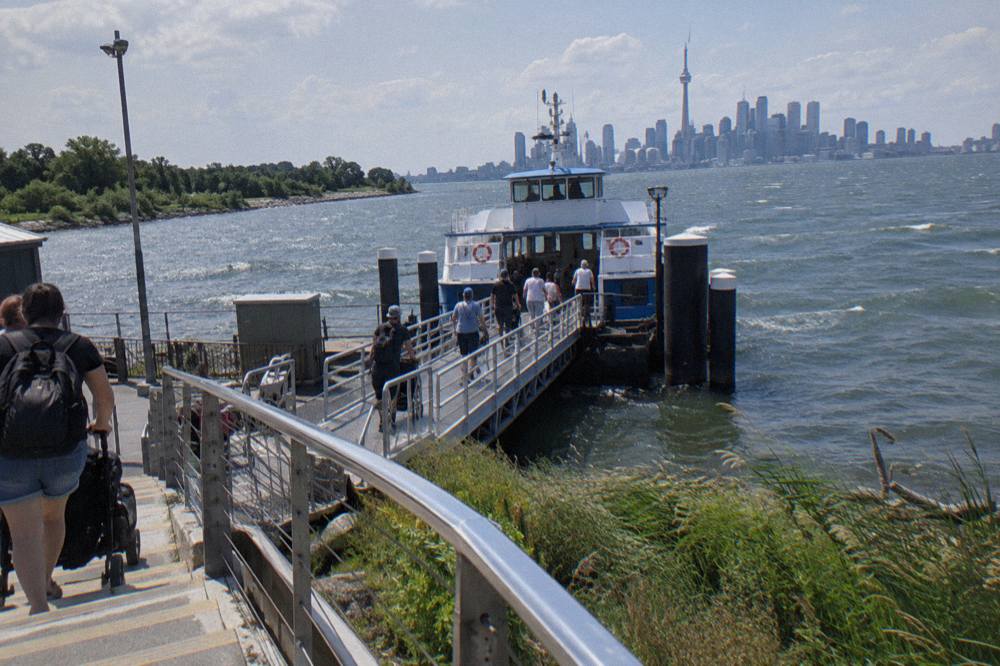
Ticket timing is where costs can drift upward for the unprepared. The peak summer sailings fill, and the terminal queue can stretch on weekend afternoons, so buying online ahead of your travel day saves waiting time even though it does not change the price. Online tickets remain valid through the end of the calendar year, which gives you flexibility if weather turns. Our companion piece on how long the Toronto Island ferry wait gets breaks down the queue patterns by season and day of week.
Payment logistics are worth sixty seconds of planning. The terminal accepts payment at the booth, and online purchases tie your ticket to the calendar year rather than a specific sailing, so a same-day impulse ride and a planned August excursion use the same product. Riders who expect to cross repeatedly, island residents aside, rarely benefit from the terminal-only monthly passes, since a visitor would need well over a dozen round trips in a month before the pass price beats the per-crossing fares.
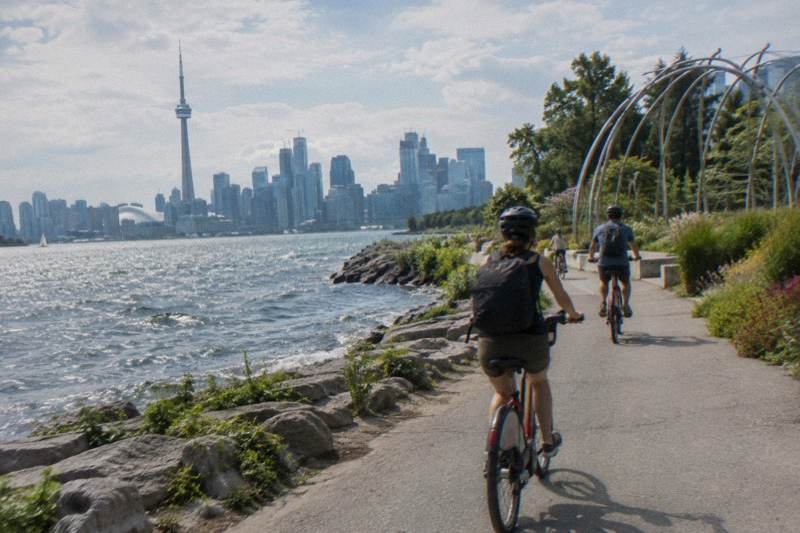
The queue itself is also a cycling-infrastructure story. The terminal sits at the foot of Bay Street, where the downtown bike network delivers riders almost to the gangway, and the neighbouring sections of the Martin Goodman Trail form part of a 20-plus km waterfront corridor running from the western to the eastern beaches. Arriving by bike is not an afterthought here; it is the way the geography is built. More on that in our Martin Goodman Trail cycling guide.
A guided ride sidesteps the whole ticket question for many visitors, since the operator builds the crossing into the itinerary. That is the single biggest money-and-time argument for a tour when you are only in the city for a weekend.
Which Ferry Fare Applies To Your Age Bracket?
Every rider pays according to their own age, and the brackets are wide: adults aged twenty to sixty-four pay $9.57 round trip, older adults sixty-five and over pay $6.15, youth aged fifteen to nineteen pay $6.15, juniors aged two to fourteen pay $4.51, and children under two travel free. No matter how the group is composed, the bicycles themselves never add a cent to the total.
Here is the full fare table as the City publishes it, in Canadian dollars, round trip:
| Passenger category | Age range | Round-trip fare (CAD) |
|---|---|---|
| Adult | 20 to 64 | $9.57 |
| Older Adult | 65 and over | $6.15 |
| Youth | 15 to 19 | $6.15 |
| Junior | 2 to 14 | $4.51 |
| Infant | Under 2 | Free |
| Bicycle | Any age | No separate charge |
Two fine points are worth knowing before you count out coins. First, the fares are Canadian dollars, not the US dollars shown on tour booking pages elsewhere on this site, so do not mix the two when budgeting a day. Second, the free-ride promotions the City has run in past summers, including free senior and youth travel one August, were time-limited programs; assume the published fares unless the City's ticket page says otherwise on the day you book.
Those promotions had a measurable effect, which tells you something about how price-sensitive this crossing is. Free senior and youth rides in August 2026 helped drive more than 423,000 ferry trips in a single month, a record, with senior ridership up about 60 percent and youth ridership up about 44 percent against the usual pattern. When the City removed a few dollars from the fare, the docks filled. A visitor planning a single round trip should simply budget the standard table above and treat any promo as a bonus.
The arithmetic also explains why a guided ride can be competitive on value. Add the age-bracket fares for your group to a mainland bike rental and the numbers climb with every rider and every hour, while a guided islands ride sets one per-person price covering the bike, the guide and the crossings. The full picture is in our guide to Toronto Island bike rental or a guided ride.
Families should note one small practicality inside the brackets: the junior fare starts at age two, so a toddler in a child seat or trailer rides as an infant, free, and the trailer itself falls under the same no-charge policy as any stroller or wagon. The fare table does not distinguish between a balance bike and a road bike either; if it rolls and you walk it on, it is a bicycle for the purposes of boarding.
One of the most convenient ways to hand the whole crossing to someone else is the Waterfront and Islands guided bicycle tour, which strings the harbour trail, the island paths and the Distillery District into a single 3.5-hour loop.
Can You Take E-Bikes And Bike Share Bikes On The Ferry?
E-bikes are welcome aboard at the discretion of ferry staff, must be fully powered off for the crossing, cannot be charged on board or at the terminal, and riders with larger e-bikes of roughly forty kilograms or more may be directed to the vehicle ferry instead. Bike Share bicycles are flatly not permitted on any ferry, so plan a docking station before you ride to the terminal.
The e-bike clause matters more every year as visitors arrive on rented and personal electric bikes. Ontario sets the machine's legal limits elsewhere, and the City's ferry rules govern the crossing itself. The provincial rules are on the official City ferry ticket page alongside the fare table, and Ontario's broader e-bike requirements, a rider sixteen or older, a helmet, a 32 km/h assisted-speed cap and a 500-watt motor limit, are on the Ontario e-bike rules page.
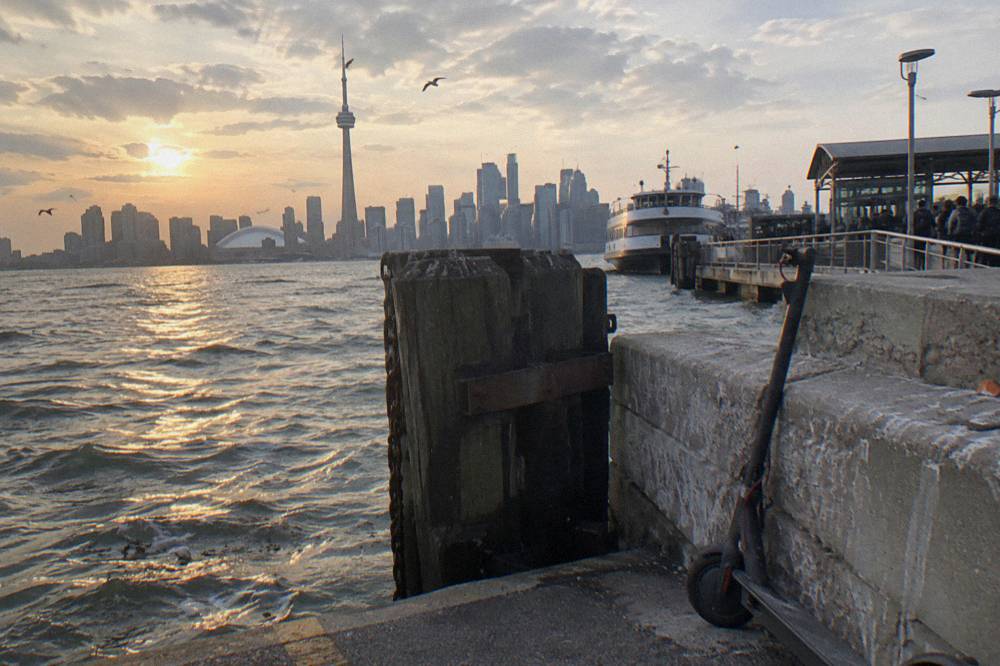
The practical takeaway for tourists is to match the machine to the trip. If your e-bike is a heavy cargo or dual-suspension model, the island park's own weight limit, which bars e-bikes over about forty kilograms from the park paths, makes the passenger ferry the wrong choice regardless of fare. Lighter city e-bikes roll on without fuss, powered down and walked on the ramp like any other bicycle. Bike Share riders should dock before the terminal and either walk on as pedestrians or rent wheels on the island, where Bike Share stations and a commercial rental shop operate. Everything else covered here is indexed on Bike Tours Toronto.
The powered-off requirement deserves emphasis because it is the one riders most often miss. The rule is not a soft suggestion: the City's page states that e-bikes must stay fully powered off on board, and that charging is prohibited both on the ferry and at the terminal. Riders who show up with a depleted battery hoping to top up while crossing will be disappointed, so charge at your hotel and treat the crossing as dead time for the motor. None of this costs money, but it can cost a detour.
If pedalling unassisted for three and a half hours sounds like more than you want, an electric-assist guided ride exists through the downtown neighbourhoods, and our comparison of e-bike or regular bike on a Toronto tour walks through the trade-offs. That question is separate from the ferry, since the guided islands rides themselves use standard bicycles. If you're planning the rest of your day, our guide to how long it takes to bike around Toronto Island covers what affects the timing, from ferry schedules to seasons.
When Does The Ferry Run, And Does The Schedule Change The Cost?
The price never changes with the season, but the schedule does: from 14 October 2026 through mid-April 2027 the ferry serves Ward's Island only, while full three-route service to Centre Island and Hanlan's Point runs mid-May to mid-September, with reduced spring and fall sailings between. Your round-trip ticket is valid at any dock, so a winter crossing costs the same but lands you at a different island doorstep.
The seasonal pattern, published on the City's ferry routes and schedules page, looks like this across a full year:
| Period | Service pattern | Island landings served |
|---|---|---|
| Mid-May to mid-September | Full summer schedule, all routes | Centre Island, Hanlan's Point, Ward's Island |
| Mid-April to mid-May | Reduced spring service | All three routes, fewer sailings |
| Mid-September to 14 October | Reduced fall service | All three routes, fewer sailings |
| 14 October to mid-April | Winter schedule | Ward's Island only |
Winter riders get frequent sailings on the single route, with first departures in the early morning and service running late into the evening, because Ward's Island is a year-round residential community and the ferry is its transit lifeline. The district itself stays quiet through the cold months, when average highs slip from 8.1 C in November to around freezing by January under the long-term climate normals, so a winter island ride is a bundled-up, empty-path experience rather than a beach day.
The shoulder seasons are quietly the best value for cyclists. In May the average high sits at 18.8 C with rain spread across roughly nine days in the month, and by September it is 22.0 C, comfortably warm for a crossing and a lap of the islands without the summer queue at the dock. June through August adds heat, with average highs from 24.2 C to 27.0 C, and bigger crowds to match. Since the fare is identical in every month, timing your visit to the shoulder season costs nothing and buys space.
A generational change is also underway on the water. The City has named its first new ferries in over sixty years, the electric vessels Lady of the Quays, expected to arrive in late 2026 with public service in spring 2027 after testing, and the Toronto Islander, a passenger-only ship planned for 2027, with charging infrastructure targeted for completion by the end of 2026. Fares have not been announced to change with the new vessels, and any future adjustment would appear on the City ticket page first.
For riders who want the island at its most atmospheric, a sunrise breakfast ride crosses early enough to beat the queues entirely, and the listing includes breakfast among its inclusions. The morning-or-twilight islands ride offers a similar crowd advantage at the other end of the day.
Is A Guided Islands Ride Better Than Paying The Ferry Yourself?
Self-ferrying costs only your age-bracket fare, $9.57 for an adult round trip in Canadian dollars, plus whatever bike you arrange, while a guided 3.5-hour islands ride wraps the crossings, the bicycle and a route through the island highlights into one per-person price on the booking page. The guided option also removes the two decisions that trip up most first-time visitors: which dock, and which paths.
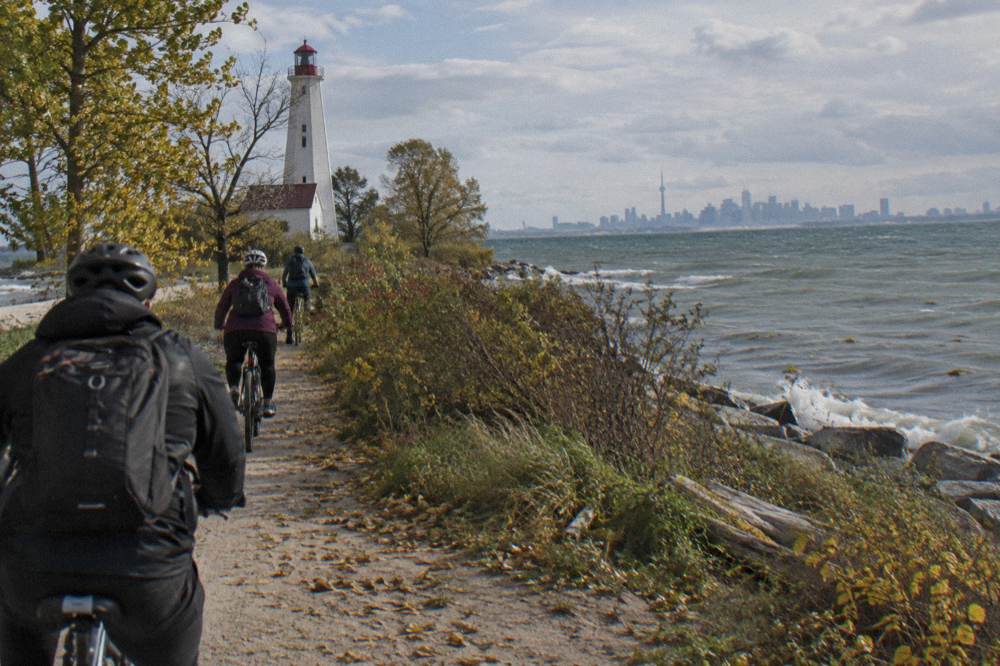
The do-it-yourself route rewards confident riders who enjoy their own navigation. You pick a sailing, walk your bike aboard, and the island's flat, car-free paths unroll from whichever dock you land at. The catch is that the island network is bigger than it looks from the city side, and time spent consulting a map is time the guided groups spend moving. Our Toronto Island ferry with a bike guide covers the self-guided version in full detail. Once you've settled on the self-guided approach, our guide to spending a full day on Toronto Island helps you pace the ride between trails, beaches, and skyline lookouts.
There is a hidden cost in the self-guided day that never appears on a receipt: the return-sailing gamble. Miss the ferry you aimed for and the wait lands squarely in your sightseeing hours, and the walk-on lanes move as one unit rather than as individual tickets scanned on arrival. Guided rides plan around the sailing times as a matter of course, which is partly why their listed durations hold steady.
The guided route rewards visitors short on time or new to the city. The Waterfront and Islands ride pairs the harbour-side trail on the mainland with the island crossings and adds the Distillery District, all inside 3.5 hours with snacks included, which is a genuinely efficient way to see three Toronto signatures in one morning. There is also a morning-or-twilight islands option for riders who want the island portion alone, with a departure window that dodges the midday terminal crowd, and a morning islands listing on the operator's other booking page for the same product under a separate listing.
Cost honesty matters here. On pure fare arithmetic, the self-guided day is cheaper for anyone who already has a bike and a plan. The guided day wins on throughput: one booking covers the machine, the route decisions and the crossings, and the operator's listing states the duration and inclusions plainly. Neither is the wrong answer; it depends whether your Toronto trip has more money or more hours in it.
Whichever way you go, the ferry fare itself will likely be the smallest line on your budget. The crossings are a few dollars per person, the bicycles ride for nothing, and the real spending happens on either side of the water, in rentals, food and time. Plan the crossing calmly and the day tends to plan itself.
Common Questions About Bike Ferry Costs
How Much Does It Cost To Take A Bike On A Ferry?
On the Toronto Island ferry, the bicycle itself costs nothing. You pay only your own passenger fare, in Canadian dollars, round trip: $9.57 for an adult, $6.15 for an older adult or youth, $4.51 for a junior aged two to fourteen, and nothing for an infant. The City's published fare table lists no separate bicycle charge.
Do I Need To Buy A Ticket For My Bicycle Separately?
No. The City's ferry ticket page prices the crossing by passenger age only, and its bicycle clause welcomes bikes on board without a fee. You walk the bicycle on and off, and the fare you buy for yourself covers the round trip.
Are The Ferry Fares In Canadian Or US Dollars?
Canadian dollars. Tour prices quoted on booking pages elsewhere are typically shown in US dollars, so keep the two currencies separate when you budget a day. A quick check of the City ticket page before travel confirms the current figures.
Can I Take My Bike Share Bike On The Ferry?
No. Bike Share bicycles are not permitted on the ferries under any circumstances. Dock the bike on the mainland before the terminal; the islands have their own Bike Share stations and a rental operation if you want wheels after crossing as a foot passenger.
Does The Ferry Cost More With An E-Bike?
There is no e-bike fare, but there are conditions. E-bikes board at staff discretion, must be powered fully off, cannot be charged on board or at the terminal, and larger e-bikes of roughly 40 kilograms or more may be directed to the vehicle ferry.
Does The Ferry Price Change In Winter?
No. Fares stay the same year round; what changes is the schedule. From 14 October 2026 to mid-April 2027 the ferry serves Ward's Island only, with full three-route service returning from mid-May to mid-September. Your round-trip ticket remains valid at any island dock.