Best Time To Visit Toronto
The best time to visit Toronto depends on what you want from the trip: lake weather, festival crowds, ferry schedules to the Islands, or a long window for riding. Here is how the months actually compare.
Short answer
For warm weather and full ferry service, mid May to mid September is Toronto's core summer window, with July and August averaging highs of 27.0 C and 26.1 C. June, September and early October trade smaller crowds for comfortable riding temperatures. Winter runs November through March, with January averaging a high of -0.3 C, but the Distillery Winter Village and Cavalcade of Lights keep the city busy.
Most visitors compress Toronto into the stretch between the May long weekend and the first cold nights of October, and that instinct is broadly right: those months hold the city's warmest lake weather, its full three-route Island ferry service and nearly all of its outdoor festival calendar. But the best time to visit Toronto is really a question about trade-offs. August gives you the highest odds of a 26 C afternoon and the longest queues at the ferry terminal. September gives you water that is still swimmable, trails that have thinned out and an average high of 22.0 C. February gives you a 0.6 C average high, an outdoor skating rink at Nathan Phillips Square and hotel rates that reflect the season.
This guide walks through the year month by month, using Environment Canada's 1991 to 2020 climate normals for Toronto City rather than forecasts, and folds in what the 2026 event calendar and visitor numbers actually showed. Because this is a cycling site, the riding season gets its own section, including when the Islands ferry runs all three routes and when it drops to Ward's Island only. Prices for guided rides change by season, so figures for tours live on the booking pages rather than here.
When Is The Best Weather In Toronto?
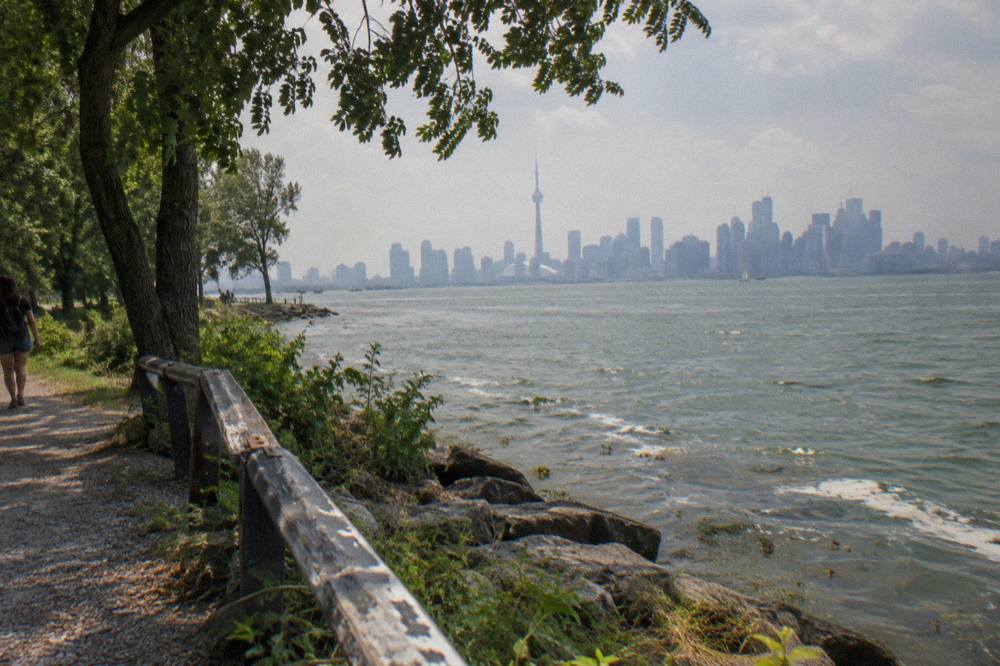
The best weather in Toronto runs from mid June through early September, when average daily highs climb from 24.2 C in June to 27.0 C in July, ease to 26.1 C in August and settle at 22.0 C in September, with 7 to 8 days of measurable rain per month. These figures are 30-year climate normals rather than forecasts.
Toronto's summer is warmer than many visitors expect for a Canadian city, and its winter is milder than the country's reputation suggests. The normals show January averaging a high of -0.3 C against a low of -6.7 C, which is cold, but far from Prairie cold. Precipitation is remarkably even across the year: every month falls between 52.8 mm and 81.6 mm, so there is no dry season to aim for and no monsoon to dodge. What changes is the form it falls in and how many hours of daylight you get to play with.

Two practical notes follow from the table. First, the shoulder months reward riders: April through June and September through October combine highs between 11.7 C and 24.2 C with the year's lowest counts of wet days, 7.7 to 9.4 per month. Second, lake effect cuts both ways. A July afternoon on the Islands feels cooler than the downtown number, and an October wind off Lake Ontario can drop the waterfront trail well below the posted high, so layers matter more than the averages suggest. The full normals come from Environment Canada's Toronto City station record.
| Month | Avg high C | Avg low C | Precip mm | Days with 1 mm+ |
|---|---|---|---|---|
| January | -0.3 | -6.7 | 64.6 | 10.5 |
| February | 0.6 | -6.0 | 53.9 | 8.4 |
| March | 5.1 | -1.8 | 52.8 | 8.4 |
| April | 11.7 | 3.9 | 78.0 | 9.4 |
| May | 18.8 | 10.0 | 76.4 | 9.3 |
| June | 24.2 | 15.3 | 81.6 | 8.4 |
| July | 27.0 | 18.1 | 76.5 | 8.2 |
| August | 26.1 | 17.7 | 71.9 | 7.2 |
| September | 22.0 | 13.8 | 69.4 | 7.7 |
| October | 14.6 | 7.7 | 69.1 | 8.3 |
| November | 8.1 | 2.3 | 70.8 | 9.0 |
| December | 2.6 | -2.7 | 57.8 | 9.3 |
Which Months Have The Biggest Crowds And Events?
July and August are the peak, anchored by summer holidays, full ferry service and the biggest outdoor festivals; June 2026 was exceptional because the FIFA World Cup put roughly 250,000 fans into Toronto Stadium across six match days. Late May and September offer the strongest festival-per-crowd ratio, and the winter event calendar, led by the Distillery Winter Village from 12 November, keeps downtown busy through the coldest months.
The 2026 summer showed how dramatically a single event can reshape the city. Destination Ontario's visitor study found that more than 4 in 5 World Cup visitors came primarily for the tournament, that overnight World Cup visitors spent an average of $1,033 per person in Ontario excluding tickets and flights, and that respondents came from 9 provinces, 25 U.S. states and 57 countries. Payments data from the tournament window showed international visitor spending in Toronto bars and restaurants up 34 percent, even as total spending rose just 3 percent. Hotel data told a similar story: downtown occupancy fell 7 percent in June 2026 while average daily rates rose 21 percent, meaning rooms were scarcer and dearer precisely when the streets were fullest.
The afterglow mattered too. Destination Toronto reported a 17 percent increase in international visits for May to July 2026 against the prior year, with UK visits up 46 percent and Germany up 59 percent, and City research found 9 in 10 surveyed World Cup visitors likely to return for leisure within two years. Crowds at that scale are now part of the baseline when you plan a summer trip. Beyond the marquee events, the recurring anchors are Luminato, which ran its 20th anniversary edition from 3 to 28 June 2026 with 140-plus performances across 25-plus locations, the free Summer Music in the Garden series on the waterfront, and Pedestrian Sundays in Kensington Market on the last Sunday of each month from May through October.
| Period | Signature events | Crowd level | Riding conditions |
|---|---|---|---|
| January to February | Cavalcade of Lights tail, Winterlicious, skating | Low outside event zones | Cold, short days, cleared trails on main routes |
| March to April | Maple syrup season, spring markets | Low to moderate | Variable, wet patches, reduced ferry service |
| May | Doors Open Toronto (29 to 30 May 2027), ferry full service from mid May | Moderate | Excellent, mild and green |
| June | Luminato, festival season begins | Moderate to high | Long daylight, warm |
| July to August | Summer Music in the Garden, peak holiday season | Highest | Warmest, busiest trails and ferries |
| September | Summer Music in the Garden finale, film festival window | High downtown, easing waterfront | Prime riding month |
| October | Fall colour rides, Pedestrian Sundays finale | Moderate | Cool, colourful, shoulder ferry service |
| November to December | Winter Village, Santa Claus Parade (22 November 2026), Cavalcade of Lights | Moderate, growing | Cold, festive, Ward's-only ferry |
When Is The Cycling Season In Toronto?
The practical cycling season runs April through October, with the sweet spot in late May, June, September and early October, when normals combine 14.6 C to 24.2 C average highs with the year's fewest wet days. Guided rides operate across this window and the shoulder months; winter riding happens but demands cold-weather gear and shorter days, and the Islands ferry drops to Ward's Island only from mid October.
Toronto's own numbers describe a genuinely rideable city: as of December 2025 the network counted 110.1 km of cycle tracks, 143.8 km of bicycle lanes, 92.1 km of sharrows and 399.3 km of multi-use trails. The Martin Goodman Trail alone strings together more than 20 km of waterfront between the western and eastern beaches, and it is free to ride. That trail is the backbone of most visitor riding, and it is at its best before the July and August peak fills it with pedestrians, rollerbladers and every variety of rental bike.
If you want a guide rather than a map, the season's question is which ride fits your month. The Islands calls loudest in summer, and the morning or twilight Islands ride is built exactly for the two ends of a hot day, a 3.5-hour classic-bike tour with the timing choice doing the heat management for you. Downtown suits any month from April to October, and the Heart of Downtown ride with snacks covers the neighbourhood circuit in the same 3.5-hour format. For one ride that stitches the waterfront to the Islands, the waterfront and Islands guided ride pairs the trail with the ferry crossing. Prices and current schedules are on each booking page, and the sibling morning versus twilight ride comparison breaks down the timing question in detail.
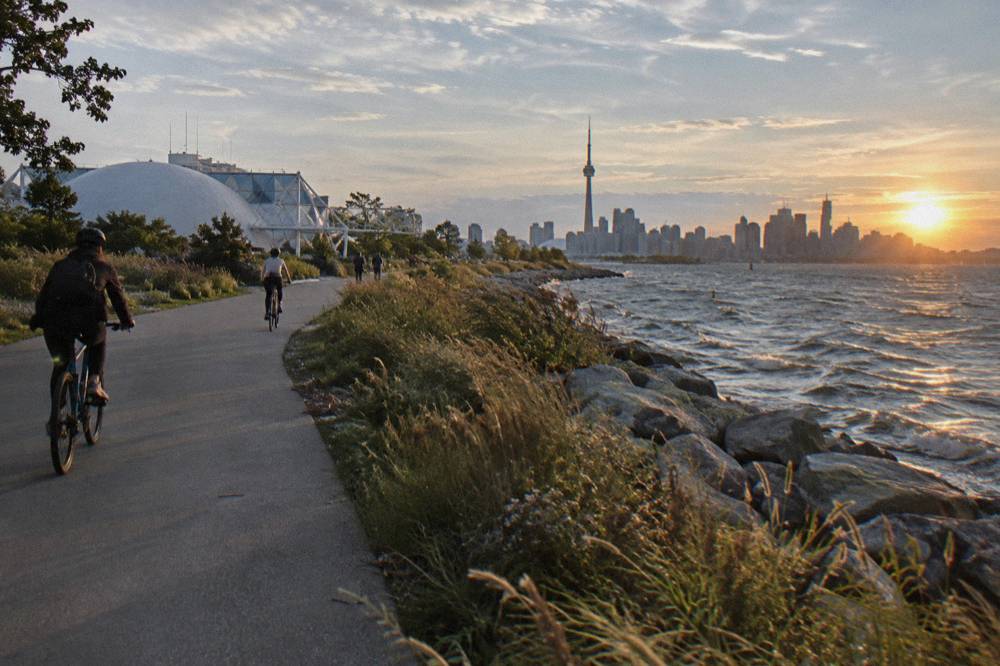
Timing within the day matters almost as much as timing within the year. In July and August, a morning start beats both the heat and the midday ferry queues, and the twilight slot turns the same ride into a skyline-at-dusk trip. In May and October, midday is the warmest window and morning starts can feel raw off the lake. None of this is guaranteed; a cool front can make an August morning feel like October, so check the forecast for your week rather than trusting the averages, and see the best time of year to cycle in Toronto guide for the riding-specific breakdown.
How Does The Season Change The Toronto Islands And The Ferry?
The Islands are at their most accessible from mid May to mid September, when all three ferry routes run; from 14 October 2026 the service drops to Ward's Island only until mid April 2027, with reduced three-route service in spring and fall. The adult round-trip fare is $9.57 in Canadian dollars, bicycles are welcome on board (walk them on and off), and Bike Share bikes are not permitted on the ferries.
The ferry calendar is the single biggest seasonal constraint on an Islands plan, and it surprises visitors who assume the boats run the same way year-round. Winter service is genuinely useful, with first departures around 6:30 a.m. from the city and sailings into the late evening, but it serves Ward's Island alone, so a winter visit lands you in the quiet residential east end rather than at Centre Island's gardens and rides. Full summer service opens all three landings. Fares in Canadian dollars are $9.57 adult round trip, $6.15 for older adults and youth, $4.51 for juniors and free for infants under two, and the City's ferry ticket page carries the current details.
| Season | Ferry service | Rider pass type | Round-trip fare (Canadian dollars) |
|---|---|---|---|
| Winter, from 14 October to mid April | Ward's Island only | Adult | $9.57 |
| Winter, from 14 October to mid April | Ward's Island only | Older adult (65 and over), youth (15 to 19) | $6.15 |
| Winter, from 14 October to mid April | Ward's Island only | Junior (2 to 14) | $4.51 |
| Winter, from 14 October to mid April | Ward's Island only | Infant (under 2) | Free |
| Spring and fall, mid April and mid September | Reduced, three routes | All fares as above | Same fares |
| Summer, mid May to mid September | Full, three routes | All fares as above | Same fares |
Bikes board with you and you walk them on and off, which is straightforward on the passenger ferries. E-bikes travel at staff discretion, must stay fully powered off on board, cannot be charged at the terminal, and riders with larger e-bikes, roughly 40 kilograms and over, may be directed to the vehicle ferry, a detail that matters if you are bringing your own rather than renting on the Islands. The ferry with a bike guide covers the whole process, and the Islands rental versus guided ride guide helps you decide whether the ferry is even the right move versus a tour that handles logistics.
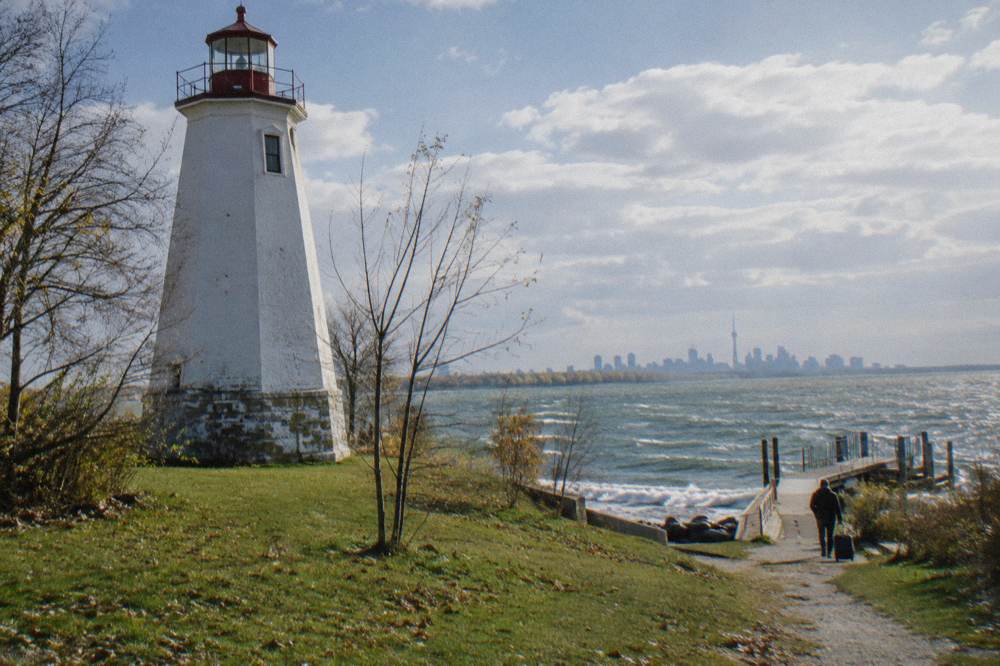
One forward-looking note: the City's first new ferries in over 60 years are due, with passenger service on the Islands expected in 2027. The electric vessel Lady of the Quays arrived as a late 2026 delivery with public service expected in spring 2027 after testing, and a second electric ferry, the Toronto Islander, is expected in 2027. Capacity should improve, but treat sailing schedules as something to confirm on the City's ferry routes page close to your travel date.
Is Winter A Good Time To Visit Toronto?
Winter is a good Toronto trip if the plan is markets, lights and skating rather than trails and Islands: the Distillery Winter Village runs 12 November 2026 to 3 January 2027, Cavalcade of Lights opens 28 November 2026 at Nathan Phillips Square, and January's average high of -0.3 C is manageable with proper layers. Riding in winter is possible on cleared multi-use trails, but it is a different sport.
The winter calendar is genuinely strong. The Winter Village at the Distillery Historic District is the anchor, open from 12 November 2026 to 3 January 2027 with the tree lighting on 12 November at 6 p.m., though tickets are required on opening night, on weekends after 4 p.m., on December Thursdays after 4 p.m., and daily after 4 p.m. from 14 to 31 December, with free entry on weekdays through 13 December and other off-peak times. The 2026 edition adds an immersive Nutcracker experience and a chocolate waterfall. Cavalcade of Lights runs 28 November 2026 to 7 January 2027 at Nathan Phillips Square with free skating, and the city's Santa Claus Parade steps off on 22 November 2026.
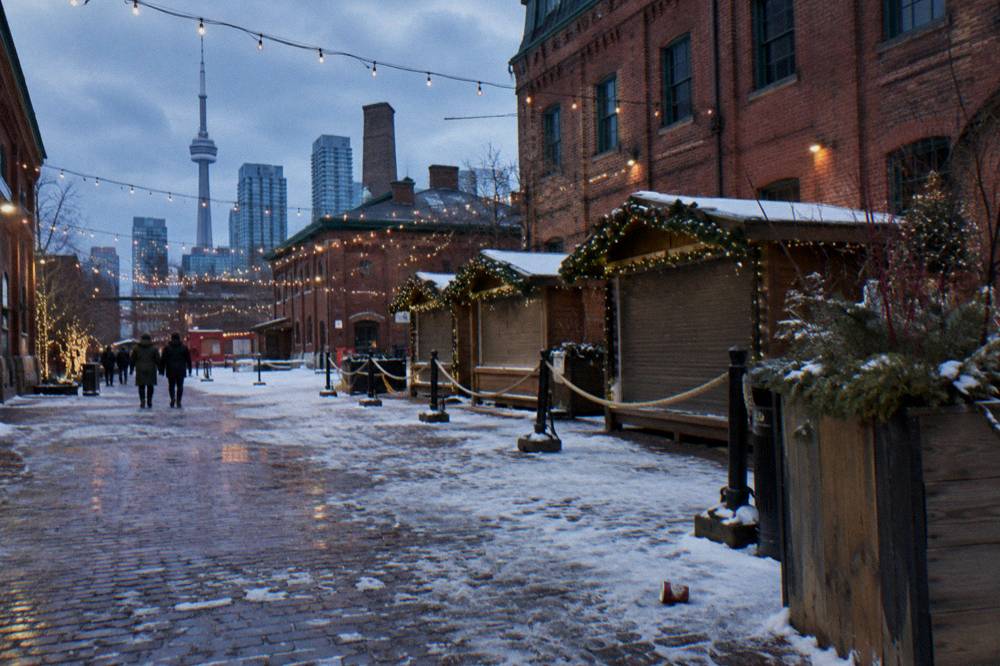
For riders, winter reframes rather than cancels the city. The Distillery District itself is car-free cobblestone and pairs naturally with a cold-weather visit, as the Distillery District by bike guide explains, and the Brick Works and Don Valley guide covers the winter market route: Evergreen's Winter Market runs pay-what-you-can on the four Sundays of 29 November and 6, 13 and 20 December 2026, with a suggested $5 per person. Guided bike rides through the coldest months are scarce; check the booking page for any given tour's operating window rather than assuming a January departure, and if you do ride, Ontario law requires lights and reflectors at night, which in winter is most of the time. The province's bicycle safety rules list the full required equipment.
How Do You Match A Guided Ride To Your Month?
Match the ride to the month's character: Islands and waterfront tours belong to the May-to-October core, with morning or twilight starts in July and August and midday starts in the shoulders; downtown neighbourhood rides tolerate the widest range from April into late October; and anything involving the ferry needs a schedule check outside full summer service. All three flagship rides run about 3.5 hours, so the month mainly decides your start time, not your route.
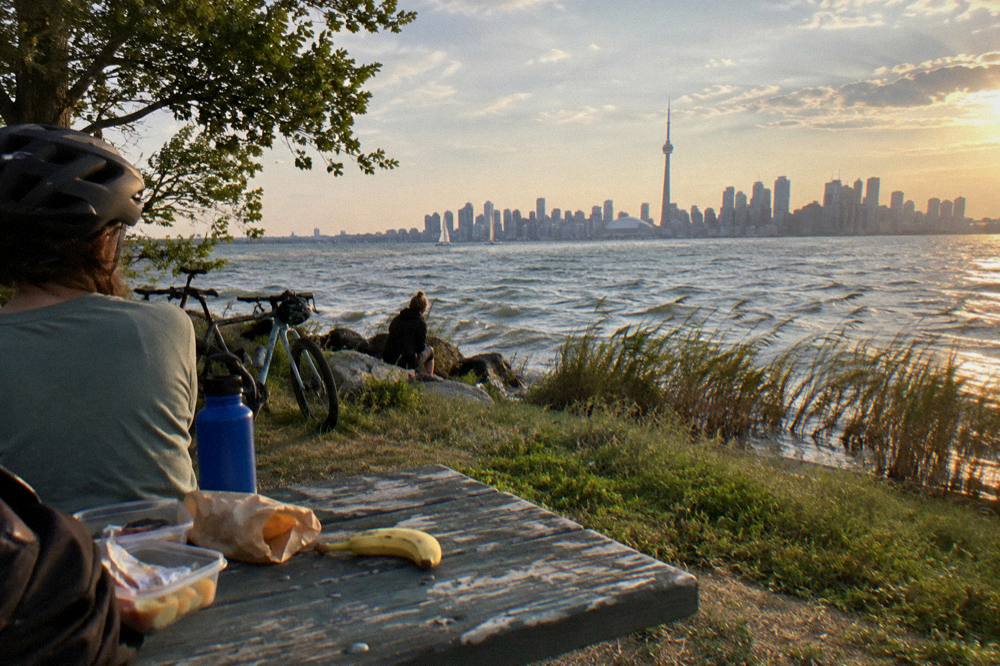
The 3.5-hour format is the common denominator across the classic guided options, and it is long enough to matter when the weather is at either extreme. In peak summer, the choice between a morning and a twilight Islands departure is effectively a choice between calm water and cool air versus golden light on the skyline, and the listing's snacks-included flag makes either work as a meal-adjacent outing. In late September and early October, the same tour becomes a fall-colour ride through the Island tree canopy, and the thinner ferry queues make the day feel roomier even as the afternoons shorten.
| Month cluster | Best-fit ride | Why it fits | What to check first |
|---|---|---|---|
| May to mid June | Waterfront and Islands guided ride | Full ferry service returns mid May, mild air, green Islands | Departure times on the booking page |
| Late June to August | Morning or twilight Islands ride | Beats heat and queues, skyline at dusk option | Which departure slots your date offers |
| September to mid October | Waterfront and Islands, or downtown | Fall colour, thinner crowds, shoulder ferry from mid September | Ferry schedule after mid September |
| April and late October | Heart of Downtown ride | Neighbourhood route works in cool air, no ferry dependency | Tour operating window |
| November to March | Downtown walking-scale plans, winter events | Ferry to Ward's only, cold trail conditions | Winter Village ticket times |
A note on what the calendar cannot promise. Weather, ferry waits and how busy a trail feels on any given day vary, and operators describe their own routes and inclusions; treat every specific here as the seasonal pattern rather than a guarantee for your date. The pattern is still worth planning around. That is the whole argument of Bike Tours Toronto as a planning resource: pick the month first, then let the month pick the ride.
Common Questions About The Best Time To Visit Toronto
When Is The Best Time To Visit Toronto?
Mid May through mid September is the core window, combining average highs of 18.8 C to 27.0 C with full three-route Island ferry service. Late May, June, September and early October offer the best balance of comfortable weather, thinner crowds and prime cycling conditions.
What Is The Warmest Month In Toronto?
July, with an average high of 27.0 C and an average low of 18.1 C per the 1991 to 2020 climate normals. August is a close second at a 26.1 C average high and holds the title for the fewest days with measurable rain, 7.2 per month on average.
When Does The Toronto Islands Ferry Run All Three Routes?
Full three-route service to Centre Island, Hanlan's Point and Ward's Island runs roughly mid May to mid September. From 14 October 2026 the winter schedule serves Ward's Island only until mid April 2027, with reduced three-route service in the spring and fall shoulders. Confirm dates on the City's sailing page.
Is Toronto Too Cold To Visit In Winter?
No, but the trip changes shape. January averages a high of -0.3 C and a low of -6.7 C, which suits the Distillery Winter Village, Cavalcade of Lights and skating rather than long rides. Winter cycling on cleared trails is possible with proper gear.
What Is The Best Month For Cycling In Toronto?
June and September, when normals pair highs of 24.2 C and 22.0 C with fewer wet days than midsummer, the trails are not yet at July and August peak occupancy, and the ferry is running full or near-full service.
When Are Toronto's Biggest Crowds?
July and August, plus event-driven spikes: the 2026 World Cup drew roughly 250,000 fans to six matches and pushed downtown hotel rates up 21 percent in June even as occupancy fell. September is busy downtown during the film festival window while the waterfront eases.