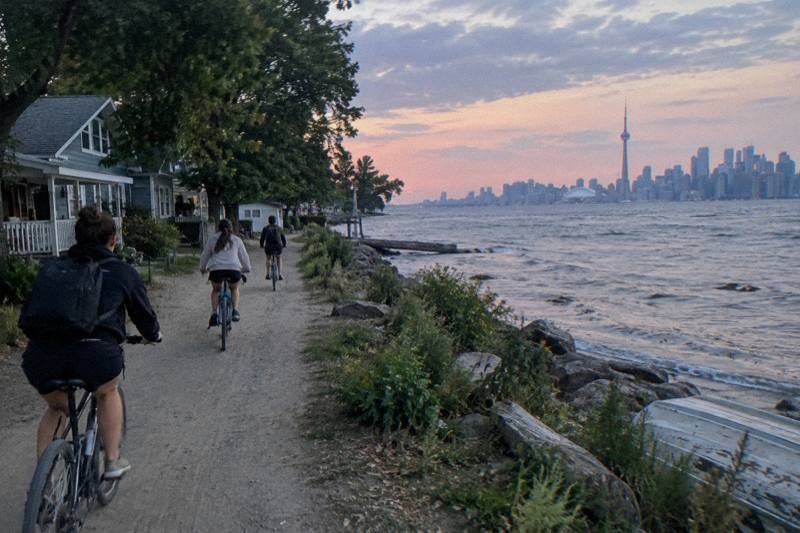
Sunrise, Morning And Twilight Rides On The Toronto Islands
The same island paths feel like three different places depending on when you ride them. Here is how sunrise, morning and twilight compare, and which departure fits your trip.
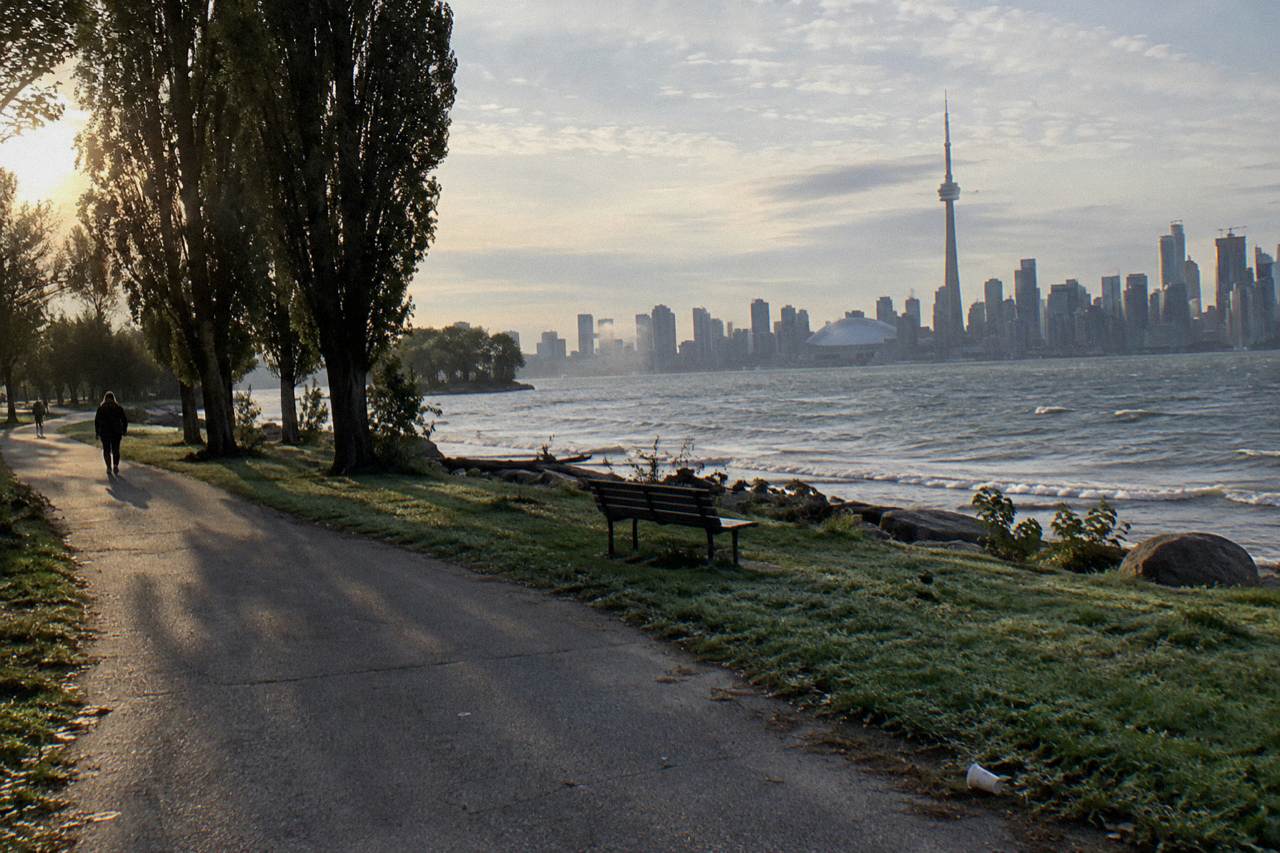
Short answer
The Islands tours all run about 3.5 hours and differ mainly by start window and inclusions: one includes breakfast, one includes snacks, and an evening option chases the late light. Ferry schedules shape every departure, and winter service runs to Ward's Island only until mid-April 2027. Check the booking page for current prices and start times.
The Toronto Islands sit close enough to the downtown core that the skyline follows you across the water, yet the pace changes the moment the ferry clears the channel. The car-free paths, the beaches and the long views toward the city all stay the same through the day; what changes is the light, the crowd density and the ferry clock. A rider who lands at the first sailing of the morning meets a different island from the one who arrives mid-afternoon, and different again from the one pedalling home under the last of the daylight.
What Makes The Islands Feel Different At Each Hour Of The Day?
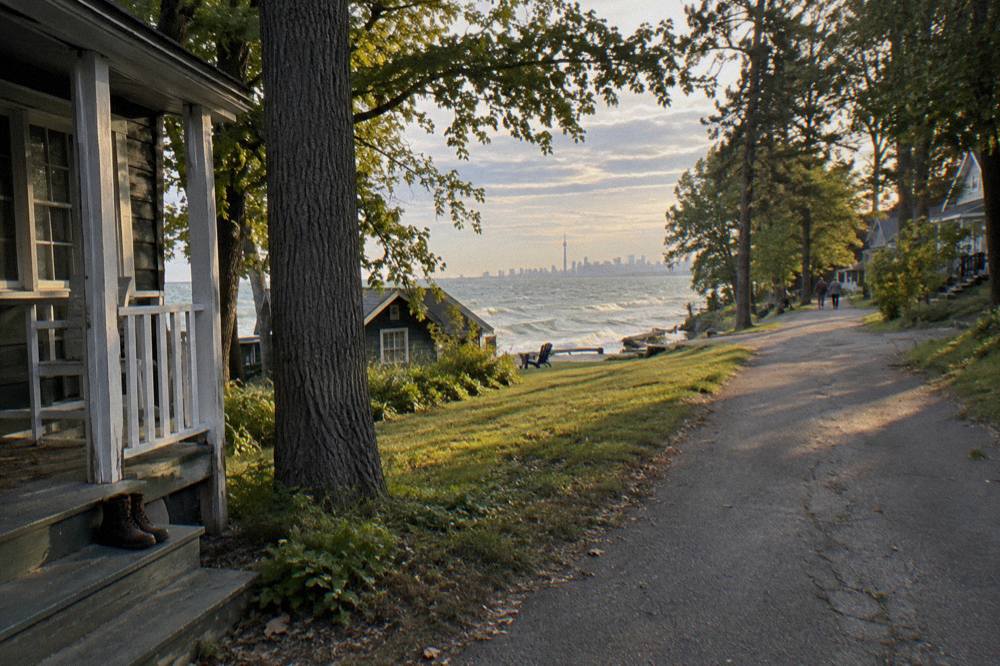
Light and crowd density, not the route, are what separate one hour from the next: the sunrise window gives the calmest paths and the flattest light on the water, mid-morning brings families and rental bikes onto the main drag, and twilight empties the west-facing beaches just as the skyline turns on. Match your ferry departure to the hour you want, not the hour that is convenient, and you get the island you came for.
The geography rewards early and late riders in specific ways. The islands face the city on the north side, so morning light falls across the water toward the towers and evening light silhouettes them. Photographers tend to prefer the ends of the day for that reason alone. Midday light is harsher, but it is also when Centre Island's lawns, the amusement area and the food concessions are fully alive, which matters if travelling with children who care more about the farm and the playground than about golden-hour photographs.
Crowds follow a reliable pattern on the paths. Early sailings carry commuters, runners and a handful of cyclists; late-morning and early-afternoon sailings carry the bulk of day visitors; the last departures home thin out fast. A guided ride that starts early or late spends more of its kilometres on open path and less time threading around pedestrians. Mid-morning rides are friendlier for anyone who does not want to set an alarm on holiday, and the guided groups move at a set pace in every slot. If you're weighing the season as well as the hour, the best time to visit Toronto guide pairs ferry season with festival timing so you can pick a week that suits both.
There is a practical floor under all of this. In winter, from 14 October 2026 until mid-April 2027, the ferry runs to Ward's Island only, with no Centre Island or Hanlan's Point service, so any off-season ride starts and ends at that dock. Full three-route service returns mid-May and runs to mid-September, with reduced service in the shoulder seasons on either side. The Toronto Island ferry guide for cyclists covers the sailing details in full.
Which Departure Slot Suits Which Kind Of Traveller?
Choose sunrise if you want near-empty paths and a meal included; choose morning for the classic family-friendly version with the most daylight to spare; choose twilight for skyline photographs, cooler air and a calmer ferry home. All three guided options run about 3.5 hours, so the real decision is when your day has a gap, not how long the ride takes. Travellers who hate early starts should not book sunrise, and photographers should skip midday.
The matching is straightforward once you are honest about your own rhythms. Sunrise riders get the stillness and a breakfast stop built into the itinerary, at the cost of the earliest alarm of the trip. Morning riders get warm-enough air, open concessions and a schedule that still leaves the afternoon free for the city. Twilight riders get the light, the cooling breeze off the lake and a return sailing after most day visitors have gone home.
| Departure slot | Best for | Trade-off |
|---|---|---|
| Sunrise | Photographers, early risers, anyone who wants empty paths and breakfast included | Earliest start of the trip; cool air |
| Morning | Families, first-time visitors, anyone wanting afternoon free | Busiest paths and ferry of the day |
| Twilight | Skyline photos, couples, riders avoiding midday heat | Day is mostly over by departure; cool return |
For the ride itself, the three Islands departures all deliver the same essential product: a guided group, a bike supplied by the operator, and about 3.5 hours on the island network. If you are still weighing whether the islands deserve your time at all, the write-up on whether the Toronto Islands are worth visiting covers the question from a non-cycling angle too.
What Does The Sunrise Breakfast Ride Actually Include?
The Sunrise Breakfast Ride includes a roughly 3.5-hour outing with breakfast built into the itinerary: an early ferry crossing, empty paths, and a meal stop before the island wakes up. The start time shifts with the seasons because it is pegged to first light, so check the booking page for the exact departure time.
This is the connoisseur's slot. The first sailings of the day carry residents and a few runners, and the main paths around Centre Island are close to silent before the mid-morning boats arrive. Light travels flat across the lake at that hour, the air is the coolest you will feel all day in summer, and the city sits in soft contrast across the channel. The tour's bicycle and breakfast are supplied by the operator; you bring yourself and the willingness to be at the ferry terminal early.
The booking page is the source for the season's start time, and it genuinely moves: a June sunrise and a September sunrise are hours apart, and no verified clock times are published for the tour itself. What does not move is the shape of the morning. You cross early, ride the quiet network while the day warms, stop for breakfast, and return with most of the day still in front of you. Riders consistently describe that as the point: it feels like a head start rather than a sacrifice.
One honest caveat: this is the youngest listing of the three, and its review pool is too small to support any rating statement. If a long review history matters to your confidence, the morning and twilight options carry more; if the format suits you, the small pool is a reason to read the cancellation terms carefully, not to stay away.
What Happens On A Morning Islands Ride?
On a Morning Islands Ride, you spend about 3.5 hours cycling the islands' main sights with a guide who sets a steady group pace, a supplied bike, and included snacks. The morning start catches the island as it fills up: the ferry is busier, the concessions open as you ride, and you hand the island back to the crowds with your afternoon intact.
Because morning and twilight are two windows of one product, choosing between them is purely a schedule decision. The morning version suits travellers who want the islands as the first chapter of a full day, with the Distillery District, Kensington or a waterfront walk still ahead of them. The paths around Centre Island will have traffic by mid-morning in July and August, and the guide's route and pace absorb that; it is a shared-path reality, not a flaw.
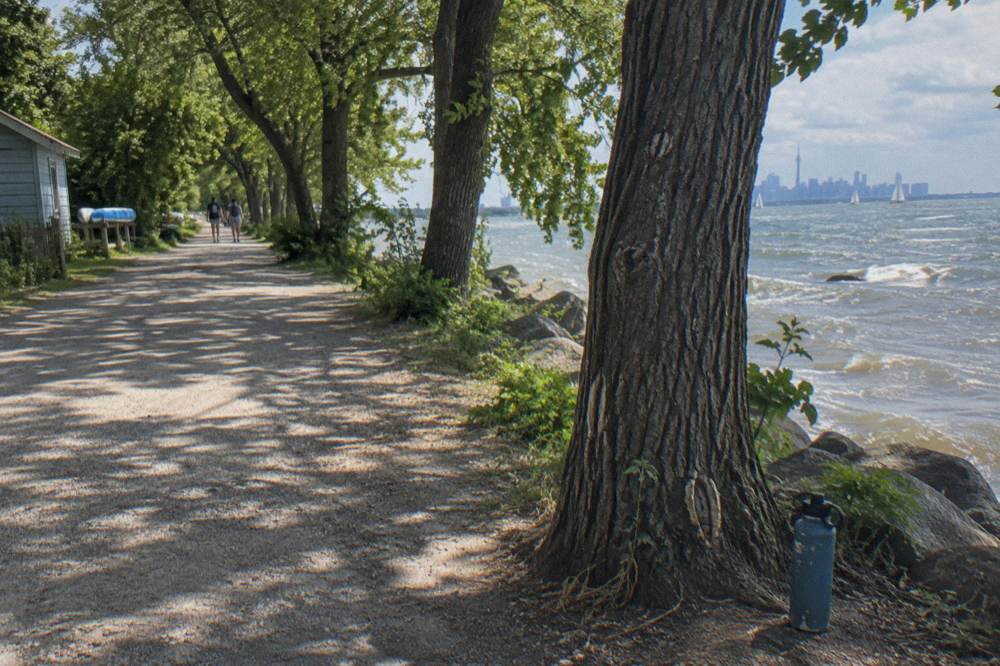
The inclusions are the practical draw for visitors without a bike of their own. The ride comes with the bicycle and snacks, so there is nothing to rent separately and nothing to carry beyond water and a layer. It is a classic bike, not an e-bike; the island network is flat, so the pedal-assist question matters far less here than on the city's hillier routes, a comparison covered in choosing an e-bike or a regular bike for a Toronto tour.
If you are weighing this against exploring on your own, the rental-versus-guided-ride comparison for the islands walks through the cost and freedom trade-offs. The short version: a guided morning ride buys you route knowledge and a set pace, a rental buys you autonomy and a lower headline price, and the right answer depends on how much of your day the islands get.
How Does A Twilight Ride Compare To The Others?
Compared with the other evening options, the Islands Evening Ride stands out for its scale: it runs about 3 hours and 30 minutes, leaving in the late afternoon and looping the network as the air cools, with skyline views as the towers light up across the water. It also carries the largest review pool among the evening rides, giving its rating real standing, though you should check the current figure on the booking page.
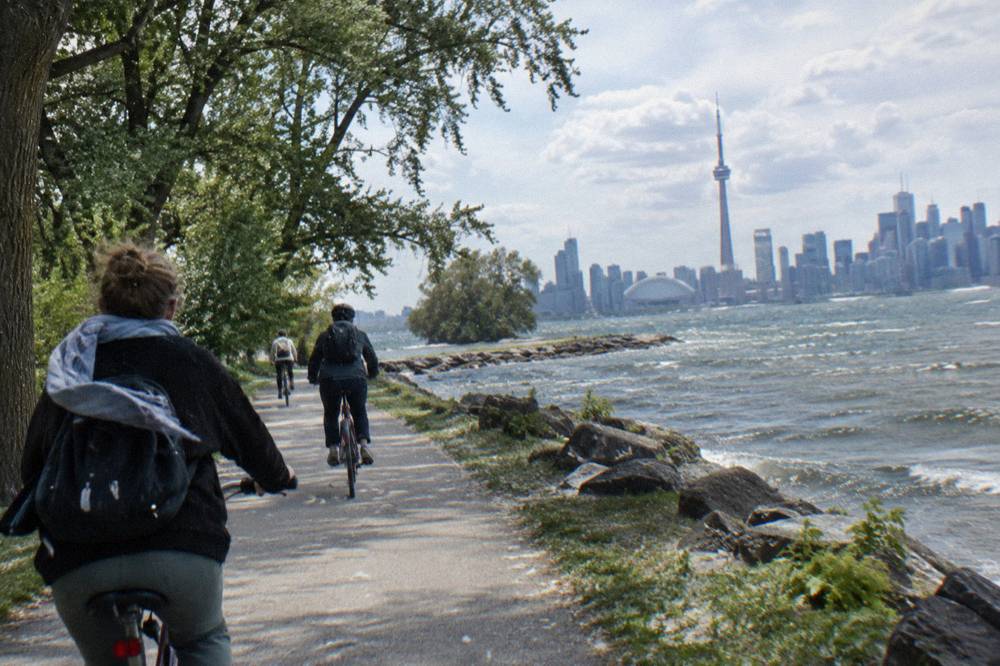
Twilight is the photographers' window, and the geography explains why. The islands look north at the city, so the evening sun goes down behind the skyline and the office lights come on as the natural light fails. The west-facing beaches catch the colour on the water. The air temperature also drops toward comfortable in July and August, when a midday ride can feel like work; the normals put the average July high at 27 C in the city, and the lake breeze at dusk is a genuine relief after a day like that.
The crowd pattern works in the evening rider's favour. Many day visitors start heading for the ferry in the late afternoon, so the paths thin out exactly as the light gets good. The tour's route and stops are listed on the booking page, and like every shared-path ride in high summer, the guide adjusts pace to conditions. What the evening version gives up is simple: the rest of the day is already spent before you roll out, so it suits travellers whose mornings belong to something else.
It is described in the overview of which guided Toronto ride to book.
How Do Ferry Times Shape Your Choice Of Departure?
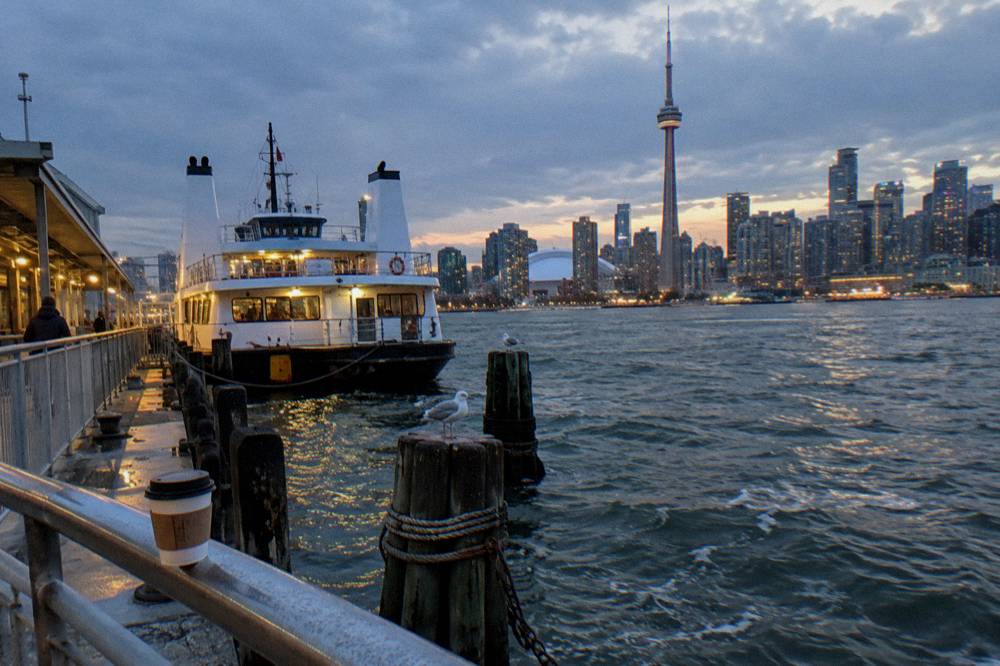
Since the ferry is the only way on and off the islands, the seasonal schedule effectively sets your departure: winter service from 14 October 2026 to mid-April 2027 serves Ward's Island only, reduced spring and fall service runs on the three routes around that window, and full service runs mid-May to mid-September.
The fare is paid to the City, not the tour operator, so it sits outside any tour price you see. Bicycles are welcome aboard and riders walk them on and off; Bike Share bicycles are not permitted on the ferries at all, which matters if you were considering docking a shared bike on the mainland and picking up another on the island. E-bikes travel at staff discretion, powered off for the crossing, with larger machines in the roughly 40 kg and over range possibly directed to the vehicle ferry. The City's own ferry ticket and passenger information page is the authority on all of it.
| Season | Service | Routes |
|---|---|---|
| Winter, 14 Oct 2026 to mid-Apr 2027 | Reduced, frequent sailings | Ward's Island only |
| Spring, mid-Apr to mid-May | Reduced | All three routes |
| Summer, mid-May to mid-Sep | Full | Centre, Hanlan's, Ward's |
| Fall, mid-Sep to mid-Oct | Reduced | All three routes |
Two recent wrinkles are worth knowing as a cyclist. The City's ferry fleet is mid-renewal: the first new vessels in over sixty years, the electric Lady of the Quays and Toronto Islander, were named in May 2026, with the first expected to enter service after testing into spring 2027. And August 2026 saw record ferry ridership on the back of free senior and youth rides, over 423,000 trips in the month, a reminder that summer afternoons at the terminal can mean queues. Early and late departures dodge the worst of both. Confirm current sailings on the City's ferry routes and schedules page before any booking.
What Do Seasons And Weather Mean For Timing Your Ride?
Summer gives you every departure slot and the warmest air, with July and August average highs of 27.0 C and 26.1 C, while May, June and September are cooler and quieter. Rain falls on 7 to 10 days a month year-round in Toronto's 1991 to 2020 normals, so pack a layer and keep your booking flexible, since from late October through April the Ward's-Only Islands draw only hardy riders who check the reduced ferry schedule first.
The climate record is steadier than most visitors expect. The warm months average between 18.8 C and 27.0 C for daytime highs, overnight lows stay above 10 C from May through September, and measurable rain lands on 7 to 9 days per month in that stretch rather than clustering into washouts. That makes a morning-versus-twilight choice mostly a preference call in summer, and a warmth call in the shoulder months, when an afternoon slot is noticeably more comfortable than a dawn one. The full monthly picture, from the Environment and Climate Change Canada normals for Toronto City, is charted below.

| Month | Avg high C | Avg low C | Days with 1 mm+ rain |
|---|---|---|---|
| May | 18.8 | 10.0 | 9.3 |
| June | 24.2 | 15.3 | 8.4 |
| July | 27.0 | 18.1 | 8.2 |
| August | 26.1 | 17.7 | 7.2 |
| September | 22.0 | 13.8 | 7.7 |
| October | 14.6 | 7.7 | 8.3 |
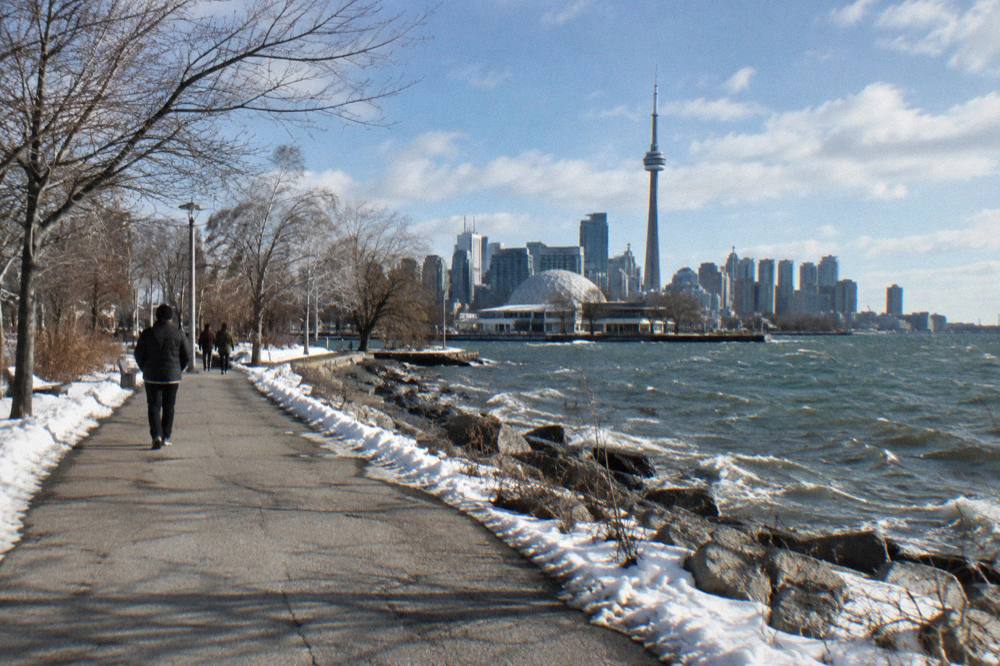
Winter riding on the islands is a specialist's game but not a fantasy. The Ward's Island winter ferry runs frequently from early morning until late evening, the paths are multi-use and maintained as parkland, and the December through February normals, with highs from 2.6 C down to -0.3 C, are fair-weather by Canadian standards. Guided tour calendars, however, thin out dramatically off-season; this is when Bike Tours Toronto points readers toward the mainland options, since the Martin Goodman Trail cycling guide describes a 20-plus km waterfront route that is rideable year-round and starts downtown.
What Should You Check On The Booking Page Before Choosing A Slot?
Before locking a slot, verify the season's actual start time, because sunrise and twilight windows shift with the light and no verified clock times are published here; confirm the current price, which varies by listing and is not restated in this guide; and read the cancellation terms, which decide how firm an early-morning commitment really is.
Start times deserve the closest read. A sunrise departure in late June and the same tour in early September differ by well over an hour of clock time, and twilight versions drift the same way in reverse. Operators adjust the meeting window through the season, so the number on the page the week you book is the only one that counts. Meeting-point details and any hotel-pickup language also live there; where a listing names none, plan on making your own way to the ferry side of the trip.
| What to check | Why it matters | Where |
|---|---|---|
| Season's start time | Sunrise and twilight windows shift with daylight | Booking page |
| Current price | Listing prices change and are not restated here | Booking page |
| Cancellation terms | Early departures are the easiest to sleep through | Booking page |
| Meeting point | Island tours begin from the ferry side | Booking page |
| Ferry fare and schedule | Paid to the City, separate from the tour | City ferry pages |
The ferry side is on you. The round-trip fare is bought from the City in Canadian dollars, and the sailing you need must exist in the season you are travelling, which in winter means Ward's Island. Ontario's rules also apply on the paths: helmets are mandatory for riders under 18, bikes need a bell or horn, and lights are required at night, which is exactly the equipment question a twilight departure raises. The Ontario government's bicycle safety page states the requirements plainly, and guided tours typically supply compliant equipment, but knowing them lets you check.
Finally, be honest about the alarm. The single most common regret in guest reviews of early departures is not the tour, it is the start. Sunrise is the islands at their most beautiful and least crowded, and it is still a pre-dawn wake-up on a holiday. Morning costs you nothing but path solitude. Twilight costs you the day's first two-thirds and gives back the best light. Pick the one whose price you are actually willing to pay, check the page for the current numbers, and book the slot rather than the idea.
Common Questions About Timing An Islands Ride
Sunrise, Morning Or Twilight, Which Toronto Islands Ride Should I Book?
Book sunrise if you want empty paths, cool air and a breakfast stop, and you do not mind the earliest alarm of your trip. Book morning for the classic family-friendly version with the afternoon left free. Book twilight for the skyline light and a calmer ferry home. All the guided options run about 3.5 hours, so the choice is about the clock, not the distance.
Do The Islands Tours Include The Ferry Fare?
No. The ferry is a City of Toronto service paid separately, in Canadian dollars: $9.57 adult round trip, $6.15 for older adults and youth, $4.51 for juniors, and free for infants under two. The tour price covers the guided ride and its stated inclusions, such as the bike and any breakfast or snacks named in the listing.
Can I Take An Evening Islands Ride In Winter?
Not in the form described here. Winter ferry service from 14 October 2026 runs to Ward's Island only, with no Centre Island or Hanlan's Point sailings until mid-April 2027, and guided tour calendars thin out off-season. Twilight rides are a May-through-September product in practice; check the operator's page for the current calendar.
Are The Sunrise Start Times The Same All Season?
No. Sunrise and twilight departures are pegged to daylight, so the start time shifts by well over an hour between the June solstice and September. No verified clock times are published here; the booking page's current departure window is the number to plan around.
Which Departure Has The Fewest Crowds On The Paths?
Sunrise, by a wide margin. The first sailings carry mostly island residents and runners, while the bulk of day visitors arrive on late-morning and midday boats and head home in the late afternoon. Twilight rides catch the paths thinning out as the light improves.
What Do I Need To Bring For An Early Or Late Ride?
A layer for the cooler hours, water, and whatever the booking page lists for check-in. Ontario law requires a helmet for riders under 18 and lights after dark, which matters for twilight departures; guided tours normally supply compliant bikes and equipment, but confirm on the booking page.