Distillery District By Bike: Cobblestones, Locking Up And A Route
The Distillery District is a car-free pocket of Victorian brick a short ride from the waterfront, and it pairs naturally with a day on the Martin Goodman Trail. Here is how to ride there, what the cobblestones do to a bike, and which guided tours include it.
Short answer
The Distillery District sits about a 10 minute ride east of the central waterfront along Queens Quay, with the Martin Goodman Trail feeding into it. Entry to the district is free. The Winter Village runs 12 November 2026 to 3 January 2027, with tickets required at peak times from about $16.
How Do You Ride To The Distillery District?
The district sits at 55 Mill Street, a few blocks north of Lake Shore Boulevard East and roughly a 10 minute ride from the central waterfront, with the Martin Goodman Trail running close by and a signalized crossing or side street connection bringing you in from Queens Quay. There is no car traffic inside, so the last stretch is a slow roll between brick buildings rather than a road sprint.
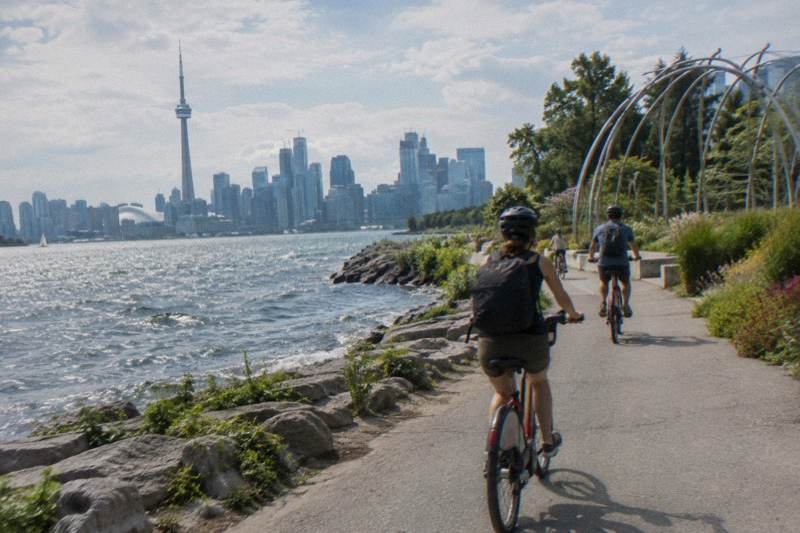
The natural approach from downtown follows the waterfront east. The Martin Goodman Trail is a paved, multi-use path that the City describes as part of a network of over 300 km of trails within Toronto, completing a 20-plus km route along the waterfront from the western to the eastern beaches. Riders heading for the Distillery District peel off that spine near the foot of Parliament Street or Cherry Street and cut north a few blocks to Mill Street.
One construction note matters for 2026. The Martin Goodman Trail on Parliament Street, between Merchant's Wharf and Lake Shore Boulevard East, is closed from 22 April to 31 December 2026 while the Queens Quay East and Parliament realignment work proceeds, with a temporary two-way protected bicycle lane carrying riders past the site behind concrete barriers. If your approach uses that block, follow the signed temporary lane rather than the trail line on an older map.
Coming from further afield, the on-street cycling network gives you options. As of December 2025, Toronto counted 110.1 km of cycle tracks, 143.8 km of bicycle lanes and 92.1 km of sharrows, for an on-street total of 346 km, plus 399.3 km of multi-use trails. A rider staying near the lake can string together quiet streets and trail sections almost the whole way from the Humber in the west or the Beaches in the east.
Distances feel short because they are. Nothing on this approach asks for fitness; it is flat waterfront riding the entire way, and the district itself is a compact pedestrian precinct you can walk end to end in minutes. That compactness is exactly why it works so well as one stop inside a longer ride, which is how the guided tours treat it. If you are planning the whole waterfront day rather than one neighbourhood, our Bike Tours Toronto homepage lays out the ride options citywide.
| Approach | What it is | Notes for cyclists |
|---|---|---|
| Martin Goodman Trail from the west | Paved waterfront multi-use path | Parliament section closed to 31 Dec 2026, temporary two-way lane signed |
| Martin Goodman Trail from the east | Same path, eastern beaches end | Flat, no climbs, shared with pedestrians in busy stretches |
| Adelaide and Richmond eastbound | Downtown cycle tracks | Faster street riding, drops south near Mill Street |
| Lower Don Trail | Valley trail from the north | Connects toward Corktown Common, a short hop to the district |
For readers comparing a self-guided roll against a booked ride, the guided options bundle the bike, a route that already solves this approach question, and a guide who adjusts when a section is closed. The three rides below all operate in this part of the city, and two of them put the Distillery District or the downtown core directly on the itinerary.
What Do The Cobblestones Mean For Cycling?
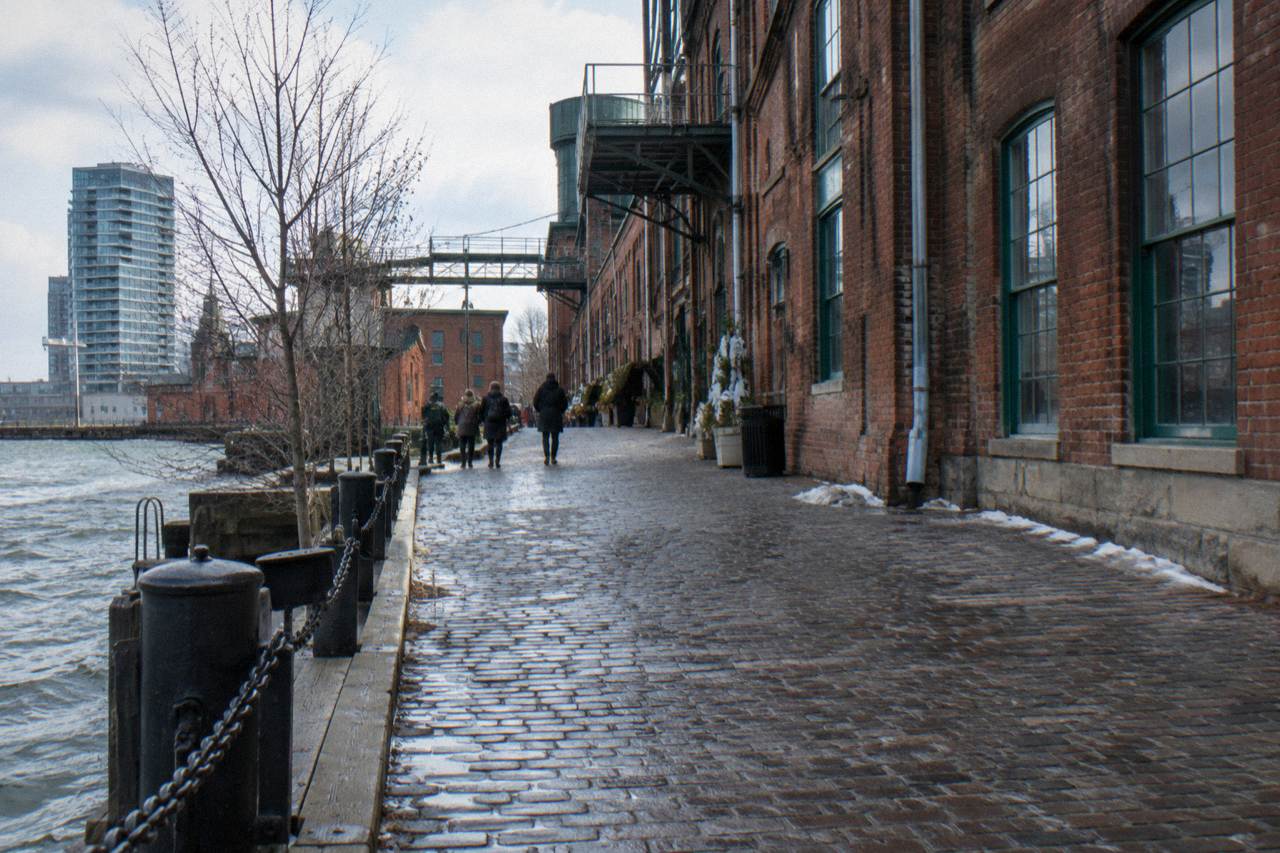
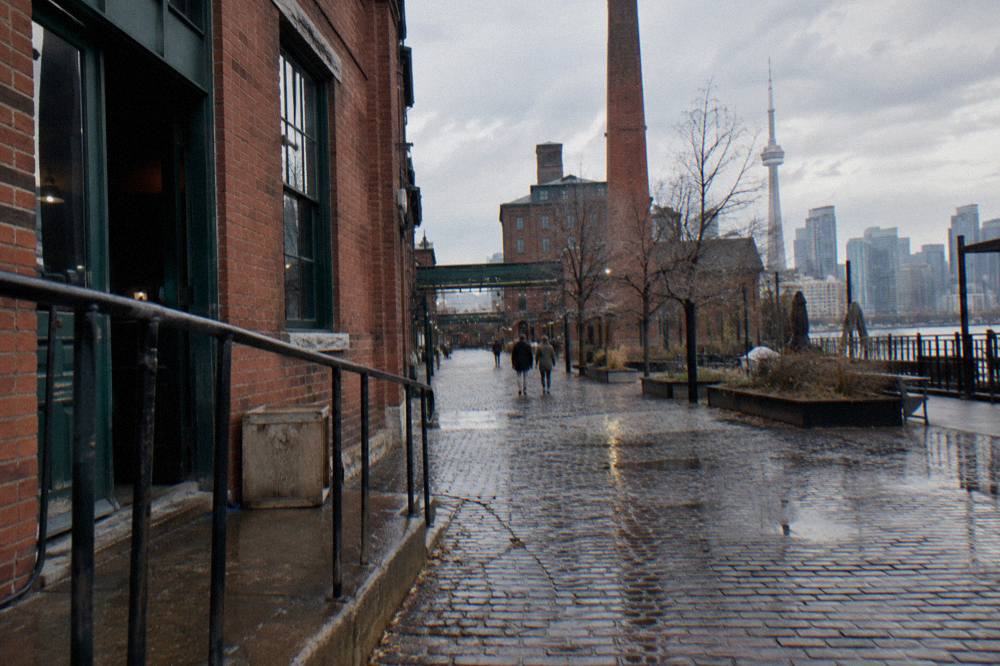
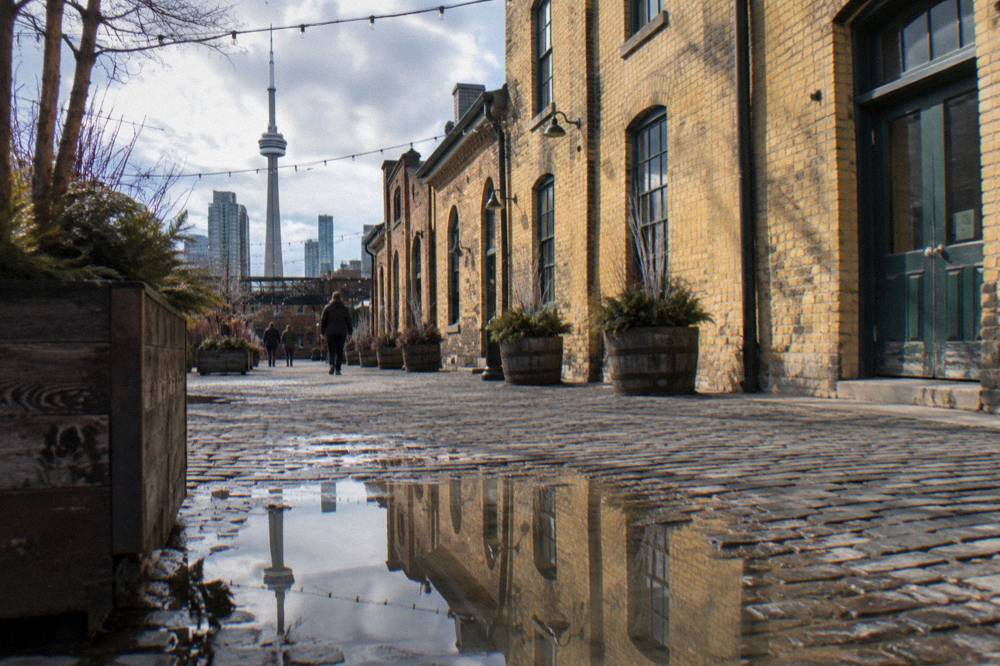
The Distillery District's lanes are genuine historic cobblestone and brick setts, and they rattle a bike noticeably at speed, so riders drop to walking pace or dismount in the busier lanes, and anything with narrower tyres feels every stone. Wide tyres, lower pressure and an unhurried line are the practical answers. Nothing about the surface bans cycling; it simply rewards going slowly.
This is not a smooth streetscape pretending to be old. The Gooderham and Worts distillery complex preserved its original stone paving, and the district's pedestrian-first design means you share those lanes with people on foot, patio tables and market cabins depending on the season. A rider who treats the interior like a bike path will have a bad minute and annoy everyone else. A rider who coasts through at foot pace gets one of the nicer arrival experiences in the city.
Practical points follow from the surface. Carrying coffee on the cobblestones is a gamble. Panniers and baskets survive fine, water bottles in cages can eject on the sharpest setts. If your bike has a choice of tyre width, take the wider option and soften the pressure a little; the perimeter streets around the district are ordinary asphalt, so the rough section is only the interior block.
The season changes the interior a great deal. Outside the winter village period, standard hours for the district's shops run Monday to Thursday 10 a.m. to 7 p.m., Friday and Saturday 10 a.m. to 8 p.m., and Sunday 11 a.m. to 7 p.m. Those are retail hours from late October 2026 listings; individual shops and restaurants vary, and a midweek morning visit can feel close to private before the patios fill. During Winter Village season the lanes fill with market cabins and the crowds thicken, which pushes even more riders toward dismounting at the Mill Street entrance.
E-bike riders have one extra thing to know, and it is a provincial rule rather than a district one. Ontario requires an e-bike rider to be 16 or older, to wear an approved bicycle or motorcycle helmet, and caps assisted speed at 32 km/h with a motor no larger than 500 watts, per the province's e-bike rules. None of that matters on cobblestones you are rolling across at walking pace, but it matters on the streets getting there. Our comparison of e-bikes and regular bikes on tours goes deeper if you are choosing between the two.
Which Guided Rides Include The Distillery District?
The Distillery District is a named stop on the waterfront-and-Islands guided bicycle tours, which run 3.5 hours and pair the waterfront trail with the Island ferry crossing; downtown-focused rides cover the neighbourhoods around it. All are shared, guided rides with bike and snacks included per the listings, and prices sit on the booking pages.
The headline option for this specific interest is the 3.5-Hour Waterfront and Islands Ride. Its route logic suits a visitor who wants the lake edge, the ferry and a neighbourhood stop in one booked block, and the listing flags snacks included. Because the district is on the itinerary, you arrive with a guide who already knows the cobblestone drill and the timing, which removes the two fiddliest parts of a self-guided version: locking up and catching a ferry.
If the Distillery District is your anchor but you also want the downtown core, the Heart of Downtown Ride, also 3.5 hours with snacks included, threads through the central neighbourhoods and makes a natural pairing with a day you build yourself around the district. Check current pricing and the meeting point on the booking page before you plan, since both vary by date.
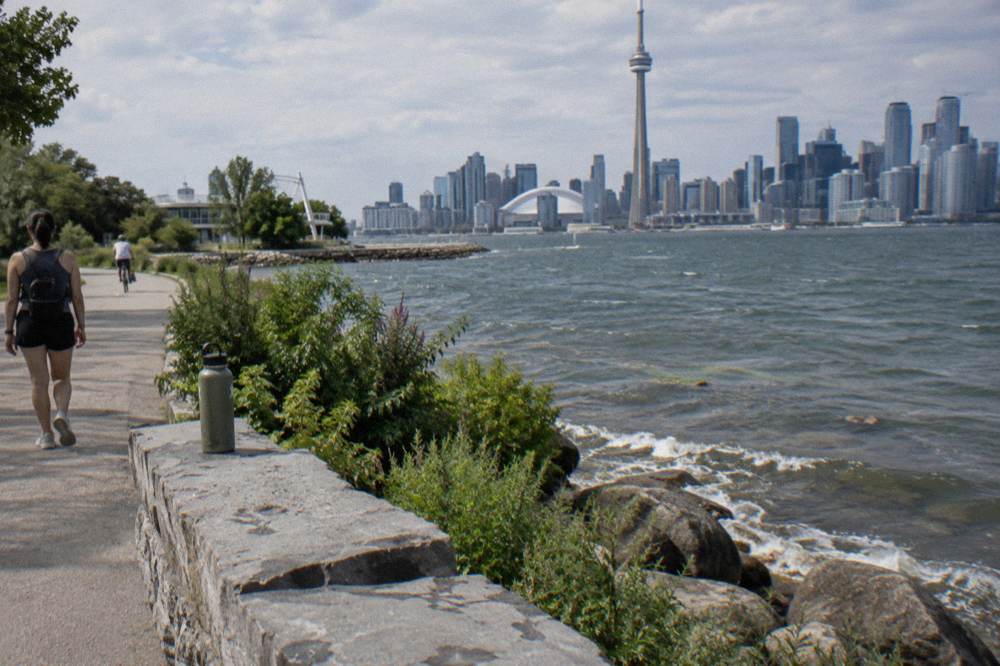
A downtown bike tour listed by a second booking channel covers the same operator product under a separate listing, at 3 hours 30 minutes with snacks included. Treat the two listings as the same ride sold through different pages, not as rival operators, and compare the price and cancellation terms shown on each booking page at the moment you book.
| Ride | Length | Bike type | Snacks | Where it fits a Distillery day |
|---|---|---|---|---|
| Waterfront and Islands guided bicycle tour | 3.5 hours | Classic | Included per listing | District is a named stop, ferry crossing included |
| Heart of Downtown ride | 3.5 hours | Classic | Included per listing | Downtown core focus, district easy to add before or after |
| Downtown bike tour (second listing) | 3 hours 30 minutes | Classic | Included per listing | Same operator product as above, compare booking pages |
| E-bike through dynamic neighbourhoods | 3.5 hours | E-bike | Per listing | Motor assist for a longer neighbourhood sweep |
The e-bike option deserves a line even though the district is flat, because it changes the rest of the day. An e-bike ride through the city's dynamic neighbourhoods runs 3.5 hours and lets a rider fold the Distillery District into a loop that also reaches further-flung areas without arriving tired. Review pools on these listings are small, so judge them on route and inclusions rather than on a rating from a handful of guests.
For a fuller decision framework across every ride style the city offers, the guide to choosing a guided ride in Toronto breaks the options down by route family.
When Is The Best Season To Visit By Bike?
Late May through September is the prime riding window, when normals run from average highs of 18.8 C in May to 27.0 C in July, and November visits trade warmth, 8.1 C average high and 70.8 mm of rain, for the Winter Village, which alone justifies the trip. Each season changes the ride more than it changes the destination.
The Environment and Climate Change Canada 1991 to 2020 normals for downtown Toronto tell the story plainly. Summer months combine highs in the mid 20s C with only 7 to 8 days of 1 mm-plus rain per month. October still averages a 14.6 C high, and late October 2026 even broke a 1946 daily record at Pearson with about 22.2 C, but the monthly precipitation curve barely dips all year, so rain gear matters in every season roughly equally.

Winter is when the district punches hardest above its weight. The Winter Village opens 12 November 2026 and runs to 3 January 2027, closed Christmas Day, with the tree lighting on 12 November at 6 p.m. and opening festivities from 4 p.m. Riding there in November means cooler air, wetter lanes and the best light display in the city. Cyclists who want the full seasonal picture can check our rundown of the best time of year to cycle in Toronto.
| Month | Avg high C | Avg low C | Precip mm | Days 1 mm+ |
|---|---|---|---|---|
| May | 18.8 | 10.0 | 76.4 | 9.3 |
| June | 24.2 | 15.3 | 81.6 | 8.4 |
| July | 27.0 | 18.1 | 76.5 | 8.2 |
| September | 22.0 | 13.8 | 69.4 | 7.7 |
| November | 8.1 | 2.3 | 70.8 | 9.0 |
One timing note if your bike day includes the Islands: the ferry schedule is seasonal. Winter service from 14 October 2026 runs to Ward's Island only until mid-April 2027, with full three-route service returning mid-May to mid-September. A combined district-plus-Islands plan works best inside that summer window, which the guided waterfront ride already assumes.
How Does The Winter Village Change A Bike Trip?
Winter Village 2026 runs 12 November to 3 January 2027 with tickets required on opening night, Friday to Sunday evenings after 4 p.m., Thursday evenings in December after 4 p.m., and daily after 4 p.m. from 14 to 31 December; entry is free at non-peak times, and general admission starts around $16, so cyclists should plan arrival around the ticket windows.
The ticketing rules reward a bike trip specifically. Free entry applies all day Monday to Wednesday through 13 December and at other non-peak times, which lines up neatly with a weekday morning ride along a quieter waterfront and a warm-up stop inside the village before the booths fill. Check the ticket page for the exact current price and any changes before you roll out.
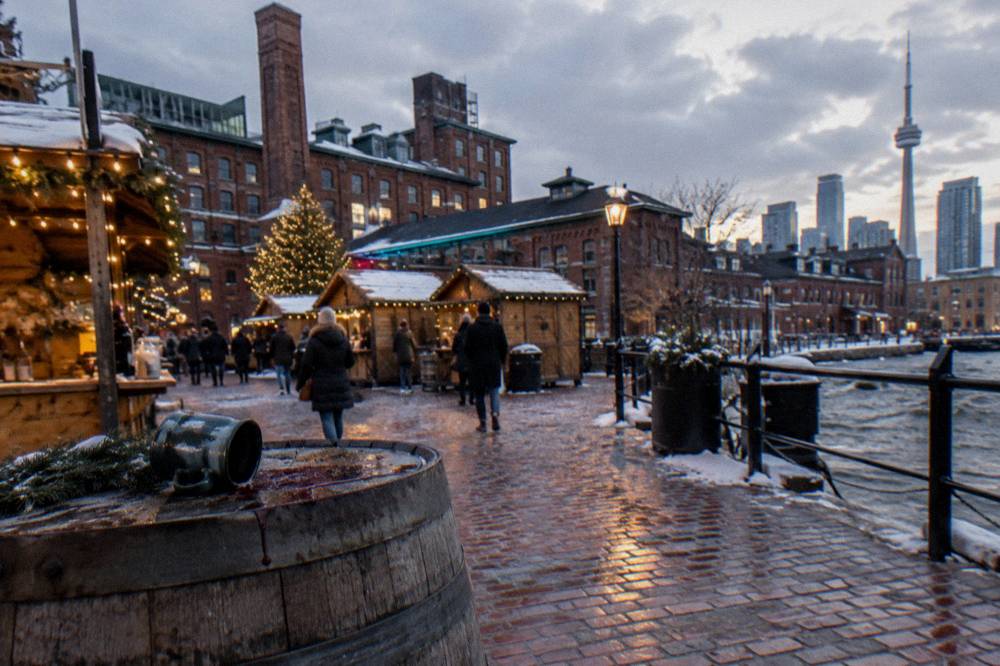
New for 2026 are an immersive Nutcracker experience and a chocolate waterfall among the attractions. Retail hours during the village typically run 10 a.m. to 9 p.m. Sunday to Thursday and to 10 p.m. Friday and Saturday, with market cabins opening from noon. Daylight is short in December, so an afternoon arrival catches both the market and the lights, but plan lights-out accordingly since the ride home in darkness legally requires a white front light and a red rear light or reflector under Ontario's equipment rules.
For riders combining stops, the seasonal calendar clusters nicely. The St. Lawrence Winter Market runs 19 November to 22 December 2026 on Market Street, free, a few blocks west of the district. Evergreen Brick Works runs its pay-what-you-can Winter Market on four Sundays, 29 November and 6, 13 and 20 December, with a suggested $5 per person. A determined winter cyclist could chain a market crawl together, and our piece on reaching Evergreen Brick Works through the Don Valley by bike covers the connecting trail.
| Winter Village entry window | Ticket needed | Notes |
|---|---|---|
| Opening night, 12 Nov | Yes | Tree lighting 6 p.m., festivities from 4 p.m. |
| Fri to Sun after 4 p.m. | Yes | Busiest evening windows |
| Thursdays in Dec after 4 p.m. | Yes | Prime-time rule extends |
| Daily 14 to 31 Dec after 4 p.m. | Yes | Peak holiday period |
| Mon to Wed through 13 Dec, daytime | No | Free entry at non-peak times |
What Should You Know About Locking Up And The Rules?
No specific bike-parking locations in the district are verified in our sources, so the working advice is general: look for posted racks when you arrive and lock to a fixed rack, never to railings, trees or market infrastructure, and carry your own lock because none is guaranteed on site. Ontario's cycling rules apply on every street getting you there.
Start with the ride in. Ontario law requires riders under 18 to wear an approved bicycle helmet, and every bike needs a bell or horn, with lights and reflective tape required for night riding. Riding on sidewalks is not allowed, with an exception for children under 10, per the province's bicycle safety page. The cobblestone interior invites walking pace anyway, which keeps you firmly on the right side of all of it.
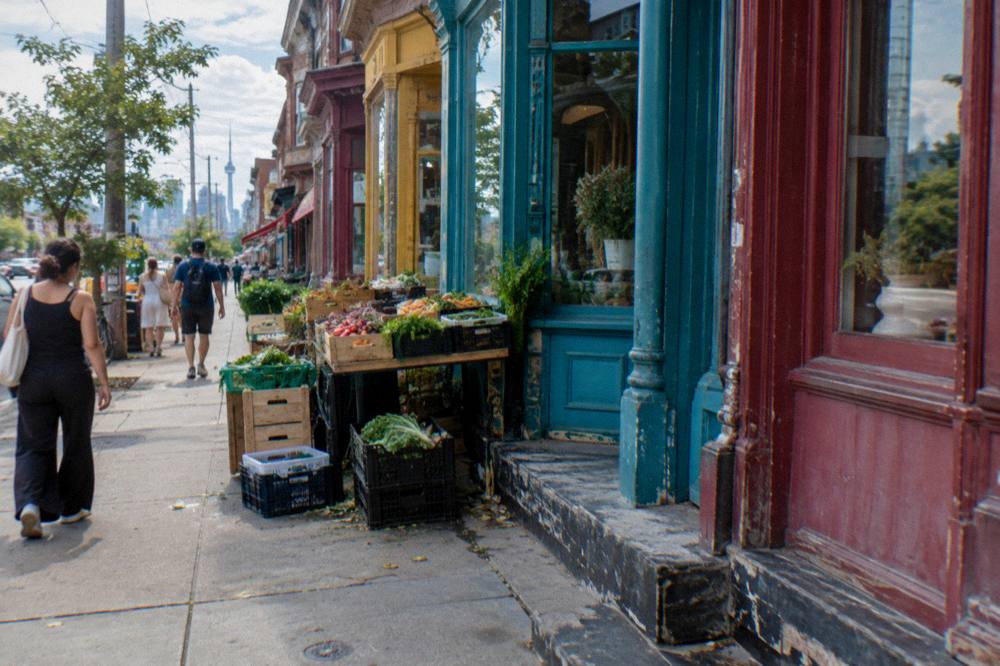
On locking up: use a proper U-lock or heavy chain through the frame and a wheel, and budget a minute to find the posted racks rather than improvising. During Winter Village peak evenings the lanes are dense, and a bike attached anywhere but a rack becomes an obstacle for thousands of people. If you arrive on Bike Share, note that the district is a pedestrian precinct once inside, and the nearest docking stations sit on the surrounding streets. Bike Share pricing we treat as reported rather than verified, so check the operator's own site for current rates.
Riders coming with their own bike from the Islands should also remember the ferry rules: bicycles are welcome on board, you walk them on and off, and Bike Share bikes are not permitted on the ferries at all. Round-trip fares, in Canadian dollars, are $9.57 for adults, $6.15 for older adults and youth, $4.51 for juniors, and infants ride free, per the City's ferry ticket page. E-bikes board at staff discretion, powered off, with larger machines possibly routed to the vehicle ferry.
A guided ride solves most of this by design. The bike comes with the booking, the guide sets the pace through the district, and the lock-and-ferry logistics are the operator's problem for the morning. Whatever you choose, the pairing is hard to beat: flat trail, car-free brick lanes, and a stop that looks best exactly when the weather gives you an excuse to ride slowly.
Common Questions About Cycling To The Distillery District
Can You Ride A Bike Through The Distillery District?
Yes, the interior is accessible to bikes, but the lanes are historic cobblestone shared heavily with pedestrians, so expect to ride at walking pace or walk the bike during busy periods, especially Winter Village evenings.
How Do You Ride To The Distillery District?
The usual approach follows the Martin Goodman Trail along the waterfront and cuts north a few blocks to Mill Street from near Parliament or Cherry Street. Note the trail's Parliament Street section is closed to 31 December 2026, with a signed temporary two-way bicycle lane in its place.
Do You Need Tickets For The Winter Village?
Tickets are required on opening night, Friday to Sunday evenings after 4 p.m., Thursday evenings in December after 4 p.m., and daily after 4 p.m. from 14 to 31 December 2026. Entry is free at other times, and general admission starts around $16.
Is The Distillery District Free To Enter?
Outside the ticketed Winter Village peak windows, yes, entry is free. The district's standard shop hours run Monday to Thursday 10 a.m. to 7 p.m., Friday and Saturday 10 a.m. to 8 p.m., and Sunday 11 a.m. to 7 p.m., with individual shops varying.
Which Bike Tours Stop At The Distillery District?
The waterfront-and-Islands guided bicycle tour lists the district as a named stop on its 3.5-hour route, with the bike and snacks included. Downtown-focused 3.5-hour rides cover the surrounding neighbourhoods and pair well with a self-guided district visit.
Where Do You Lock A Bike At The Distillery District?
No specific bike-parking spots are verified, so look for posted racks on arrival and lock your frame and wheel to a fixed rack with your own lock. Avoid railings, trees and market installations, which block the pedestrian lanes.