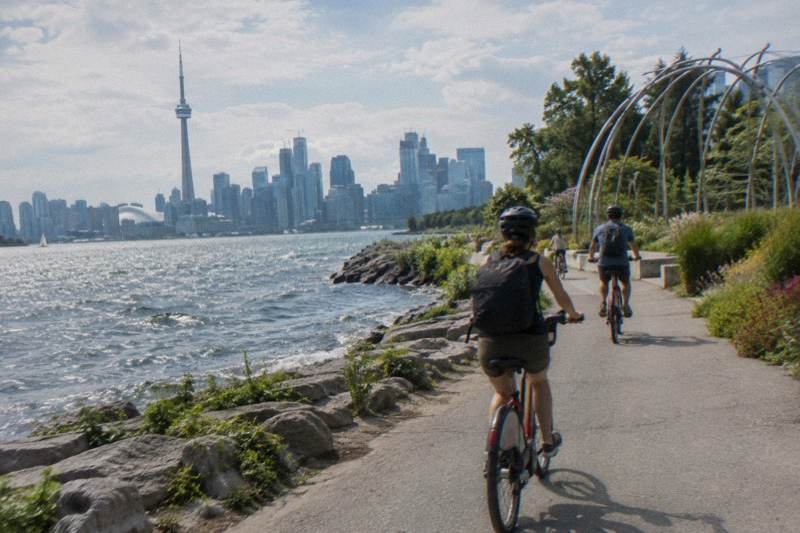
Evergreen Brick Works And The Don Valley By Bike
The Don Valley is Toronto's biggest green corridor, and Evergreen Brick Works sits in the middle of it. Here is how the ride works, what the trails are like, and how it fits a day of cycling.
Short answer
Evergreen Brick Works sits in the Don Valley ravine, reachable by bike on paved and gravel multi-use trails linked to the waterfront trail network. No guided tour is sold for the valley itself, so most visitors ride it solo or fold it into a neighbourhood ride. Winter market Sundays run November 29 to December 20, 2026.
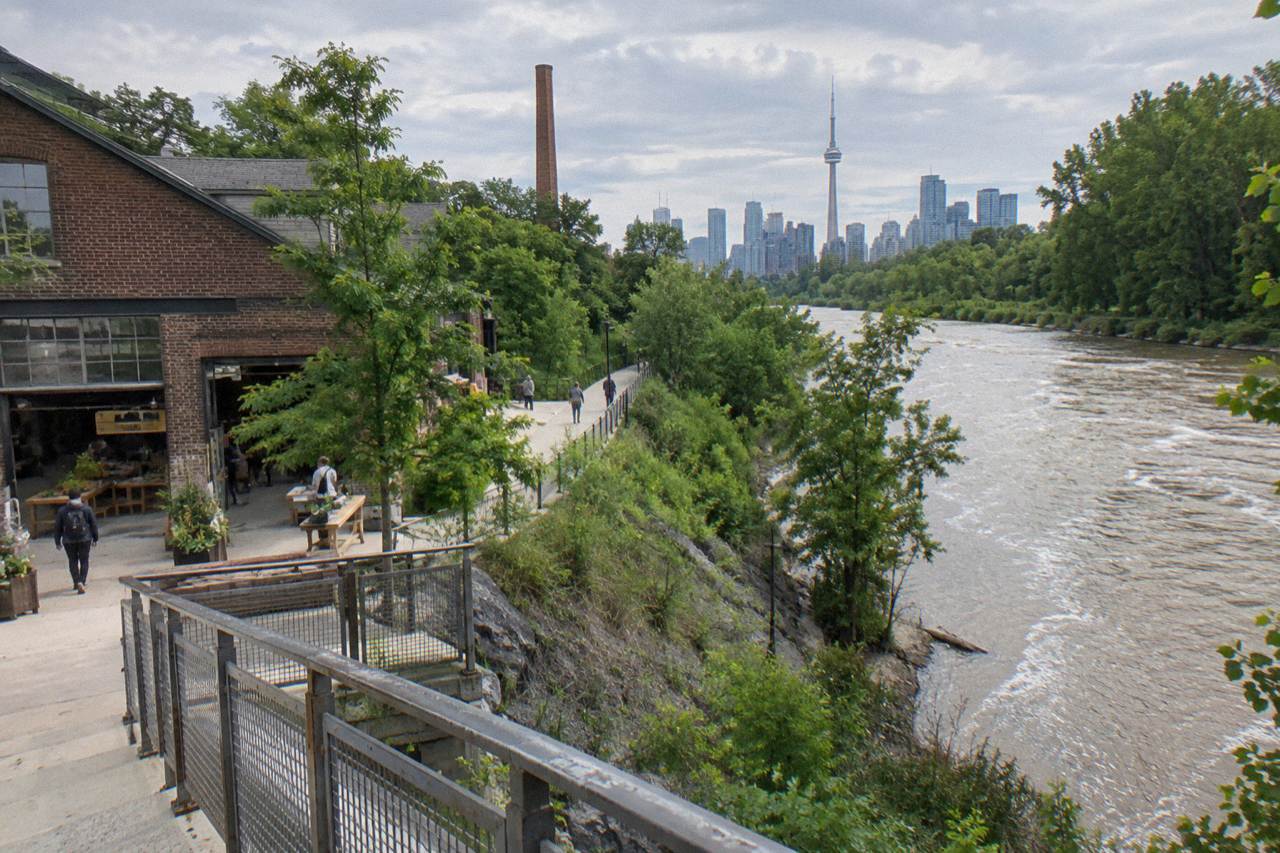
The Don Valley is the reason Toronto cyclists own a rain jacket. The ravine threads a leafy river corridor from the lakeshore deep into the north of the city, and Evergreen Brick Works, the old brick factory turned park and market place at 550 Bayview Avenue, is the single best destination inside it. The site sits below street level in the flood plain of the West Don, surrounded by forest, with trails running out in three directions.
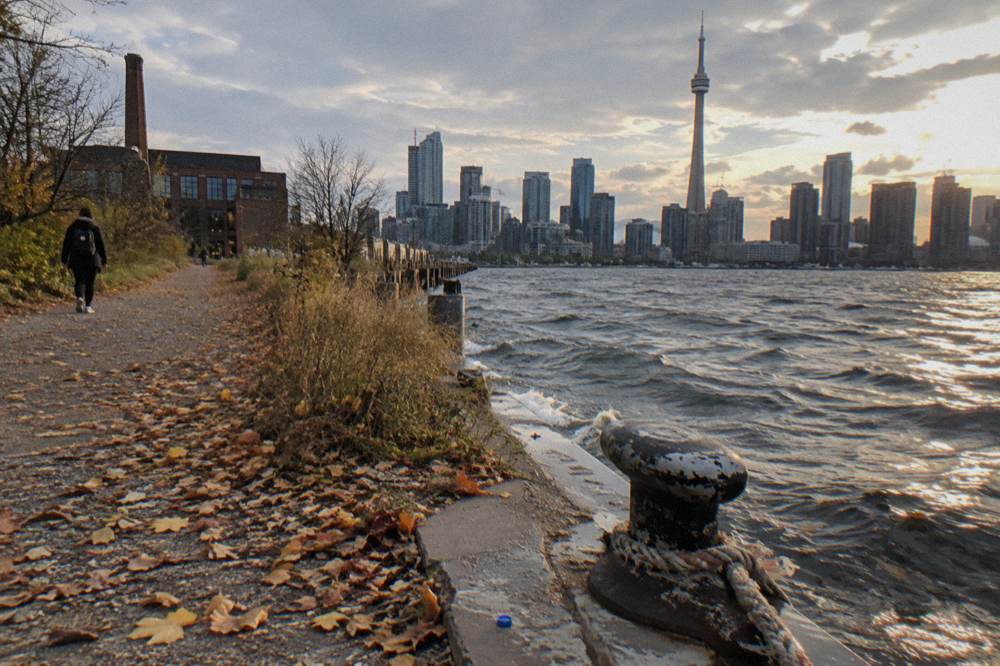
What surprises first-time riders is how quickly the city disappears. Ten minutes of pedalling from the dense eastern edge of downtown and the skyline is behind trees, the noise drops to birds and river, and the route is entirely off-road. Toronto's cycling network counted 399.3 km of multi-use trails as of December 2025, and the Don Valley system is one of the largest continuous chunks of it. This guide covers how to ride in, what the trails are actually like under the wheels, when to go, and how a guided ride fits if you would rather not find your own way through the ravine alone. For a sense of how Toronto stacks up nationally, this comparison of Canada's most bike-friendly cities looks at what each ranking actually measures and where the city's trails fit in.
How Do You Ride To Evergreen Brick Works From Downtown?
The standard approach is the Lower Don Trail, a paved multi-use path that follows the Don River south toward the lake and connects to the Martin Goodman Trail and the waterfront system. Riders reach the Brick Works by branching off the valley trail onto the Bayview extension path and descending into the site. The whole approach is off-road, signposted at the major junctions, and requires no road riding on high-traffic streets once you are in the valley. From the waterfront connection, it is a short hop west along the lake to High Park, and the guide to cycling High Park and the west end covers that route in detail.
The Lower Don is the spine of the route. From the lakeshore near the Keating Channel, the trail runs north along the river through cottonwood forest, past the berm fields and the colourful mural under the Prince Edward Viaduct, and up toward the Brick Works turnoff. Coming from downtown, most riders cross the Don River on one of the bridges, drop into the valley at the nearest access point, and head north.
There are three practical ways in. From the west, the Bayview access from the Moore Avenue side is the classic entry, a paved slope down from Bayview Avenue directly into the Brick Works site. From the south, the Lower Don Trail connects up the valley. From the east, the Crother's Woods and Beltline network links in from the north and east. None of these is a wilderness portage; they are maintained city trails with a mix of pavement and firm gravel.
One important planning note: the valley floods. The Don is a managed river in a flood plain, and after heavy rain the Brick Works parking area and low sections of trail can close. The City posts trail status updates, and it is worth a quick check the morning you ride, especially in spring. November averages 70.8 mm of precipitation across about 9 days with a millimetre or more, so a wet-weather check is routine at this time of year.
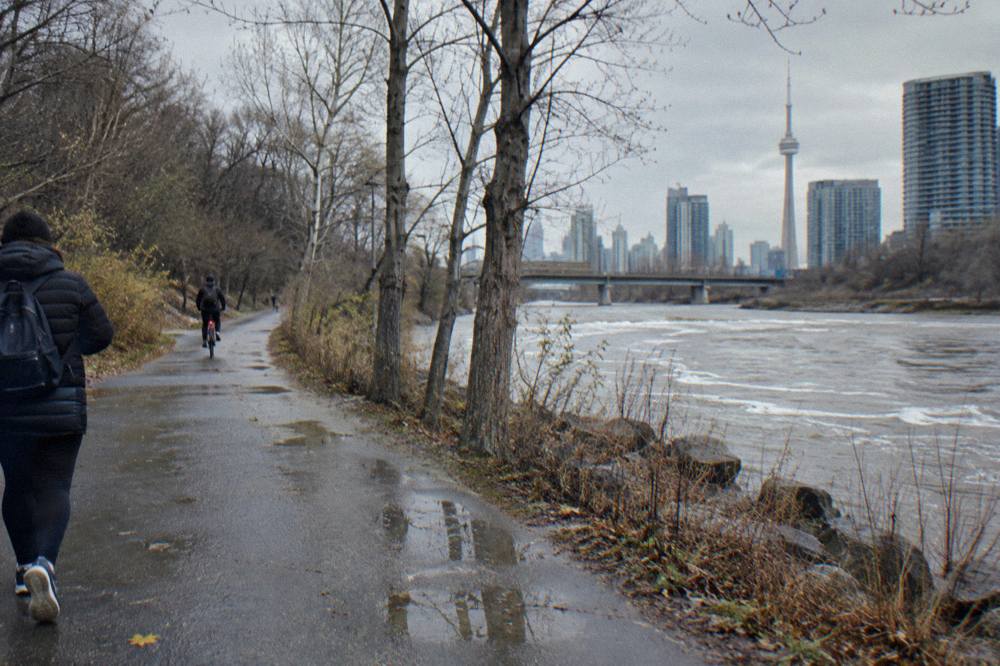
A good first ride is a loop: descend into the valley, ride north on the Lower Don, arrive at the Brick Works, explore the site, then return south and finish on the waterfront. If your legs are willing, extend along the Martin Goodman Trail, the 20-plus km waterfront path described in our Martin Goodman Trail cycling guide, which details the full lakeshore route and its 2026 detours.
| Approach | Direction | Character | Best for |
|---|---|---|---|
| Lower Don Trail | From the south, along the river | Paved valley path, forest views | First-time visitors, waterfront loops |
| Bayview extension path | From the west, off Bayview Avenue | Short paved descent into the site | Quickest entry from midtown |
| Beltline and Crother's Woods | From the north and east | Gravel and natural surface segments | Riders extending a longer valley loop |
What Is The Don Valley Trail Actually Like To Cycle?
The valley trails are a mix of paved multi-use path and firm gravel, built for shared use by cyclists, pedestrians and dog walkers, not for speed. Grades are gentle on the main spine beside the river, with short climbs at the access points where the trail rises to street level. Expect trail traffic on weekends and a surface that is rideable on any bike with tires wider than a road slick.
The main spine is genuinely easy. The Lower Don follows the river's gradient, which is shallow over its whole length, so the riding is closer to a rail trail than to anything mountainous. The access ramps are where the work is: the climb back out to Bayview or to the Bloor Street bridges is short but real, especially loaded with market purchases. Riders on e-bikes barely notice it.
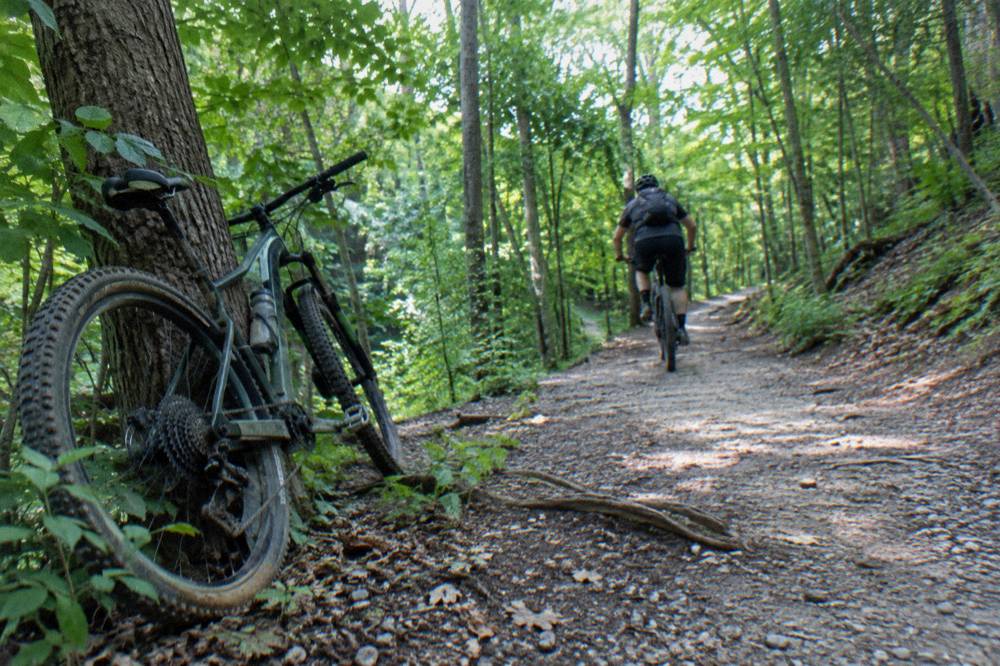
Surface is the question riders ask most, and the honest answer is that it varies by section. The southern sections are asphalt, in good repair for the most part, with occasional root heave. The northern and side trails, including parts of the Crother's Woods network, are gravel and dirt, and those can be soft after rain. A hybrid, a city bike with medium tires or an e-bike handles all of it. A road bike on 25 mm tires will manage the paved spine but will not enjoy the gravel branches.
The trail network also grew in 2026. Phase 1 of the East Don Trail, a 3.3 km multi-use path, officially opened on July 13, 2026, connecting sections east of Don Mills Road and north of Taylor Creek to Bermondsey Road and linking into the wider Don Valley network and The Meadoway. That matters for valley riders because it opens a genuine long-loop option through the eastern valley rather than the out-and-back the Lower Don forces on you. More on the East Don Trail opening is on the conservation authority's announcement.
There is no guided product sold for the Don Valley ravine itself; the bookable guided rides in Toronto cover the downtown streets, the neighbourhoods and the Islands. So the honest framing is this: if your interest is the ravine, you ride it yourself, and the planning in this guide is the substitute for a guide. If your interest is seeing a lot of Toronto with someone else handling the routing, a guided ride is the better tool. Our overview of which guided ride to book in Toronto compares the formats side by side.
When Is The Best Season To Ride The Don Valley?
May through October is the comfortable window, with July and August the warmest and driest riding months on the 1991 to 2020 climate normals, averaging highs of 27.0 C and 26.1 C with roughly 7 to 8 wet days each. Late autumn remains rideable but cool, with November averaging a high of 8.1 C, and the winter market season makes November and December rewarding for a short, dressed-for-it ride.
Spring is the tricky one. The valley greens up beautifully in May, which averages a high of 18.8 C, but it is also the wettest stretch of the riding season and the flood plain does what flood plains do. Trail closures after storms are more common in April and May than at any other time of year, so check the City's trail status before committing. April averages 78.0 mm of precipitation, the highest month in the normals table.
Summer is the reliable season. The trails are dry, the forest canopy is full, and the long evenings mean a post-work ride to the market or the lookout points is comfortable into September. September is arguably the sweet spot: an average high of 22.0 C, falling leaf colour beginning late in the month, and thinner weekend crowds once school starts.
| Month | Avg high C | Avg low C | Precip mm | Notes for valley riders |
|---|---|---|---|---|
| April | 11.7 | 3.9 | 78.0 | Wettest riding month, check flood closures |
| May | 18.8 | 10.0 | 76.4 | Full canopy, muddy side trails early on |
| July | 27.0 | 18.1 | 76.5 | Warmest, busiest trails |
| September | 22.0 | 13.8 | 69.4 | Comfortable, thinning crowds |
| November | 8.1 | 2.3 | 70.8 | Cool and damp, winter market season |
Winter riding in the valley is possible on the paved spine, and the Winter Market gives it a purpose. The trails are not maintained to clear-standards in the way sidewalks are, so after snow the surface is what it is; studded tires or fat tires are the realistic choice, and a cold-weather kit. December averages a high of just 2.6 C and a low of -2.7 C. Our broader season-by-season cycling guide covers the shoulder months in more detail.

What Is There To Do At Evergreen Brick Works?
The site is a former brick factory converted into a park, garden centre, food court and event space, with the industrial kiln buildings preserved and open to walk through. Weekend markets are the headline draw, and in winter the Evergreen Winter Market runs four Sundays, November 29 and December 6, 13 and 20, 2026, on pay-what-you-can admission with a suggested five dollars per person.
Arriving by bike puts you at the bottom of the site near the quarry garden and the pond. The brick buildings above hold the market hall, workshops and food vendors; the interpretive signage through the kilns explains how this one factory supplied much of the brick that built Victorian Toronto, in buildings that still show the firing tunnels and chimneys. It is a rare piece of industrial heritage that you can ride into the middle of on a forest trail.
The market calendar is the thing to time a visit around. Through the main season the Saturday market fills the halls with food and farm vendors; in winter it compresses into the four Sunday dates above, with an Ontario artisan and vintage market, a food court and workshops, plus a Winter Garden feature on select dates. Parking a bike is easy; the site is built around arrival by trail and shuttle rather than private car, and bicycle parking racks sit near the main buildings.
| What | When in 2026 to 2027 | Admission |
|---|---|---|
| Saturday farmers' market | Main season Saturdays | Free |
| Evergreen Winter Market | Sundays November 29, December 6, 13, 20, 11 a.m. to 5 p.m. | Pay-what-you-can, suggested $5 per person or $20 per family |
| Kiln buildings and trails | Year-round during site hours | Free |
| Winter Garden feature | Select Winter Market dates | Included in market admission |
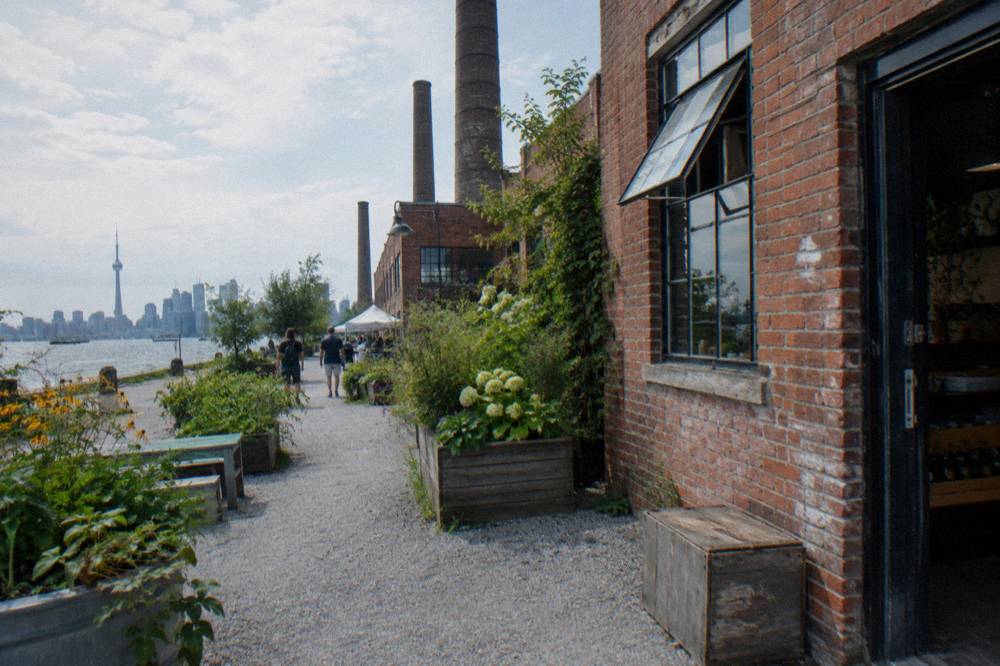
Beyond the market, the site is a trailhead. Paths climb the valley walls to the Moore Park ravine and the Beltline, and the Don Valley trails run north and south from the edge of the property. The nature trails on the property itself are short, interpretive loops through the meadow and around the quarry pond, fine for a walking break between rides.
Can A Guided Ride Cover The Don Valley?
No guided bike tour is sold for the Don Valley ravine or Evergreen Brick Works. The bookable guided rides in Toronto cover downtown streets, the neighbourhoods and the Islands. Riders who want the valley ride it independently using route resources like this one, then book a guided ride for the parts of the city where a guide, a bike and snacks in the price genuinely change the experience. Before you commit to either approach, our guide to how well Toronto actually works for cyclists covers the trail network, the lanes, the ferry to the Islands, and what the seasons do to your planning.
That is not a dodge, it is how the products divide. The valley is free to ride, needs no booking, and its route decisions are simple once you are on the trail. The downtown and neighbourhood rides, by contrast, involve street routing, neighbourhood selection and stories that a guide actually adds value to. The 3.5-hour Heart of Downtown Ride with snacks included is the closest bookable product thematically, since it covers the downtown core streets that sit just west of the valley; check the booking page for its current price, meeting point and inclusions. The rest of the planning pages sit on Bike Tours Toronto.
The operator describes a shared, guided format with snacks included, and the meeting point and full inclusion list are on the booking page. Riders weighing it against a solo valley ride should think about what they want from the day: quiet forest and a market, or dense city neighbourhoods with someone else choosing the streets. The two also combine well as separate days, a solo ravine morning and a guided afternoon.
Should You Ride An E-Bike Or A Regular Bike In The Valley?
A regular bike suits the valley's main trails: the grades beside the river are gentle and the distances modest. An e-bike earns its keep on the access climbs out of the ravine and on longer loops that extend up the Beltline or onto the new East Don Trail. Ontario law treats e-bikes as bicycles on trails where they are permitted, with a 32 km/h assisted speed limit and a minimum rider age of 16.
The honest trade-off is effort versus range. On a regular bike the valley loop to the Brick Works and back to the waterfront is a half-day outing at a relaxed pace. The climbs out of the valley are the only real work. On an e-bike those climbs vanish, and a loop taking in the East Don Trail, the Beltline and the waterfront in one ride becomes realistic. Ontario's e-bike rules, published on the provincial safety page, set the assisted speed ceiling, weight limit and helmet requirement; note that Toronto Island Park bars e-bikes over about 40 kg, though that rule does not apply to the mainland valley trails.
If you do not own an e-bike, rental is an option, and our piece on what an e-bike rental costs in Toronto walks through the pricing structures. For a guided comparison, there is also an e-bike version of the neighbourhood ride, a 3.5-hour shared tour through Toronto's dynamic neighbourhoods; the booking page carries the current price and the meeting point.
What Should You Know Before Riding The Ravine?
Ontario law requires riders under 18 to wear a helmet, and all bikes need a bell or horn plus lights after dark. Riding on sidewalks is not allowed, with an exception for children under 10. In the valley itself, the practical rules are shared-use etiquette: moderate speed, audible passes, and yielding to pedestrians on the narrow gravel sections. Bring water, a lock for the market stop, and layers for the temperature drop under the tree cover.
The equipment requirements come from the provincial cycling safety page, which specifies the bell or horn, a white front light and a red rear light or reflector for night riding. The official bicycle safety page is the source for the helmet law and the sidewalk rule. On the valley trails the City also asks cyclists to keep speeds down near pedestrians, which matters most on summer weekends when the paved spine carries families, runners and dogs on long leads.
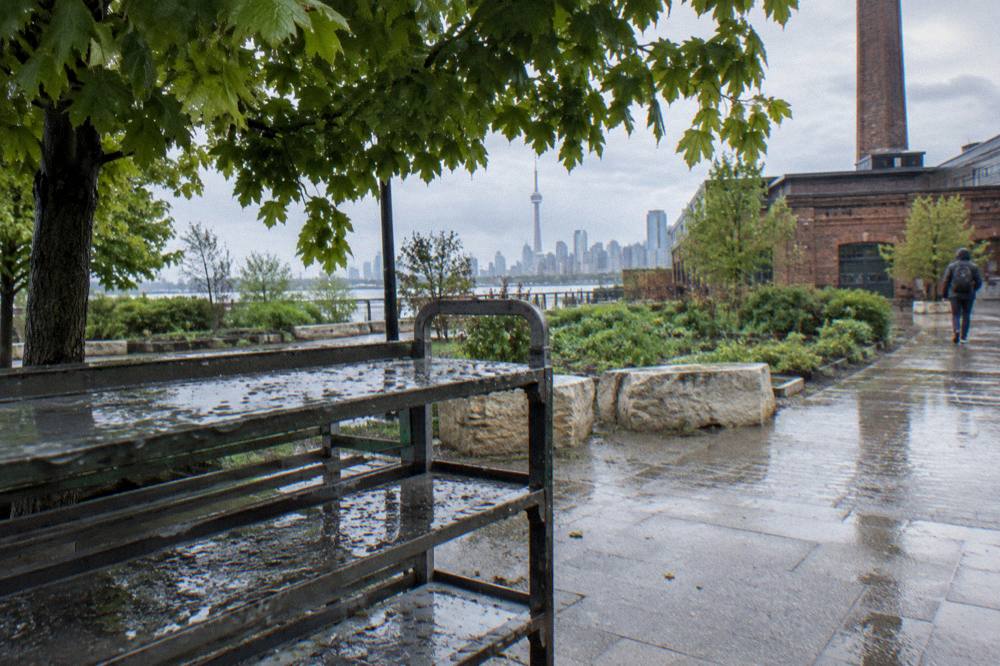
Weather planning matters more here than on street routes. The tree cover holds cool air and dampness, so a morning that feels mild on Bloor Street can feel five degrees cooler beside the river, and the gravel sections stay greasy a day or two after rain. The flood-plain position of the whole Brick Works site means storm closures happen; check the City's trail notices on the day. Our packing rundown in what to bring on a Toronto bike ride covers the rest of the kit list, including the lock question for market stops.
For riders staying downtown without a bike, the choice is between renting independently and joining a guided ride that supplies the bike. The guided downtown format, sold under more than one listing by the same operator family, includes the bike and snacks; treat price differences between the listings as listing differences rather than different products. Check the booking page for whichever version you look at.
How Does The Valley Ride Fit Into A Day Of Cycling?
The valley ride works best as the quiet half of a fuller day: ride the Lower Don north to the Brick Works, spend an hour or two at the market and the kilns, then return south and finish along the Martin Goodman Trail toward the harbour. In summer, add the East Don Trail for a long loop; in winter, keep mileage short and time the ride to a Winter Market Sunday.
The pairing works because the two systems connect. The Lower Don's southern end meets the waterfront trail network near the Keating Channel, and the Martin Goodman Trail runs more than 20 km along the lake from the western to the eastern beaches, as the City's own trail description confirms. Riders can build anything from a 10 km market outing to a full-day figure-eight through the two corridors. Our waterfront trail riding guide maps the lakeshore half of that day.
Season changes the shape of the day. In July, start early, ride the valley while it is cool, and finish on the waterfront in the afternoon heat. In late November, invert it: a late-morning start, the Winter Market over lunch, and home before the temperature drops toward the 2.3 C November average low. In both cases the valley is the flexible half; the market dates and the daylight are the fixed points.
Common Questions About Evergreen Brick Works And The Don Valley
How Do I Get To Evergreen Brick Works By Bike?
Ride into the Don Valley and follow the Lower Don Trail north, or take the paved descent from Bayview Avenue directly into the site. The approach is off-road, signposted at major junctions, and reachable from the waterfront trail network at the river's mouth.
Is The Don Valley Trail Paved Or Gravel?
Both. The main Lower Don spine beside the river is asphalt, while the northern and side trails, including parts of Crother's Woods, are gravel and natural surface that can be soft after rain. Any bike with medium-width tires handles all of it.
When Is The Evergreen Winter Market In 2026?
The Winter Market runs four Sundays: November 29 and December 6, 13 and 20, 2026, from 11 a.m. to 5 p.m. Admission is pay-what-you-can, with a suggested five dollars per person or twenty dollars per family.
Is There A Guided Bike Tour Of The Don Valley?
No guided bike tour is sold for the Don Valley or the Brick Works. The valley is free to ride on your own; guided rides in Toronto cover the downtown streets, neighbourhoods and Islands instead.
Do I Need An E-Bike For The Don Valley Trails?
Not for the main trails, whose riverside grades are gentle. An e-bike helps on the climbs out of the valley and on longer loops using the East Don Trail or the Beltline. Ontario caps assisted speed at 32 km/h and requires riders to be 16 or older.
When Is The Best Time Of Year To Ride The Don Valley?
May through October is the comfortable window, with September a sweet spot at an average high of 22.0 C. Spring brings the most trail closures after rain; November and December remain rideable for dressed-for-it rides timed to the Winter Market.