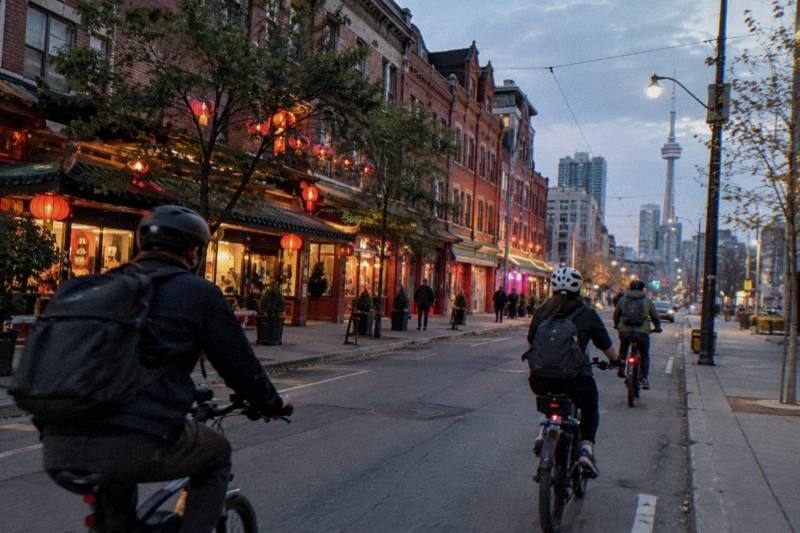
How Much Does It Cost To Rent An Ebike In Toronto?
Ebike rental pricing in Toronto explained: reported Bike Share rates, what a guided ebike ride costs, Ontario rules that shape the price, and the cheapest months to ride.
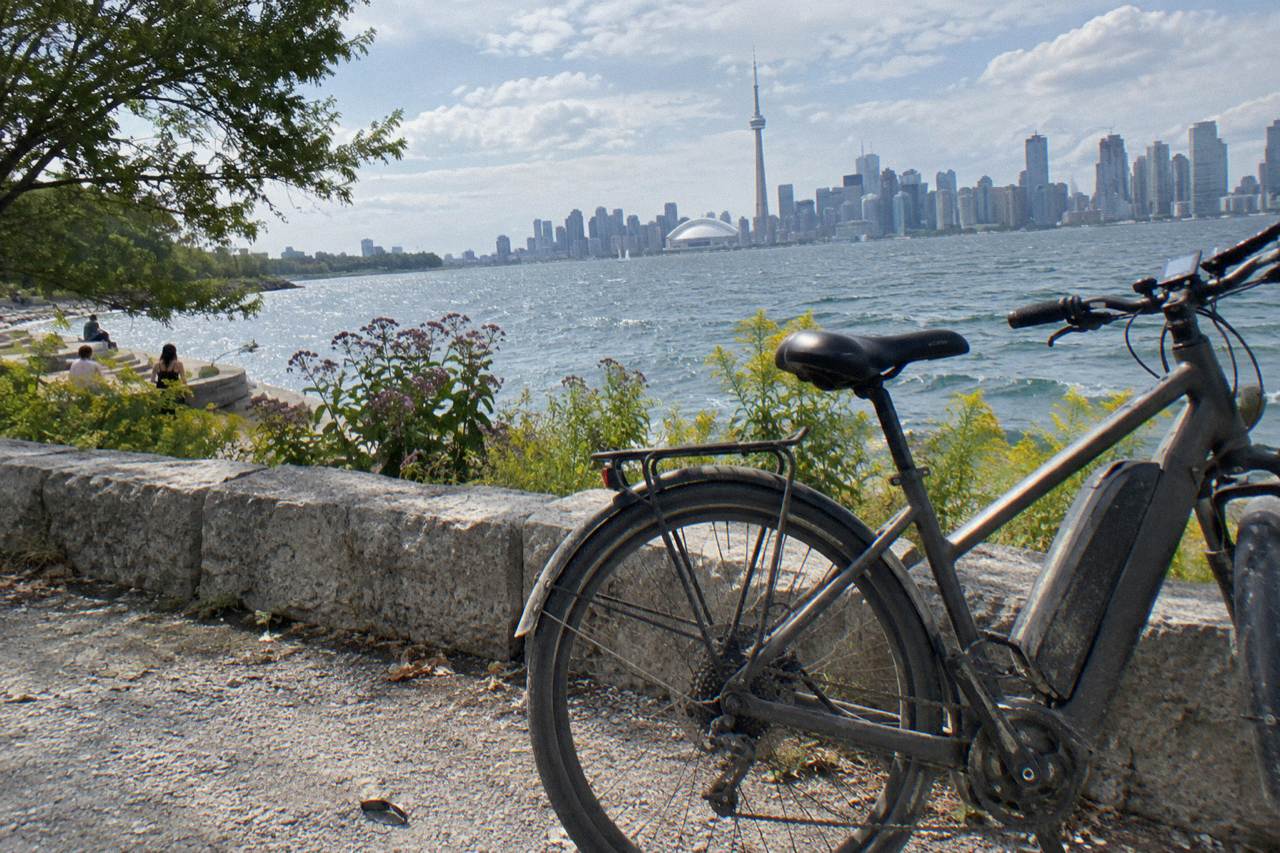
There is no single verified rental-shop rate for an ebike in Toronto that can be quoted with confidence, so treat any shop price as a check-before-you-go number. The reliable published figures are Bike Share Toronto's pay-as-you-go ebike rate, reported at $1 to unlock plus $0.20 per minute as of mid-2026, and the fixed per-person price of a guided ebike ride, which the operator's booking page states in full. If you'd rather skip the motor, our guide to renting a regular bike in Toronto, from pricing to pickup walks through helmets, locks, and when Bike Share maths works in your favour.
That opening probably reads differently from most cost articles, and it should. Toronto has dozens of bike rental counters along the waterfront and in the downtown core, and their ebike rates shift with the season, the model and the day of the week. None of those rates has been verified against a primary source, so this article will not invent one. What can be stated with confidence comes from three places: Bike Share Toronto's public pricing (reported figures, flagged as such), the fixed price of a guided ebike ride as shown on its booking page, and the provincial rules that shape what you are actually paying for.
The honest frame for budgeting is this. If you want a bare ebike and nothing else, a short ride on the city's share system is the cheapest verified structure, roughly $13 for a 60-minute spin at the reported per-minute rate, though the rate should be confirmed on the Bike Share Toronto site before you rely on it. If you want an ebike plus a route, a guide, and the parts of Toronto you would otherwise miss, a guided ride prices the whole package at once, and the per-person figure on the booking page is the number that matters. Most visitors underestimate the second option because they price the bike and forget the hours of routing, snacks and local context that come folded in.
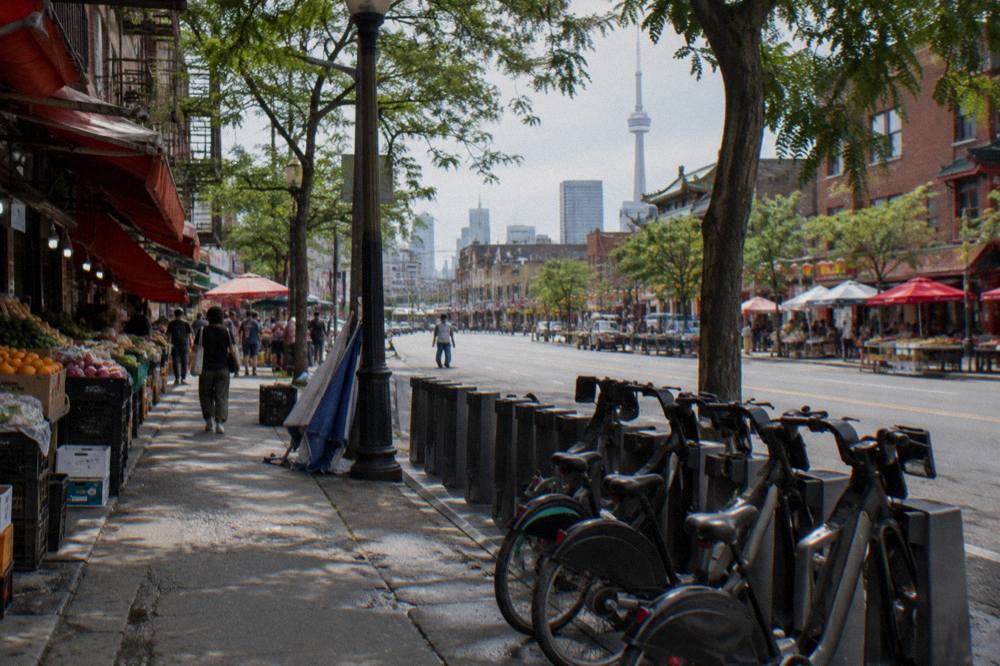
There is also a legal dimension that affects cost. Ontario treats an ebike as a specific class of vehicle: the rider must be 16 or older, must wear an approved helmet, and the motor can assist only up to 32 km/h with a maximum weight of 120 kg and a motor not exceeding 500 watts, as set out on the province's official e-bike page. A rental that meets those rules is a road-legal machine; one that does not is a problem you inherit. Operators who run guided ebike rides work inside these limits, which is part of what the ticket pays for.
For readers who want a shortcut to a good day rather than a pricing seminar, these are the rides worth comparing first:
The rest of this article unpacks each cost in turn: the share system's reported rates, why shop prices resist quoting, what a guided ride bundles in, and how the calendar changes what you pay.
What The Bike Share Ebike Rate Actually Is
Bike Share Toronto's reported mid-2026 pricing puts a pay-as-you-go ebike at $1 to unlock plus $0.20 per minute, about $13 for an hour of assisted riding before pass discounts. A $15 day pass covers unlimited 90-minute classic bike rides but does not include ebikes. These are reported figures, not verified on the operator's page, so confirm them before budgeting.
That distinction matters more here than almost anywhere else in Toronto travel planning. The Bike Share Toronto website blocks automated verification, so the pricing below comes from a mid-2026 secondary report rather than a direct read of the operator's page. The structure is consistent across reports, but the exact cents can move, and the operator runs promotions that change the effective cost. Treat the table as a planning range and check the current rate on the Bike Share Toronto site.
| Option | Reported price | What it covers | Ebike included |
|---|---|---|---|
| Pay-as-you-go ebike | $1 unlock + $0.20 per minute | One assisted ride, any length | Yes, this is the ebike rate |
| Day pass | $15 | Unlimited 90-minute classic bike rides in 24 hours | No, ebikes billed at per-minute rate |
| Annual 30 membership | $105 per year | Classic rides with a 30-minute cap | 50% ebike discount, reported at $0.10 per minute plus unlock |
| Annual 45 membership | $120 per year | Classic rides with a 45-minute cap | Same reported ebike discount |
Two practical notes sit behind those numbers. First, the share system's fleet includes regular bikes and power-assisted bikes, and the assisted machines get ridden hard: the operator's 2026 planning documents project e-bikes, roughly one fifth of the fleet, to generate more than twice as many trips per day as the standard bikes, with 1.71 million ebike trips forecast for the year out of 8.6 million total. An ebike you unlock at a waterfront station in July has likely been in use all day, and battery level is a real constraint on a per-minute product.
Second, the share system is a transportation service, not a tour. There is no route, no guide and no helmet in that $13. Ontario law requires ebike riders to wear an approved helmet, and the province's own bicycle safety page covers the equipment rules that apply, so a bare unlock rate is never the full cost of a legal ride. You bring the helmet or you do without the assist.
Why No Rental Shop Ebike Rate Is A Safe Number To Quote
Walk-up rental shops along Queens Quay and in the downtown core set their own ebike rates, and no primary source verifies any of them, so this article prints none. Rates vary by model, by hour block and by season, and a phone quote can differ from the August counter price. Email the specific shop for its rate, deposit policy and battery terms.
This is not evasion; it is the difference between a verified figure and a plausible one. Travel content is full of "$X per hour" claims for Toronto ebike rentals, and those numbers age badly. A shop's high-season Saturday rate can be double its shoulder-season weekday rate, deposits differ, and the definition of an "hour" varies, some shops clock from departure, others from paperwork. Printing a single number would imply a stability that does not exist.
What you can do is compare shops on the questions that actually decide value:
| Question to ask the shop | Why it changes the real cost |
|---|---|
| Is the rate per hour, per half day or per day? | Long blocks usually beat hourly rates past the third hour |
| Is a helmet included? | Ontario requires one for ebike riders; buying one adds to a "cheap" rate |
| What is the battery policy? | A flat battery mid-ride can end your day or trigger a swap fee |
| What is the deposit and the damage terms? | Deposits vary widely and are often held on a card for days |
| Does the shop provide a lock or a route? | Losing ride time to logistics is a hidden cost |
The deeper point for a visitor is that a bare rental solves only the bike part of the day. Toronto rewards knowing where to ride: the city counts 346 km of on-street cycling infrastructure as of December 2025, plus 399.3 km of multi-use trails, and the difference between a good route and a bad one is the difference between a lakefront cruise and a stretch of busy arterial road. A rental shop hands you a machine and a shrug. That gap is exactly what a guided ride prices.
What A Guided Ebike Ride Costs And What It Includes
The guided ebike option in Toronto, the E-bike City and Neighbourhoods ride, runs 3.5 hours through the city's dynamic neighbourhoods with the ebike and snacks described on its booking page, at a fixed per-person price shown there. Its companion listing covers the same operator product at 3 hours 30 minutes. Neither price is printed here because the booking page is the price of record.
That last clause deserves a plain explanation. Two of the ebike rides on this site's comparison pages are separate listings of the same operator product, one from each of two booking channels. They are not different companies and not different rides. Where their prices differ, that is a listing difference, not a quality difference, and the only way to know which is cheaper on your date is to open both booking pages side by side.
What the guided price buys is the whole structure of the day. The ride is 3.5 hours, an ebike rather than a standard bike, and a guide who handles the routing through neighbourhoods most first-time visitors never reach. Snacks are flagged in the listing. The meeting point is stated on the booking page, and that is where you confirm it rather than relying on any summary, including this one.
Set against the share system's reported $13-per-assisted-hour, a guided ride looks expensive per hour and cheap per experience. Three and a half hours of pay-as-you-go ebike time alone would run past $40 at the reported rate, before a helmet, before a route, before anything to eat, and with battery anxiety priced in. The guided ticket replaces all of that arithmetic with one number.
One honest caveat on social proof: the companion ebike listing carries only a couple of reviews, and this site does not print rating claims from review pools that small. The ride's length, format and inclusions come from the operator's own listing; its reputation you can judge from the booking page's review section directly.
The Ontario Rules That Quietly Shape The Price
Every legal ebike in Toronto must cap its assist at 32 km/h, weigh no more than 120 kg with a motor under 500 watts, and be ridden by someone 16 or older wearing an approved helmet. Rentals that meet those rules cost more to maintain and insure than grey-market machines, and riders under 16 cannot ride an ebike at all, which matters for families comparing options. If you're wondering how far these rules reach beyond rentals, our plain-language guide to Toronto's ebike laws explains what else Ontario expects from riders.
The rules come from the province, not the city, and they are worth a minute of any renter's attention because they define what the money buys. A compliant ebike is a pedal-assist machine that stops helping above 32 km/h. It is not a scooter, it is not a throttle motorcycle, and rental fleets that stay inside the law carry the cost of that compliance in their rates.
The helmet rule is the one that catches visitors. Ontario requires helmets for ebike riders of any age, stricter than the under-18 rule that applies to regular bicycles. If a rental price does not include a helmet, add one to the real cost or use an operator who provides them.

There is also a ferry wrinkle worth one paragraph, since many ebike days in Toronto end up crossing to the Islands. Bicycles are welcome on the ferry, walked on and off, and Bike Share bikes are not permitted at all. E-bikes are accepted at the discretion of staff, must be powered off on board, cannot be charged, and larger machines, roughly 40 kilograms and over, may be directed to the vehicle ferry. The City's ferry ticketing page states these rules and the round-trip fares, which are in Canadian dollars. If your ebike plan involves the Islands, the machine's weight class is part of your cost calculation, a fact covered in full in the site's Island ferry with a bike guide.
When Weather Changes What You Should Pay
Toronto's warmest riding months are June through September, with average highs from 22.0 to 27.0 C, while November averages a high of just 8.1 C with rain on about nine days of the month. Ebike demand and pricing follow that curve, so the same machine is hardest to find and priciest in July and cheapest, where shops stay open at all, in the shoulder months of late April, May and early October.
Those figures are Environment Canada's 1991 to 2020 climate normals for downtown Toronto, the standard long-term averages rather than any forecast, and they map neatly onto the rental calendar. The full seasonal picture:
| Month | Avg high C | Avg low C | Precip mm | Days with 1 mm+ rain |
|---|---|---|---|---|
| April | 11.7 | 3.9 | 78.0 | 9.4 |
| May | 18.8 | 10.0 | 76.4 | 9.3 |
| June | 24.2 | 15.3 | 81.6 | 8.4 |
| July | 27.0 | 18.1 | 76.5 | 8.2 |
| August | 26.1 | 17.7 | 71.9 | 7.2 |
| September | 22.0 | 13.8 | 69.4 | 7.7 |
| October | 14.6 | 7.7 | 69.1 | 8.3 |
| November | 8.1 | 2.3 | 70.8 | 9.0 |
The budget angle is that an electric assist earns its keep differently across that table. In July heat, the motor saves you from arriving at a neighbourhood café soaked; in a 14.6 C October, the same motor matters less and a classic bike, at the reported $15 day-pass rate or a shop's standard rental, does nearly the same job for less money. The trade-offs between the two formats are laid out in the site's ebike or regular bike comparison, which is the better place to weigh that decision in full.
Weather also interacts with the share system's biggest weakness. Per-minute pricing in rain is money spent riding to the next thing rather than enjoying it, and Toronto averages seven to nine wet days a month through the whole riding season, so a fixed-price guided ride carries no meter anxiety on a grey afternoon. Operators describe their weather and cancellation terms on the booking page; read that section before paying, not after.
Ebike Versus A Classic Bike Tour For The Same Money
The classic-bike alternative, the Heart of Downtown Ride with snacks included, covers downtown Toronto in the same 3.5-hour format at its own per-person price on the booking page, typically below the ebike version because the machine costs less to run. If your route is flat downtown neighbourhoods rather than long distances, the assist buys comfort rather than capability, and the classic ride is often the better value.
Toronto's core is genuinely flat. The downtown tour format works on a standard bike precisely because the terrain lets it, and the listing for that ride flags snacks in the same way the ebike listing does. The decision is less about hills and more about distance, heat and how much pedalling you want between stops.
A rough decision frame, using only figures already established in this article:
| You want | Better fit | Why |
|---|---|---|
| Cheapest assisted hour | Bike Share ebike, reported rate | About $13 per assisted hour, no guide |
| Most ground covered comfortably | Guided ebike ride | 3.5 hours with assist through multiple neighbourhoods |
| Best value guided format downtown | Classic downtown ride | Same format and duration, lower machine cost |
| Total flexibility, no schedule | Any bare rental | You set the route and the clock |
For context on where a bare rental can take you, the Martin Goodman Trail cycling guide covers the 20+ km waterfront route that runs from the western to the eastern beaches, the single best stretch of car-light riding in the city and a natural anchor for any self-guided day. An ebike turns that corridor into a relaxed half day; a classic bike turns it into a workout.
One more cost that is easy to forget: time. A rental day includes finding the shop, fitting the bike, route planning and returning the machine. A guided ride compresses all of that into a meeting point and a start time. For a visitor with two or three days in the city, an hour of logistics is a real expense, and it is the honest reason many travellers end up choosing a guide even when the sticker price is higher.
Common Questions About Ebike Rental Costs In Toronto
How Much Does It Cost To Rent An Ebike In Toronto?
No verified rental-shop rate exists to quote. The reliable structures are Bike Share Toronto's reported pay-as-you-go ebike rate of $1 to unlock plus $0.20 per minute, roughly $13 for an assisted hour, and the fixed per-person price of a guided ebike ride shown on its booking page. Confirm shop rates directly with the shop.
Is The Bike Share Ebike Rate Confirmed?
It is reported mid-2026 pricing rather than a rate this site verified on the operator's own page, since that page blocks automated checks. The structure, unlock fee plus per-minute charge, is consistent across reports, but check the Bike Share Toronto site for the current cents before relying on it.
Why Not Just Quote A Rental Shop Price?
Because shop rates vary by model, season, hour block and deposit terms, and no primary source verifies any single figure. A number printed today can be wrong by August. Ask the specific shop for its rate, deposit, helmet policy and battery terms instead.
Is A Guided Ebike Ride Better Value Than Renting?
Per assisted hour, no; per experience, often yes. Three and a half hours of per-minute ebike time would exceed $40 at the reported rate, with no helmet, route, guide or snacks, while the guided ride prices all of it at once. The booking page states what the ticket includes.
Do I Need A Helmet On A Rental Ebike?
Yes, at any age. Ontario requires an approved helmet for every ebike rider, stricter than the under-18 rule for regular bicycles. If a rental or tour price does not include one, factor the cost or the provision into your comparison.
When Is The Cheapest Time To Ride An Ebike In Toronto?
The shoulder months, late April, May, late September and early October, when average highs run from about 14.6 to 18.8 C and demand drops. July and August, with average highs of 27.0 and 26.1 C, are peak season for both rental demand and pricing.
If you are weighing the options, Bike Tours Toronto keeps the full set of ride comparisons, ferry logistics and neighbourhood routes in one place, and the three rides below are the natural starting point for an ebike day in the city.