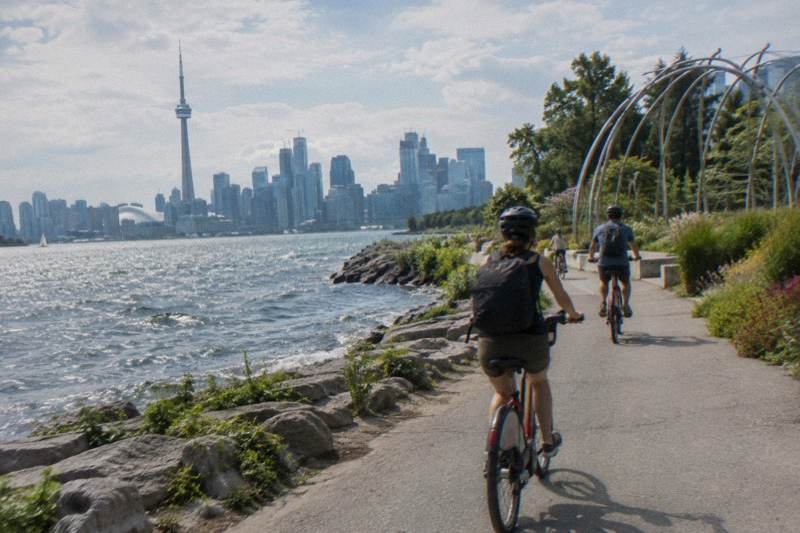
Renting A Bike In Toronto: Prices, Pickup And What To Check
Rental rates in Toronto vary shop to shop and no single verified rate sheet exists, so this guide walks through how day pricing is structured, what gear is included or charged extra, where bikes are collected, and how the total compares with a guided ride that folds the bike, the route and snacks into one price.
Short answer
Day rental rates in Toronto vary by shop, season and bike type, and no verified citywide rate exists, so check the shop directly. The honest anchor for comparison is the cheapest guided ride from this site's tour pages, which includes the bike, a guide and snacks. Bike Share day passes run $15 in Canadian dollars for unlimited 90-minute classic rides.
What Does A Day Of Bike Rental In Toronto Cost?
There is no single verified rental rate for Toronto. Rates vary by shop, by season and by bike type, and no rental shop price has been confirmed against a primary source, so check with the shop you plan to use. For a fixed comparison point, the guided rides listed on this site fold the bike, the guide and in some cases snacks into one per-person price, which is the number you can plan around.
That may sound like a dodge, but it is the opposite. Toronto has rental counters near the waterfront, around the Islands ferry terminal and scattered through downtown, and each sets its own day rate, its own hour increments and its own deposit rules. A figure quoted in one neighbourhood may not hold two blocks away, and shoulder-season pricing often differs from July pricing. Any page that prints one tidy number is guessing.
What you can do is build the comparison the smart way. Take the total a rental day really costs, which is the base rate plus anything the shop charges for a helmet, a lock, a basket or a longer day than the standard block, and set it beside the per-person price of a guided ride that includes those things from the start. The 3.5-Hour Waterfront and Islands Ride, for example, includes the bicycle itself, so the only variables left are the ferry fare and whatever you spend on food.
There is one fixed cost on the Islands side that does not move shop to shop: the ferry. Round-trip fares are set by the City, in Canadian dollars, at $9.57 for an adult, $6.15 for older adults and youth, $4.51 for juniors and free for infants under two. That applies whether you rent a bike downtown and carry it over, or ride a tour that crosses as a group. The ferry guide for cyclists covers the boarding rules in detail.
A useful budgeting frame, using only figures that are actually verified:
| Cost item | What is verified | Where it comes from |
|---|---|---|
| Ferry round trip, adult | $9.57 Canadian dollars | City of Toronto fare page |
| Ferry round trip, youth or older adult | $6.15 Canadian dollars | City of Toronto fare page |
| Ferry round trip, junior | $4.51 Canadian dollars | City of Toronto fare page |
| Bike Share day pass | $15 Canadian dollars, unlimited 90-minute classic rides | Reported pricing, confirm on the Bike Share Toronto site |
| Rental shop day rate | Varies, not verified | Check the shop |
| Guided ride | One per-person price including the bike | The tour's booking page |

How Do Bike Rentals In Toronto Actually Work?
Most Toronto rental shops work on a block-of-time basis, typically one hour, half a day or a full day, with a deposit or hold on a card, and you return the bike to the same counter you collected it from. What changes shop to shop is the cut-off times, the deposit size and whether helmets and locks are bundled or billed separately, which is exactly what to ask before paying.
The mechanics are simple once you know the pattern. You choose a duration, leave a card or deposit, get a bike fitted to your height, and the clock starts. Full-day rentals usually mean returning before the shop closes, not a rolling 24 hours, and going over the block you paid for generally triggers the next increment. Some counters near the ferry terminal run one-way arrangements in peak season, but that is shop-specific and should never be assumed; ask directly.
The bike itself deserves thirty seconds of inspection. Check the brakes, the bell and the tire pressure before you roll out. Ontario law requires a bell or horn on any bicycle ridden on the road, plus a white front light and a red rear light or reflector if you ride at night, so a legal rental should already have them. The province's own bicycle safety page lists the full equipment set, and it is the standard a shop should meet without you asking.
E-bikes follow a different set of rules again. In Ontario an e-bike rider must be 16 or older and helmeted, the motor cannot exceed 500 watts and assisted speed tops out at 32 km/h. If you rent an e-bike, or book an e-bike tour, those limits apply to the machine under you. The dedicated e-bike rental cost breakdown covers that side of the market.
Here is where the rental-versus-tour fork becomes real. A rental hands you a bike and leaves the routing, the ferry timing and the food to you. A guided ride hands you a plan. Three rides illustrate the spread better than any abstract argument:
Each of those includes the bicycle, so the rental question disappears from your budget the moment you book one. The Waterfront and Islands ride runs 3.5 hours and covers the trail, the ferry crossing and the island paths in a single loop. The evening Islands ride covers similar ground at dusk. The downtown ride stays on the city side and works through the neighbourhoods. Which one fits depends less on price and more on which Toronto you actually want to see, a choice the guided ride comparison guide walks through question by question.
Where Do You Pick Up A Rental Bike In Toronto?
The practical pickup clusters are the waterfront between the ferry terminal and the central harbour, the areas around major hotels and the Islands themselves, where rental options exist on the island side of the crossing. No specific shop name, address or rate has been verified, so treat that as geography, not a recommendation, and confirm the actual counter when you book.
Geography matters more than branding here. If your day is an Islands day, renting downtown means carrying the bike onto the ferry, walking it on and off per the City's boarding rules, and keeping it all day whether you ride it or not. Renting on the island side, where rental stands operate in season, means a shorter commitment and no ferry logistics for the bike, though island-side hours follow the visitor season and thin out sharply after the summer. Bike Share stations also sit on the Islands, which is its own strategy covered below.
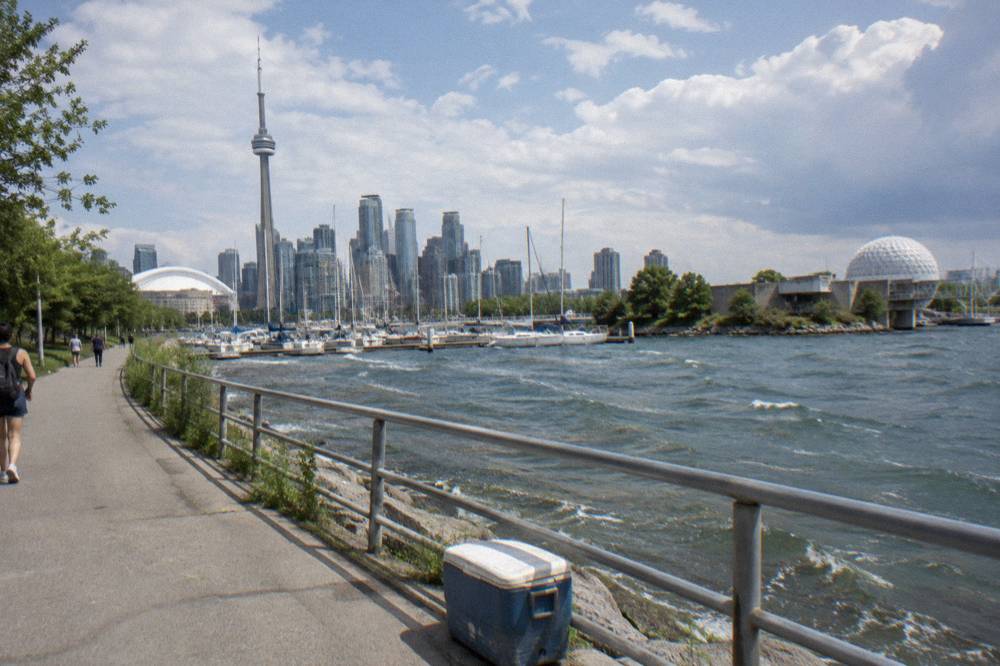
If your day is a waterfront-and-neighbourhoods day, a downtown or harbourfront pickup puts you on the Martin Goodman Trail within minutes. That trail anchors a 20-plus km waterfront corridor running from the western beaches to the eastern ones, part of a network of over 300 km of trails inside the city, figures from the City's own trail pages. The waterfront trail riding guide maps how the pieces connect.
One construction note worth knowing before you plan an eastern waterfront loop: the Martin Goodman Trail on Parliament Street is closed from 22 April to 31 December 2026, with a temporary two-way protected bicycle lane carrying riders through the Queens Quay East realignment work. That is a current, dated detour, not a permanent feature, but it shapes where a rented bike day flows in the east.
For anyone weighing the whole question of self-planned riding against a guided loop, there is a shortcut worth checking: a ride that starts downtown, uses the trail, crosses to the Islands and returns, with the bike, the timing and the crossing all handled by the operator. That is precisely the shape of the Waterfront and Islands guided ride, and its booking page states the inclusions and the meeting point plainly.
After the middle of the article the choice usually clarifies on its own: renters who enjoy route-planning and ferry-timing tend to stay renters, and renters who would rather not think about any of that tend to book the guided loop and spend their attention on the view.
What Do Helmets, Locks And Extras Cost Or Include?
Ontario law requires a helmet only for riders under 18, so an adult rental does not legally need one, though many shops offer them and some include them; locks are usually supplied with any rental meant for stopping midway, but whether either is free or charged is shop policy. Ask what the listed rate includes before you pay, because the extras are where day totals move.
The legal baseline is short. Cyclists under 18 must wear an approved helmet in Ontario. Adults ride at their own discretion. Lights and reflectors are required between half an hour before sunset and half an hour after sunrise, and riding on sidewalks is prohibited, with an exception for children under 10. None of that costs money, but it does shape what a shop must hand you and what you should check on the bike.
The extras arithmetic is where rentals and tours diverge quietly. A rental day can accumulate a helmet fee, a lock deposit, a basket charge and an over-time increment. A guided ride either includes these things as part of the per-person price or does not use them at all, since the group stays together and the operator carries the gear. The what to bring guide lists the personal items that sit outside either model: water, layers, and in island season, sunscreen.
Here is how the responsibilities and costs actually split between the two models:
| Item | Rental shop day | Guided ride |
|---|---|---|
| Helmet for under-18 rider | Legally required, shop availability varies | Operator supplies, confirm on the booking page |
| Lock | Usually supplied, sometimes a deposit | Not needed, group stays together |
| Lights for night riding | Legally required, check the bike | Rides run in daylight or dusk windows |
| Basket or storage | Often an extra charge | Snacks carried by the operator on rides that include them |
| Route planning | Entirely yours | The guide's job |
On the Islands specifically, one rule catches e-bike riders: the ferry and the park both treat larger e-bikes differently. Ferry staff may direct e-bikes over roughly 40 kilograms to the vehicle ferry, e-bikes must stay powered off on board, and charging is not available at the terminal. If your rented or guided machine is a heavy one, the crossing needs a few extra minutes of planning.
Is Bike Share Toronto Cheaper Than A Day Rental?
A Bike Share day pass runs about $15 in Canadian dollars for unlimited 90-minute classic rides, with e-bikes billed separately at a pay-as-you-go rate, reported figures that should be confirmed on the official site. Whether that beats a shop rental depends on one thing: whether your day is many short rides dock to dock, or one long rolling loop that never wants a dock.
Bike Share rewards the stop-and-start traveller. You ride from a station near your hotel to the Distillery District, dock the bike, walk, ride on to Kensington, dock again, and each 90-minute classic-bike session is covered by the pass. Go over 90 minutes on a single session and overage fees apply, which is how a $15 day quietly grows. E-bikes sit outside the day pass and bill at their own unlock-plus-per-minute rate, so a full e-bike day can outpace a shop rental fast.
The system's shape matters too. In 2026 Bike Share Toronto planned to add 200 e-bikes, 750 regular bikes and roughly 1,200 solar-powered docking stations, and the operating plan projected 8.6 million trips for the year. Those are the operator's and the City's reported figures, and they describe a network dense enough downtown that station-hopping is realistic. The Bike Share versus guided ride guide works through the full comparison.
The hard wall is the ferry. Bike Share bikes from the mainland cannot board the Island ferries, full stop. If your day includes the Islands, a Bike Share day only works with the bikes already stationed on the island side, which means a different, thinner fleet than the downtown one and no riding the trail on the city side of the crossing on the same bike.
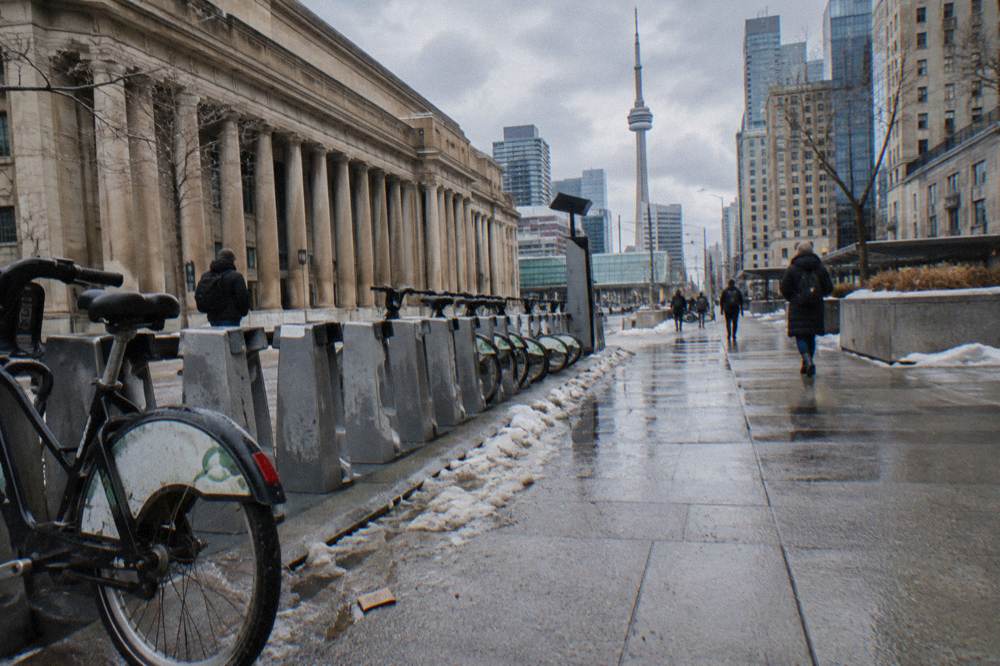
For a full-islands morning instead, there is a guided alternative that removes the station maths entirely:
The morning Islands ride keeps a dedicated bike with you for the whole 3.5-hour loop, ferry crossing included in the plan, and the booking page states what else comes with it.
When Is The Best Season To Rent And Ride?
The warm-riding window in Toronto runs roughly May through September, when average daily highs sit between 18.8 C and 27.0 C, though June through September all stay workable with rain days averaging fewer than 10 per month. Shoulder months trade thinner ferry service and cooler mornings for emptier paths; winter largely ends island rides because only the Ward's Island ferry runs.
Those temperature and rainfall figures come from the Environment Canada 1991 to 2020 climate normals for Toronto City, which describe long-term averages, never a forecast for your week. October still averages a 14.6 C high and is a genuinely pleasant riding month; November drops to an 8.1 C average high with about nine wet days. Late October 2026 even broke a daily heat record at Toronto Pearson, hitting around 22.2 C against the old 1946 mark of 21.7 C, a reminder that normals describe the middle, not the edges.
| Month | Average high C | Average low C | Days with 1 mm+ rain |
|---|---|---|---|
| May | 18.8 | 10.0 | 9.3 |
| June | 24.2 | 15.3 | 8.4 |
| July | 27.0 | 18.1 | 8.2 |
| August | 26.1 | 17.7 | 7.2 |
| September | 22.0 | 13.8 | 7.7 |
| October | 14.6 | 7.7 | 8.3 |
The ferry calendar is the real season-maker for island plans. Full three-route summer service runs mid-May to mid-September; spring and fall get reduced service on all routes; and from 14 October 2026 through mid-April 2027 only Ward's Island receives ferries. The City's ferry routes and schedules page is the source to confirm before any island day. Downtown and waterfront riding, by contrast, never closes, and the trail is plowed-busy year-round in the harbourfront stretch.
Timing within the day matters as much as timing within the year. Morning light on the Islands is the quiet window, and one ride is built exactly around it:
The sunrise ride pairs the early crossing with breakfast included, and the booking page lists the current price and what the morning covers.
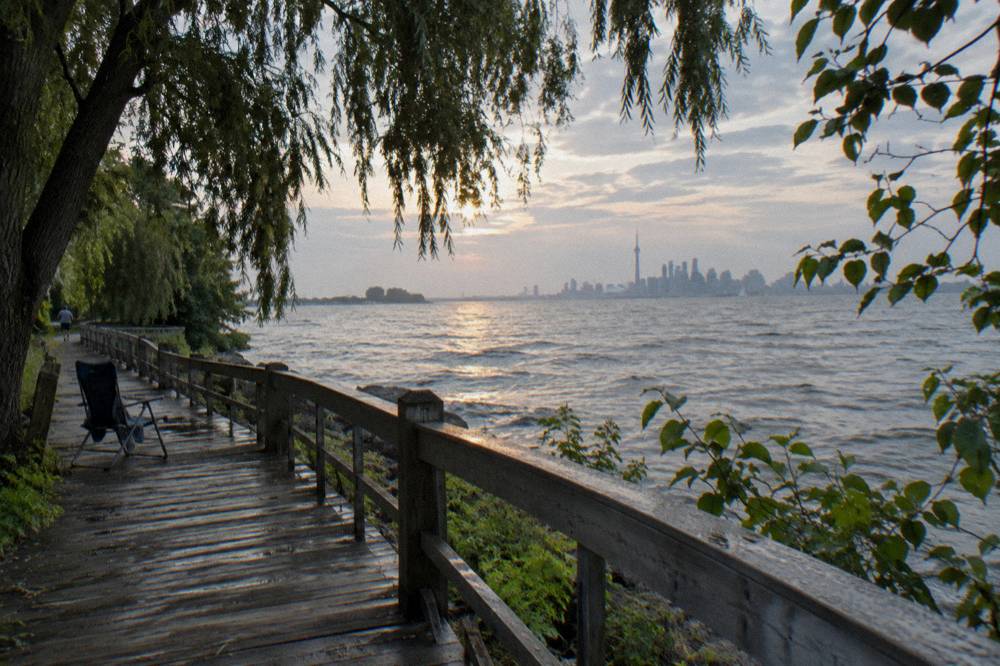
The best time of year guide extends this season-by-season if your travel dates are flexible.
Renting Versus A Guided Ride: Which Fits Your Day?
Renting wins when you want full control of route, pace and stops, and when your day is short or improvised. A guided ride wins when the logistics, the bike, the ferry timing and the routing are worth paying someone else to carry, which is why the 3.5-hour guided options on this site all include the bicycle and a guide in one per-person price. The tiebreaker is usually how much of the day you want to spend planning.
Put the two models side by side and the differences cluster in three places. Cost structure: a rental is a rate plus extras plus ferry plus food, while a guided ride is one price plus ferry plus whatever you personally add. Logistics: a rental makes you the route-planner, the lock manager and the ferry scheduler; a guided ride assigns all three to the operator. Ceiling: a rental caps at your own navigation, while a guided ride's ceiling is the guide's route, stories and pacing.
The cost gap is narrower than it first looks once you count everything. Add a rental day rate, a helmet, a lock and a ferry fare, then subtract the value of not routing 20 km of unfamiliar trail yourself, and the guided per-person price often lands close enough that the decision stops being financial. That is especially true for the downtown format, where the Heart of Downtown ride with snacks included folds food into the ride itself, and its booking page states the current price with the inclusions listed.
For first-time visitors the guided case is stronger still. Toronto's riding is good, but its network is a mix of cycle tracks, neighbourhood streets and shared paths, 110.1 km of cycle tracks and 143.8 km of bicycle lanes as of December 2025, and reading that mix cold takes local judgement. The City's network status page publishes the current totals if you want the raw picture before deciding.
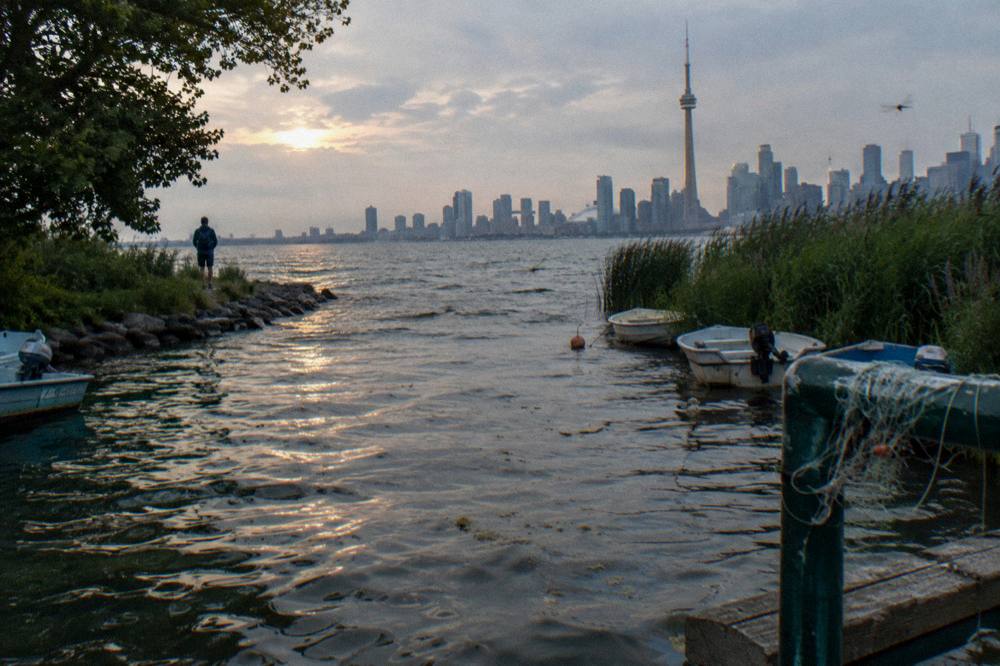
Whichever way you lean, the pages across Bike Tours Toronto hold the neighbourhood-by-neighbourhood detail, from the Kensington and downtown neighbourhoods route to the Distillery District ride guide, so the plan can be as self-directed or as guided as the day demands.
If the guided side of the ledger appeals, these three rides cover the waterfront, the Islands at dusk and downtown:
Common Questions About Renting A Bike In Toronto
How Do Bike Rentals In Toronto Work?
Rentals run on time blocks, typically an hour, a half day or a full day, with a card hold or deposit. You collect the bike at a counter, ride it, and return it to the same place before the shop's closing time. Helmets, locks and baskets may be included or charged, which is shop policy, so ask what the rate covers before paying.
What Does A Day Of Cycling In Toronto Cost?
There is no verified citywide rental rate, so the shop sets the day price and you should check it directly. Fixed, verified costs around it include the adult Island ferry round trip at $9.57 Canadian dollars and a reported Bike Share day pass at $15 Canadian dollars for unlimited 90-minute classic rides. Guided rides bundle the bike and guide into one per-person price stated on the booking page.
Is A Helmet Included With A Toronto Bike Rental?
Ontario law requires a helmet only for riders under 18. Shops commonly offer adult helmets, sometimes free and sometimes for a fee, but no shop's policy has been verified here, so confirm at the counter. Guided rides list their equipment inclusions on the booking page.
Can I Take A Rented Bike On The Toronto Island Ferry?
Yes. Ordinary bicycles are welcome on the ferries and you walk them on and off. Bike Share bicycles are not permitted on the ferries, and e-bikes travel at staff discretion, powered off, with larger e-bikes over roughly 40 kilograms possibly directed to the vehicle ferry. Winter service to mid-April 2027 runs to Ward's Island only.
Is Bike Share Cheaper Than Renting A Bike In Toronto?
For many short dock-to-dock rides, yes: a reported day pass is $15 Canadian dollars for unlimited 90-minute classic-bike sessions, with overage fees beyond 90 minutes and e-bikes billed separately. For one long continuous loop, or any day involving the Islands with a mainland bike, a shop rental or a guided ride usually fits better.
Where Do I Pick Up A Rental Bike In Toronto?
Pickups cluster along the waterfront near the ferry terminal, around downtown hotels, and on the Islands themselves in season. No specific shop, address or rate is verified here, so treat that as geography and confirm the actual counter, its hours and its rates when booking.