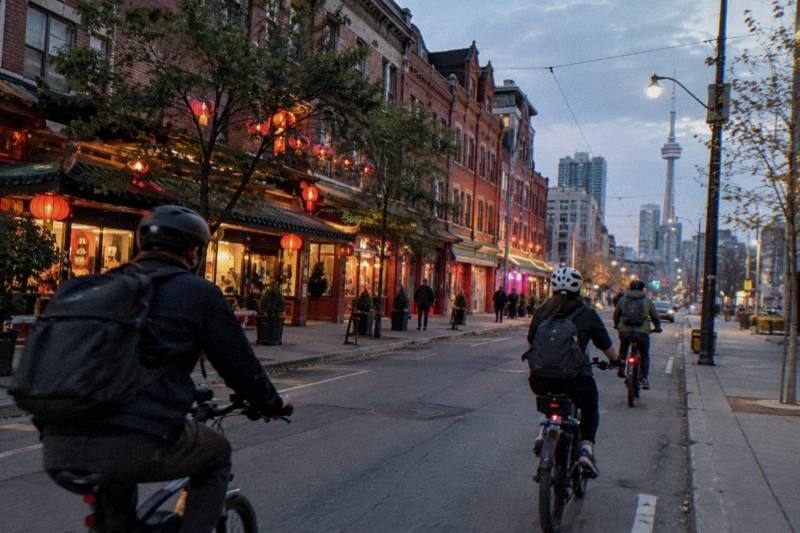
Are E Bikes Illegal In Toronto?
No, e-bikes are legal in Toronto, but Ontario sets firm limits: riders 16 and older, a helmet, a 500 W motor cap and 32 km/h assisted speed. Here is what the rules say and how they shape a ride.
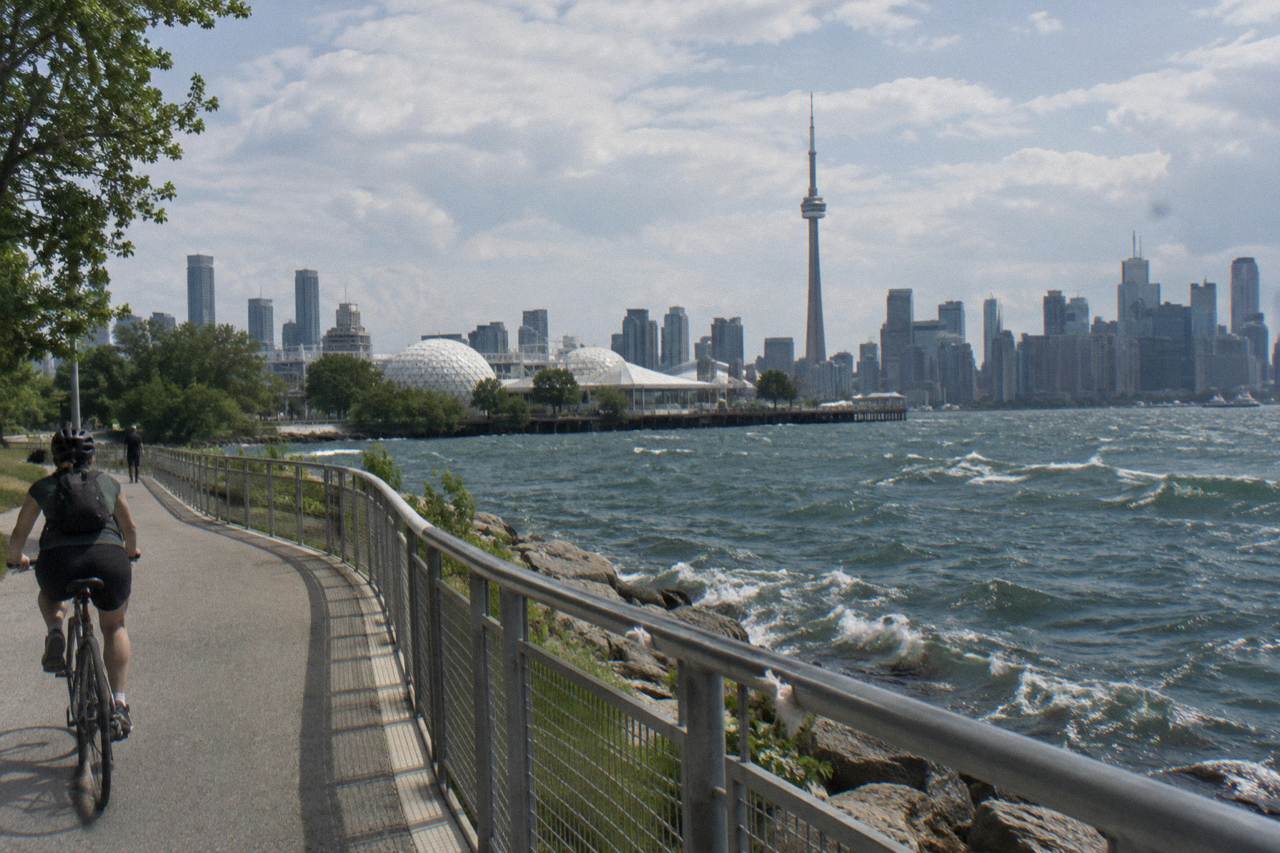
No, e-bikes are legal in Toronto, and nobody bans them from city streets. Ontario regulates them instead: the rider must be 16 or older, must wear an approved helmet, and the bike itself is capped at a 500 watt motor, a 120 kg total weight and a 32 km/h maximum assisted speed. Break those limits and the machine stops being a legal e-bike.
That distinction matters more than most visitors expect. The question "are e bikes illegal in toronto?" gets asked constantly, and the honest answer is that the province has drawn a tight box around what counts as an e-bike at all. Inside the box, you are a cyclist with a motor. Outside it, you may be riding something closer to a motor vehicle, with everything that implies for licences, insurance and where you can go.
Toronto itself adds very little on top of the provincial framework. What the City does control is access: the rules for taking an e-bike on the island ferry, and a weight limit inside Toronto Island Park. Those local wrinkles trip up more riders than the provincial law ever does, because they are less publicized and they change what a day on the islands looks like.
The law also matters for the guided side of things. Toronto has two shared e-bike tours on the market right now, and part of their appeal is exactly this: the operator supplies machines that already sit inside the legal box, so a visitor does not have to interpret Ontario's equipment rules alone. If riding an e-bike through unfamiliar neighbourhoods is the goal, these are the options.
The rest of this article walks through the actual rules, one at a time, using Ontario's own published requirements and the City's ferry and park policies. Where a detail is genuinely uncertain, it says so. For the broader picture on helmets and equipment, see the companion piece on Bike Tours Toronto covering Toronto cycling rules, helmets and e-bike law, which goes deeper on penalties and equipment.
What Are Ontario's E Bike Rules?
Ontario's rules are specific: an e-bike rider must be at least 16 years old and must wear an approved bicycle or motorcycle helmet. The machine may not exceed a 500 watt motor, a 32 km/h maximum assisted speed, or a total weight of 120 kg. The province publishes these requirements on its official riding page, and they apply on every street in Toronto. If you're curious how that compares to regular bicycles, our guide to Toronto's helmet laws for standard bikes explains who actually has to wear one.

Those four numbers, the age floor, the helmet, the wattage and the speed ceiling, are the whole skeleton of the law. The province states them plainly: a rider "must be 16 or older and wear an approved bicycle or motorcycle helmet," with the machine limited to a 32 km/h assisted maximum and a motor not exceeding 500 watts, all within a 120 kg weight cap. You can read the requirements directly on Ontario's official e-bike page.
| Rule | Limit | Who it applies to |
|---|---|---|
| Minimum rider age | 16 or older | Every e-bike rider in Ontario |
| Helmet | Approved bicycle or motorcycle helmet | Every e-bike rider, no exceptions by age |
| Maximum assisted speed | 32 km/h | The motor must stop assisting above this |
| Maximum motor power | 500 watts | The machine itself |
| Maximum weight | 120 kg | The machine itself |
Two clarifications are worth making. First, the 32 km/h limit is on assistance, not on how fast you may physically pedal downhill; the motor simply cuts out past that threshold. A fit rider on flat terrain can legally travel faster than 32 km/h under their own power, and nothing in the e-bike rules prevents it. What the law forbids is the motor continuing to push you once that speed is reached. Manufacturers of bikes sold legally in Canada build the cutoff into the controller, which is why a compliant machine goes quiet, in assist terms, right around that number even with the throttle held.
Second, the helmet rule for e-bikes covers everyone, which is stricter than the ordinary bicycle rule. On a regular bike, Ontario requires helmets only for riders under 18, per the province's bicycle safety page. On an e-bike, the helmet is mandatory at any age. That asymmetry surprises a lot of returning cyclists who last rode as teenagers and assume the same under-18 rule follows them onto an electric machine. It does not.
The other equipment rules carry over from the bicycle side of the ledger. A bell or horn, a white front light, a red rear light or reflector at night, and reflective tape on the forks are all required gear, and an e-bike is not exempt from any of it. For a rider joining a guided tour, this is largely invisible, since operators hand out helmets with the bike and keep their fleets lit and belled. For someone riding a rented or borrowed machine solo, it is worth a thirty second check before setting off, especially if any part of the ride will happen after dark.
If you are weighing whether the electric assist is even worth it for a Toronto visit, the comparison piece on e-bike or regular bike on a Toronto tour breaks down the trade-offs, from hills, of which the downtown has few, to distance, of which the waterfront has many.
Can You Take An E Bike On The Island Ferry?
Yes, but with conditions. The City allows e-bikes on the ferry at staff discretion; they must be fully powered off on board, charging is not permitted, and staff may direct riders with larger e-bikes, roughly 40 kilograms and over, to the vehicle ferry instead. Regular bicycles are simpler: walk them on and off, and they are always welcome.
The island ferry is the choke point for any e-bike ride to Toronto Island Park, so the fine print deserves attention. The City's own ticketing page states that bicycles are welcome aboard and that riders should "walk your bicycles when boarding and disembarking," while noting that Bike Share bicycles are not permitted on the ferries at all. E-bikes fall into a separate, softer category: welcome "at the discretion of staff," powered off for the crossing, with no charging on board or at the terminal.
| Machine | Ferry policy | Notes |
|---|---|---|
| Regular bicycle | Welcome | Walk it on and off |
| Bike Share bicycle | Not permitted | Neither mainland nor island rentals cross |
| E-bike under roughly 40 kg | Welcome at staff discretion | Must be powered off on board |
| E-bike roughly 40 kg and over | May be directed to the vehicle ferry | Staff decision, case by case |
The powered-off requirement is the one riders most often miss. It is not enough to stop pedalling; the machine should be switched off entirely for the duration of the crossing, and the charging rule means you cannot top up a battery while waiting at the terminal either. None of this is onerous for a typical pedal-assist city bike, which weighs well under the 40 kg threshold and switches off with a single button press. It bites harder for heavier cargo-style builds and for riders hauling the machine for a full island loop rather than a short crossing.
There is a second layer once you land. Toronto Island Park has its own reported limit: e-bikes over 40 kg are said not to be allowed inside the park, though this figure is less firmly documented than the ferry rules and is worth confirming with the City before you plan around it. Heavy cargo-style machines that squeeze under the provincial 120 kg ceiling can still fail the park's much lower threshold. The park's trail network is a mix of paved and gravel paths, and the island has its own rental outfits and Bike Share stations, so a rider with an oversized machine has realistic alternatives: leave it secured on the mainland and rent on the island instead. If that mainland swap sounds appealing, our guide to what e-bike rentals typically cost in Toronto breaks down the pricing before you commit.
Ferry service itself runs on a seasonal rhythm that shapes any island ride. Since 14 October 2026, the winter schedule serves Ward's Island only, with the first departure from the city around 6:30 a.m. and the last around 11:45 p.m.; Centre Island and Hanlan's Point have no winter service until mid-April 2027. Full three-route service returns mid-May to mid-September, with reduced schedules in spring and fall. The City's sailing page carries the live times. Round-trip fares, in Canadian dollars, are $9.57 for adults, $6.15 for older adults and youth, $4.51 for juniors, and free for infants. Online tickets stay valid to the end of the year, and tickets are round-trip, valid from any dock.
Where Can You Legally Ride An E Bike In Toronto?
Anywhere a regular bicycle can go, with one big shared exception: sidewalks. Riding any bicycle, electric or not, on a Toronto sidewalk is not allowed, though children under 10 may ride on the sidewalk. Beyond that, e-bikes use the same network of cycle tracks, painted lanes and multi-use trails as everyone else, a network that totalled 346 km on-street plus 399.3 km of trails as of December 2025.
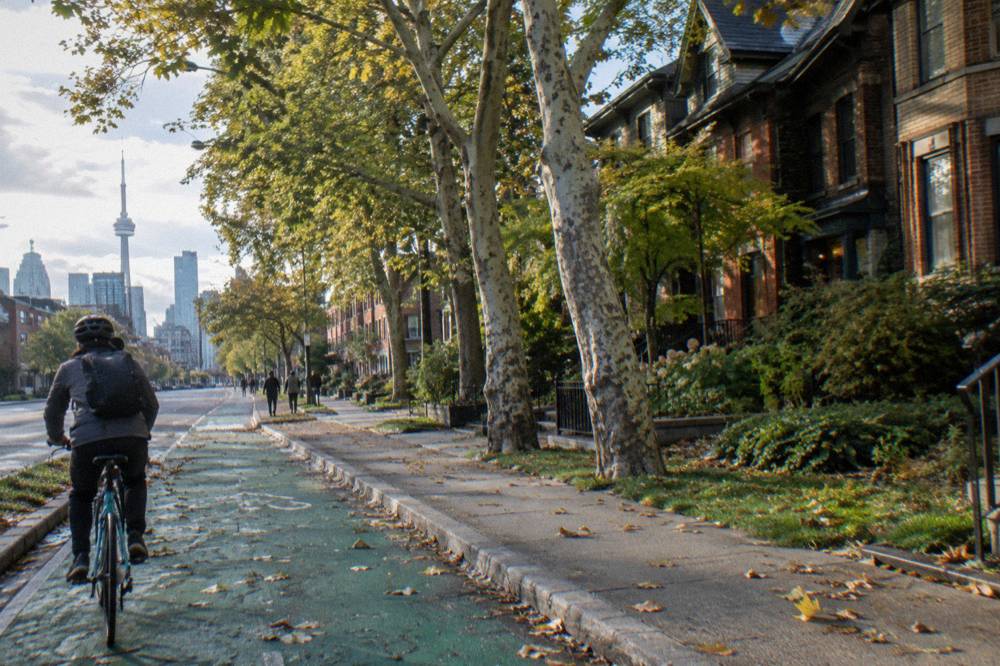
The sidewalk rule is the one that catches visitors, because e-bikes invite the cautious rider toward the pavement. Ontario's rule allows only young children on sidewalks; everyone else, regardless of bike type, belongs on the road or the trail. The rest of the legal geography is shared: 110.1 km of cycle tracks, 143.8 km of bicycle lanes and 92.1 km of sharrows as of December 2025, per the City's network status page, plus the multi-use trail network that includes the Martin Goodman Trail's 20-plus kilometre run along the waterfront.
The network is also in flux, and honestly so. Ontario completed removing the protected bike lanes on a 1.2 km stretch of Bloor Street West in Etobicoke, between Clissold Road and Royal York Road, on 30 October 2026, the first removal under the province's plan, restoring motor vehicle lanes in both directions. The Court of Appeal had ruled on 14 August 2026 that roadway design is a matter for the legislature, and advocates have since sought leave to appeal to the Supreme Court of Canada. The practical upshot for a rider is simple: check current lane conditions on any route you plan, because signage on paper and paint on asphalt have diverged this year.
The province has also issued a request for proposals covering design options for about 19 km of Bloor Street, Yonge Street, University Avenue, Queen's Park, Queen's Park Crescent and Avenue Road, closing in December 2026, with awards targeted for mid-December and major construction expected from spring 2027. None of that changes what is legal today, but it does change what is comfortable, and a rider planning next summer's routes should expect further shifts before then.
Closer to the waterfront, the Martin Goodman Trail on Parliament Street has been closed from 22 April to 31 December 2026, with a temporary two-way protected bicycle lane carrying riders through the Queens Quay East construction zone. That detour is signed, and it keeps the waterfront link intact while the realignment proceeds. Farther east, the Port Union shoreline project has kept the trail open with intermittent detours and a short signed gravel section, and the Rouge Beach section of the Waterfront Trail remains closed long-term with a detour in place.
What Is It Like To Ride An E Bike Tour In Toronto?
Two shared guided rides currently put you on an e-bike in Toronto, both around 3.5 hours, both aimed at the city's neighbourhoods rather than its trails. The operators supply the bikes, which quietly solves the whole legal question: the machines arrive inside Ontario's 500 watt and 32 km/h limits, and the guide handles routing away from sidewalk mistakes and construction detours.
The main option is E-bike through Toronto's Dynamic Neighbourhoods, a 3.5 hour shared ride that moves through several of the city's distinct districts with the assist doing the work on the longer stretches. The current price and the exact meeting point are shown on the booking page, so check there before planning your day around it. A second listing covers the same ground under the operator's other booking channel; it is the same underlying product family, not a different operator, and with only two reviews so far it has no meaningful rating to report. Treat any price difference between the two as a listing difference, not a quality difference.
The comparison that actually helps a buyer is against the classic-bike alternative. The Heart of Downtown Ride, Snacks Included, also runs 3.5 hours and covers the downtown core on a regular bicycle, with snacks in the price. Toronto's downtown is famously flat, so the electric assist buys range more than it buys hill relief; the e-bike earns its keep if your legs are done after a long travel day, or if the plan is to string together far-flung neighbourhoods rather than stay central. The booking pages carry live prices and inclusions for both.
For riders who want the full picture before choosing, the site's planning piece on which guided bike ride in Toronto to book lines up the whole set of options by format, duration and focus, including the classic and e-bike families side by side.
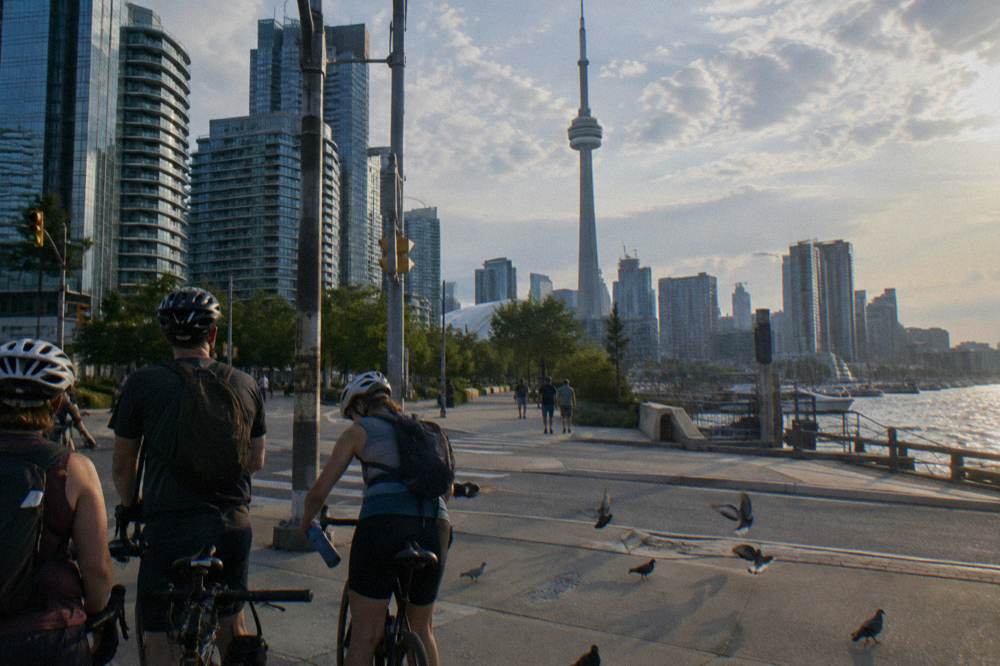
Weather shapes the experience as much as the machine. The Environment Canada 1991 to 2020 normals for Toronto City put the average July high at 27.0 C and the average January high at -0.3 C, with June through August each averaging 15.3 to 18.1 C overnight. Those are long-run averages, not forecasts, but they explain why the guided season concentrates in the warm half of the year: e-bike batteries and cold fingers both behave better above roughly 10 C, and the normals say that describes April through October here. Rain is spread fairly evenly, with monthly precipitation between 52.8 mm and 81.6 mm across the year, so a rain shell earns its place in a bag at any season.
Since both listings are the same underlying product family, compare the live prices shown on each booking page and let whichever comes out lower when you book take the reservation. While you are there, note the listed meeting point and build your travel time into the schedule, because the 3.5 hour window starts at that spot, not at your hotel.
On clothing, the long-run numbers argue for a layer you can shed: a 27.0 C July afternoon and an evening inside the 15.3 to 18.1 C overnight band are two different rides, and something light that packs down beside the rain shell covers the gap between them.
One habit worth adopting given the flexible routes: raise your must-sees with the guide at the start, before the group rolls. That is the moment the day is still being shaped, and asking costs nothing.
One honest caution to close the practical picture: what a guide shows on any given day varies with construction, events and group pace, so treat route descriptions as indicative rather than fixed. Operators report their routes flexibly for exactly this reason, and the Bloor and Parliament changes described above are recent enough that any route card older than this autumn is out of date.
Common Questions About E Bikes In Toronto
Are E Bikes Illegal In Toronto?
No. E-bikes are legal on Toronto streets under Ontario law, provided the rider is 16 or older, wears an approved helmet, and the machine stays within a 500 watt motor, a 32 km/h assisted maximum and a 120 kg weight cap.
Do You Need A Licence Or Insurance For An E-Bike In Toronto?
No licence or vehicle insurance is required for a legal e-bike that meets Ontario's definition. The requirements are the age minimum, the helmet and the machine's technical limits. If a machine exceeds those limits it may be classified differently, which changes the answer.
Can You Ride An E-Bike On The Sidewalk In Toronto?
No. Sidewalk riding is not allowed for any bicycle in Toronto, electric or not, with an exception for children under 10. E-bike riders use bike lanes, cycle tracks and multi-use trails like everyone else.
Can You Take An E-Bike On The Toronto Island Ferry?
Yes, at staff discretion. The e-bike must be fully powered off on board, charging is not allowed, and riders with larger e-bikes, roughly 40 kg and over, may be directed to the vehicle ferry. Toronto Island Park is also reported to bar e-bikes over 40 kg; confirm with the City before you go.
Is A Helmet Mandatory On An E-Bike If You Are Over 18?
Yes. Ontario's e-bike helmet rule applies to every rider aged 16 and up, with no upper age exemption. This is stricter than the regular bicycle rule, which requires helmets only for riders under 18.
Are Guided E-Bike Tours In Toronto Legal For Visitors?
Yes, and they are the simplest route into legal e-biking in the city. The operators supply machines that meet Ontario's limits, supply the helmets, and route the ride on streets and trails. Check the booking page for prices, meeting points and inclusions.