Can I Ride A Bike Without A Helmet In Toronto?
Ontario law requires helmets only for cyclists under 18, with a separate mandatory helmet rule for e-bike riders of every age. Here is what the rules actually say for Toronto.
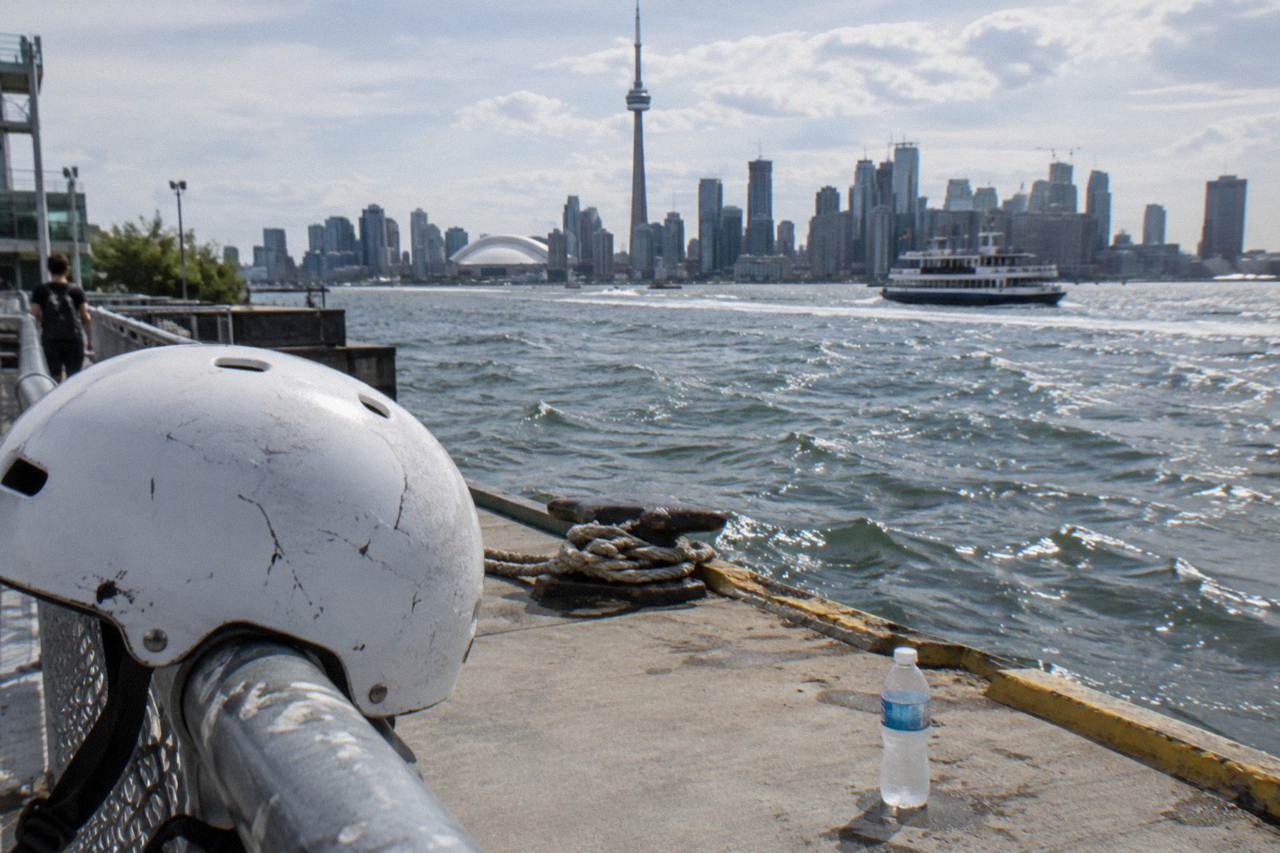
Yes, adults can legally ride a regular bicycle in Toronto without a helmet. Ontario law requires an approved bicycle helmet only for cyclists under 18, so riders aged 18 and older on an ordinary bike face no such requirement. However, anyone operating an e-bike at any age must wear an approved bicycle or motorcycle helmet. That helmet rule is only one of the conditions attached to e-bikes, and if you're wondering whether those machines are even street legal, our guide to Toronto's e-bike laws has the answer.
That is the short answer, and it surprises visitors from places with all-ages helmet laws. Canada's rules are set province by province, and Ontario's Highway Traffic Act draws its bicycle helmet line at the 18th birthday. For a tourist standing at a rental stand on the waterfront deciding whether to grab a helmet, the legal question has a clean answer, and the practical question is a separate one this article deliberately does not answer for you.
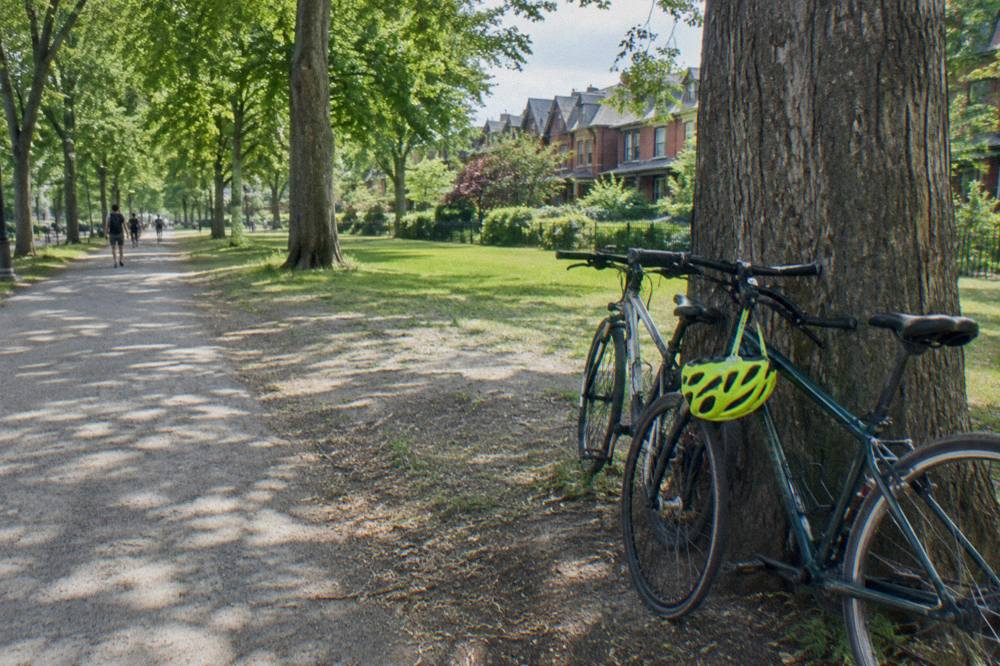
What the law actually says, in the province's own words, is that "By law, cyclists under the age of 18 must wear an approved bicycle helmet." That single sentence carries all the obligations for regular bicycles in the province, and it is worth reading closely, because two words in it do a lot of work. The first is "under": the obligation stops at 18, not 16, not 21. The second is "approved": a costume helmet, a construction hard hat or a ski helmet does not satisfy the rule. More detail on what counts appears further down this page.
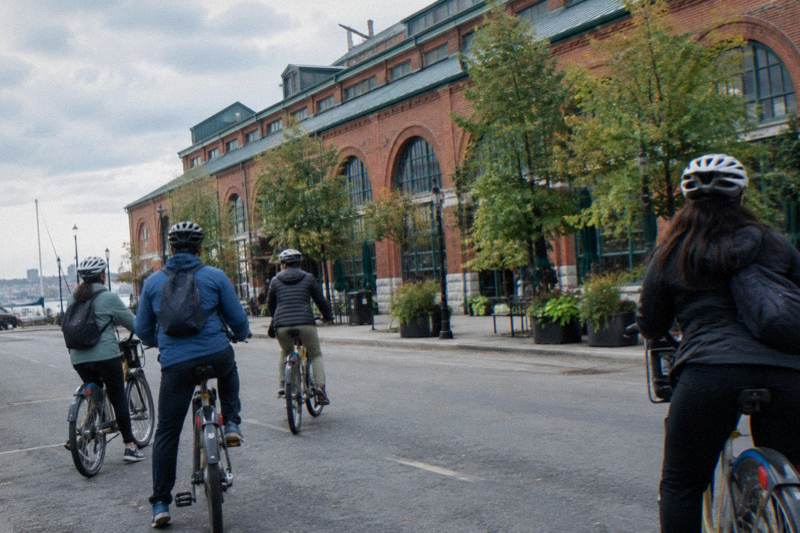
The e-bike carve-out is where adults get caught out. Ontario treats e-bikes as their own category of vehicle with their own requirements, and one of them is a helmet for every rider aged 16 and up. If you have booked an e-bike tour of the city's neighbourhoods, the helmet is not optional for anyone in your group. The pair of e-bike rides available in the city, which use pedal-assist bikes, both fall under that rule.
Before going further, it helps to see the whole legal picture in one place.
| Rider situation | Helmet legally required? | Source of the rule |
|---|---|---|
| Regular bicycle, rider under 18 | Yes, an approved bicycle helmet | Ontario Highway Traffic Act |
| Regular bicycle, rider 18 or older | No | Same act, obligation ends at 18 |
| E-bike, rider 16 or older | Yes, an approved bicycle or motorcycle helmet | Ontario e-bike rules |
| E-bike, rider under 16 | Not permitted to ride an e-bike at all | Ontario e-bike rules |
One more framing note. This article reports what the law says and what tour operators state on their listings. It does not offer a safety opinion, and it will not quote injury statistics, because the question asked is a legal one: can you ride without a helmet in Toronto? You can, if you are an adult on a regular bike. Whether you should is a personal decision the rules leave entirely to you.
Who Must Wear A Helmet Under Ontario Law?
Riders under 18 on any bicycle must wear an approved helmet, and the duty extends to parents: a parent or guardian must not knowingly allow a child under 16 to ride without one. Adults aged 18 and over on a regular bicycle have no helmet obligation at all. The helmet must be an approved bicycle helmet, meaning one certified to the standards the province recognizes, not merely any hard shell.
The under 18 rule is the backbone of Ontario's bicycle helmet law, and Toronto follows the province completely on this, since Ontario's helmet law mandates them only for riders under 18. Ontario law requires helmets for cyclists under 18, and adult riders are not covered by that rule, so helmet use across Toronto, the waterfront trail, and the islands is a matter of personal choice for riders 18 and over. The provincial line is the line. With the helmet question settled, the planning shifts to where to ride, and our guide to free Toronto experiences you can pedal to covers the waterfront trails, markets, and summer concerts that cost nothing.
The parent side of the rule deserves emphasis for travelling families. It is not only the young rider who bears responsibility; an adult who knowingly lets a child under 16 ride bareheaded is also contravening the law. In practice that matters on family holidays, where a parent might send a teenager off on a rental while heading to a cafe. If your rider is under 18, the helmet goes with the bike.
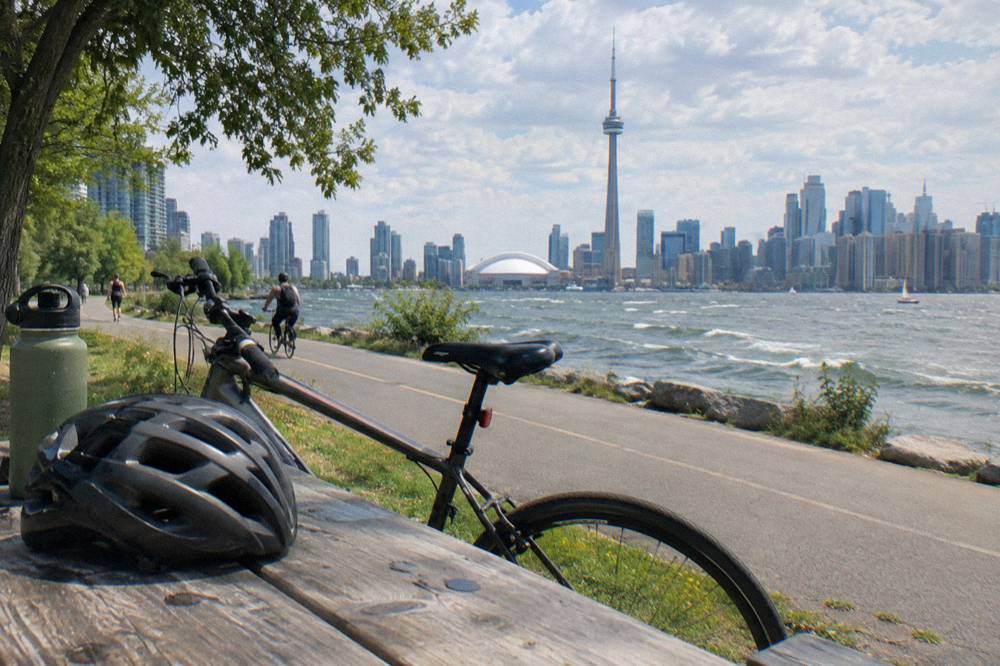
"Approved" is the word that trips people up. The Ontario bicycle safety page states the requirement as an approved bicycle helmet, and certification marks inside the helmet's shell are how you confirm it. A helmet bought from a reputable bike shop in Canada will carry the mark; a novelty shell from a costume shop will not. For rentals, the shop or tour operator supplies the helmet, and any established operator's stock will meet the standard as a matter of course.
The province's own summary page sets out the rule in full, alongside the equipment requirements covered further down: Ontario's bicycle safety page. It is the primary source for every helmet and equipment claim in this article.
For visitors joining a guided ride, the operator handles this end of things. The Heart of Downtown Ride, a 3.5 hour shared tour with snacks included, supplies the equipment its riders need, and the downtown 3.5 hour guided ride describes what is provided on its booking page. Families booking for teenagers should still confirm helmet sizing in advance, since child and youth sizes run out first on busy summer mornings.
What Are The E-Bike Helmet Rules In Toronto?
Every e-bike rider aged 16 or older must wear an approved bicycle or motorcycle helmet, with no upper age exemption of any kind. Riders under 16 may not operate an e-bike at all. The same provincial rules cap assisted speed at 32 km/h, limit motor output to 500 watts and set a maximum vehicle weight of 120 kg.
This is the rule that changes the answer for adults. The moment you swing a leg over an e-bike in Ontario, the adult exemption disappears. The province's e-bike page requires the rider to be 16 or older and to wear an approved bicycle or motorcycle helmet, and unlike the regular bicycle law there is no birthday at which the obligation ends. A 70 year old on a pedal assist bike needs a helmet just as a 17 year old does.
The definition matters here, because "e-bike" in Ontario is a legal category, not a marketing one. To qualify, the vehicle must have pedals, an electric motor not exceeding 500 watts, a maximum assisted speed of 32 km/h and a gross weight of 120 kg or less. The pedal assist bikes used on the city's guided e-bike rides sit inside that definition, so every guest on those tours wears a helmet. The full set of requirements is on Ontario's e-bike rules page.
| Ontario e-bike requirement | What the rule says |
|---|---|
| Minimum rider age | 16 years |
| Helmet | Approved bicycle or motorcycle helmet, every rider |
| Maximum assisted speed | 32 km/h |
| Maximum motor output | 500 watts |
| Maximum weight | 120 kg |
The ferry adds one more layer if your e-bike plans involve the Islands. E-bikes are welcome on the island ferries at the discretion of staff, must be fully powered off on board, and cannot be charged on the ferry or at the terminal. Staff may direct riders with larger e-bikes, roughly those over 40 kilograms, to the vehicle ferry. These are access rules rather than helmet rules, but they tend to arrive in the same conversation.
Visitors weighing an e-bike against a regular bike for a guided ride can compare the two formats in the site's comparison of e-bike or regular bike tours. The helmet obligation differs between them, and the pedal assist option also flattens the city's longer climbs toward the Don Valley and the west end.
What Equipment Does Ontario Require On Your Bike?
Beyond the helmet rule for under 18s, Ontario requires every bicycle to carry a bell or horn, and to show a white front light plus a red rear light or reflector between a half hour before sunset and a half hour after sunrise. Reflective tape on the front forks is also required, and riding on sidewalks is prohibited, with an exception for children under 10.
The equipment list is short and easy to meet, and it applies to the bicycle itself rather than the rider, which is why rental fleets and tour operators handle it invisibly. A bell or horn is mandatory at all times, not just on trails. Lights are mandatory only in the dark half hour windows around sunrise and sunset, but a set fitted to the bike year round costs little and removes the timing question entirely. The same Ontario page that carries the helmet law carries these requirements. The rest of the planning pages sit on Bike Tours Toronto.
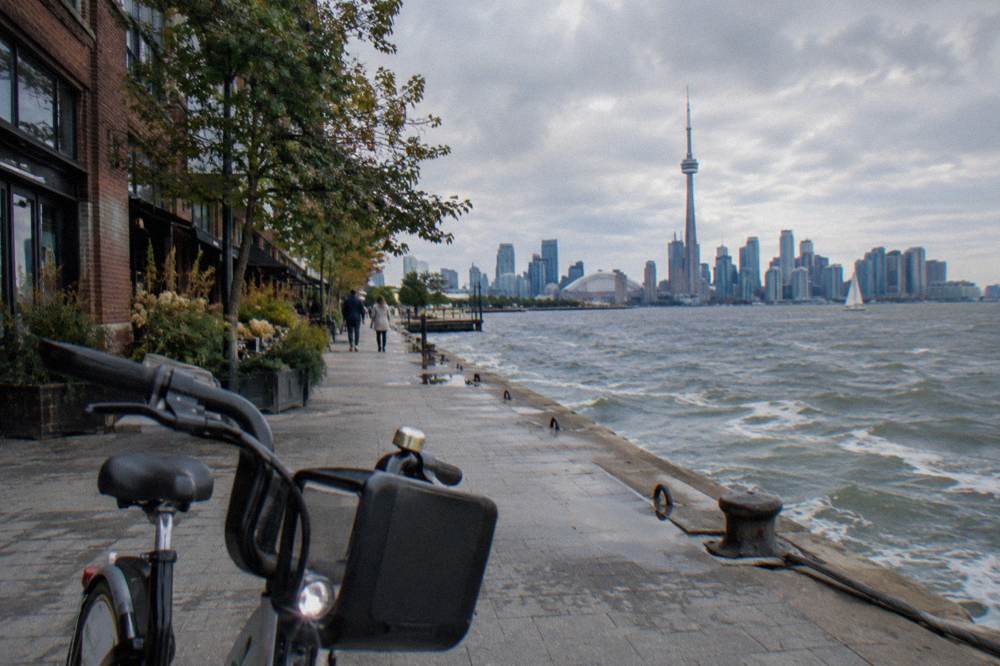
The sidewalk rule catches visitors who get nervous in traffic and hop up onto the curb. Riding a bicycle on sidewalks is not allowed, with the exception for children under 10. Nervy riders are better served by route choice than by sidewalks, and Toronto gives good options: the city counted 110.1 km of cycle tracks and 143.8 km of bicycle lanes as of December 2025, plus 399.3 km of multi use trails, so there is almost always a lower stress way to get where you are going. The site's overview of Toronto bike lanes and path maps lays those out.
For a packing list that includes lights, layers and the other small things, the guide on what to bring on a Toronto ride covers the practical side. Guided tours fold most of it into the listing: bikes, equipment and snacks come with the ride, and the booking page states exactly what is included for each option.
Do Guided Bike Tours In Toronto Include Helmets?
Most guided rides listed here supply helmets with the bike, though it varies by tour, so check the live booking page for the ride you want. This matters most for riders under 18 and e-bike riders, the two groups Ontario helmet rules cover. Ontario law requires a bell and lights. The listing notes what each tour bike carries. Adults on regular bike tours who prefer to ride bareheaded should raise it with the operator directly, since policies vary.
The guided format quietly solves the legal question for the groups the law actually protects. A family booking the downtown ride for a 15 year old does not need to pack a helmet from home, because the operator's equipment covers the under 18 obligation. An e-bike group gets helmets for everyone, since the province requires them regardless of age. What the listings describe is equipment included with the ride, alongside the snacks that several of the options provide.
The Waterfront and Islands ride, 3.5 hours on a classic bike, is the format where the adult helmet question comes up most, because car free island paths feel casual and riders sometimes assume rules relax there. They do not. The Islands are inside Ontario, the under 18 and e-bike rules apply on island paths exactly as on King Street, and the island park management additionally restricts e-bikes over 40 kg. Adults on regular bikes remain legally bareheaded on the islands, as anywhere else in the province.
Timing shapes these rides too. The morning and twilight versions of the islands tour exist because light and crowds change across the day, and riders booked into a twilight departure should note that the lighting requirement kicks in a half hour before sunset. A tour ending at dusk needs its lights on, and tour bikes carry them. For the differences between the day's departure windows, the site's look at sunrise, morning and twilight island rides compares them directly.
One practical note on helmets and group tours: sizing is the thing to flag when booking, not availability. Operators carry child, youth and adult sizes, but youth sizes go first on peak summer mornings. A family of five booking for a July weekend should mention ages in the booking notes, and any question about what a specific tour includes, from helmet sizes to snack options, is best sent to the operator through the booking page before the departure date.
What Happens If You Ride Without A Helmet?
An adult riding a regular bicycle without a helmet in Toronto breaks no law, so nothing legal happens. A rider under 18 without a helmet, or an e-bike rider of any age without one, is riding contrary to Ontario law, and under Ontario's Highway Traffic Act, anyone under 18 must wear an approved helmet, and a parent or guardian is responsible for a rider under 16 who goes without one.
Splitting those two situations cleanly is the honest answer. For the adult on a regular bike, there is no stop, no fine, no consequence in law, because there is no rule to enforce. Ontario legislated a helmet requirement and deliberately scoped it to minors. Adults who choose to ride bareheaded are exercising a choice the province left open.
For the covered groups, the mechanism is a provincial offence. Police in Toronto do enforce the helmet law, most often around schools and on family routes, and the usual first step is a stop and a conversation rather than a ticket on the spot. The fine structure sits under the Highway Traffic Act, and this article will not quote a dollar figure, because fine amounts change and the provincial page is the reliable source. What matters for a visitor is simpler: if your group includes under 18s or is on e-bikes, helmets are part of the law, not a suggestion.
A word on what this article will not do. It will not tell you a bareheaded adult is taking no risk, and it will not quote injury statistics, because the question here is a legal one and the law is genuinely permissive for adults. Riders make their own call; the rules simply draw the line at 18 for regular bikes and at zero exemptions for e-bikes. Parents make the call for under 16s in practice as well as in law, since the parent duty rides alongside the child's.
The rental market lands in the same place as the guided tours. Shops renting bikes to families will hand over helmets for under 18 riders without being asked twice, and shops renting e-bikes will require helmets for every rider as a condition of the rental. Adults renting regular bikes are usually offered a helmet and can decline. The legal picture is consistent across rental stands, tour operators and private bikes: under 18 always, e-bikes always, adults on regular bikes never required.
Where The Rules Leave You
Where the rules leave you is in the gray areas, the moments no checklist or guideline covers, where you fall back on your own judgment and basic courtesy. Official guidance gets you most of the way there, but the rest is up to you, and that gap is less a flaw in the rules than a simple fact of travel.
For visitors, the practical translation is short. Book a guided ride and the helmet question shifts to the operator: most listed tours include one, but check the specific booking page to confirm. Riding with teenagers or on an e-bike means a helmet is part of the deal before you even reach the path. Riding solo as an adult on a regular bike means the province trusts you to decide, and the only mandatory extras on the bicycle itself are the bell and, after dark, the lights.
Common Questions About Riding Without A Helmet In Toronto
Can I Ride A Bike Without A Helmet In Toronto?
Yes, if you are 18 or older and riding a regular bicycle. Ontario requires an approved helmet only for cyclists under 18. E-bike riders of any age must wear an approved bicycle or motorcycle helmet, and riders under 16 may not use an e-bike at all.
Do Adults Have To Wear A Helmet On An E-Bike In Toronto?
Yes. The e-bike helmet requirement applies to every rider aged 16 and older with no age exemption, unlike the regular bicycle rule that stops at 18. The same provincial rules limit e-bikes to a 32 km/h assisted speed, a 500 watt motor and a 120 kg maximum weight.
Can My Child Ride Without A Helmet If I Am Watching Them?
No. Cyclists under 18 must wear an approved bicycle helmet, and a parent or guardian must not knowingly allow a child under 16 to ride without one. Both the young rider and the supervising adult are covered by the law.
Does A Rental Bike Or Guided Tour Come With A Helmet?
Most of the city's guided rides include a helmet, but check the live booking page for the specific tour to confirm what's provided. Check the booking page of the specific tour for exactly what is included, and mention youth sizes when booking for a family.
What Counts As An Approved Helmet?
An approved bicycle helmet is one certified to the standards Ontario recognizes, marked inside the shell. Novelty shells and helmets designed for other sports do not satisfy the rule. Helmets from established bike shops, rental fleets and tour operators in Canada carry the certification as standard.
Is Riding On The Sidewalk Allowed Instead Of The Road?
No. Riding a bicycle on sidewalks is not allowed in Toronto, with an exception permitting children under 10 to ride on the sidewalk. The city's network of cycle tracks, bicycle lanes and multi use trails is the lower stress alternative for nervous riders.