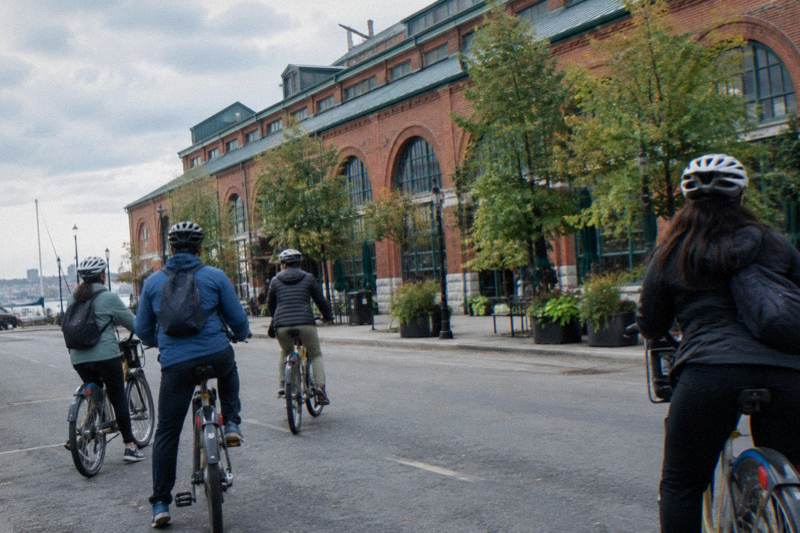
What To Bring And Wear On A Toronto Bike Ride
What you wear and carry decides how a 3.5-hour ride feels. Here is what matters for Toronto's weather, trails and ferry rules, and what you can safely leave behind.
Short answer
Wear layers you can shed, closed shoes, and sun protection, and bring water and a small bag for what you remove. Toronto's guided rides run about 3.5 hours in changeable weather: July normals run 18.1 to 27 C, May and October swing much wider. Operators supply the bike and, on snack-flagged rides, snacks; check the booking page for helmet and water details.
Toronto sits at the north edge of Lake Ontario, and that geography shapes every ride: mornings on the waterfront can be 10 degrees cooler than mid-afternoon inland, and a route that starts in sunshine can end in a headwind off the lake. Pack for that range, not for the forecast high alone. This guide covers clothing, footwear, sun and water, the small items that earn their space, what a guided ride already covers, and what is better left in the hotel safe. It draws on Toronto's official climate normals, the City's ferry and cycling rules, and what the guided rides on Bike Tours Toronto actually state on their booking pages.
What Should You Wear On A Bike Tour In Toronto?
Dress in two to three light layers with a wind shell on the outside, and plan to shed one within the first hour. Toronto's lake breeze makes the first and last hours of a ride noticeably cooler than the middle, and a 3.5-hour ride spans that whole swing. The Environment and Climate Change Canada 1991 to 2020 normals for downtown Toronto put July's average low at 18.1 C against an average high of 27 C, and shoulder months are wider: May averages 10.0 C at night and 18.8 C by day, October 7.7 to 14.6 C. A short-sleeve base layer, a light long-sleeve mid layer and a packable wind jacket cover nearly every guided-ride day between May and October.
The classic mistake is dressing for the temperature outside the hotel door at the meeting time. Waterfront rides spend their first stretch beside open water, where the wind chill is real even in summer, and Islands rides involve a ferry crossing where you stand on an open deck. Riders who start warm enough at the dock are often too warm an hour later on a residential street with no shade. Layers you can remove in thirty seconds, stashed in a small backpack or in the pannier the operator provides, solve both problems.
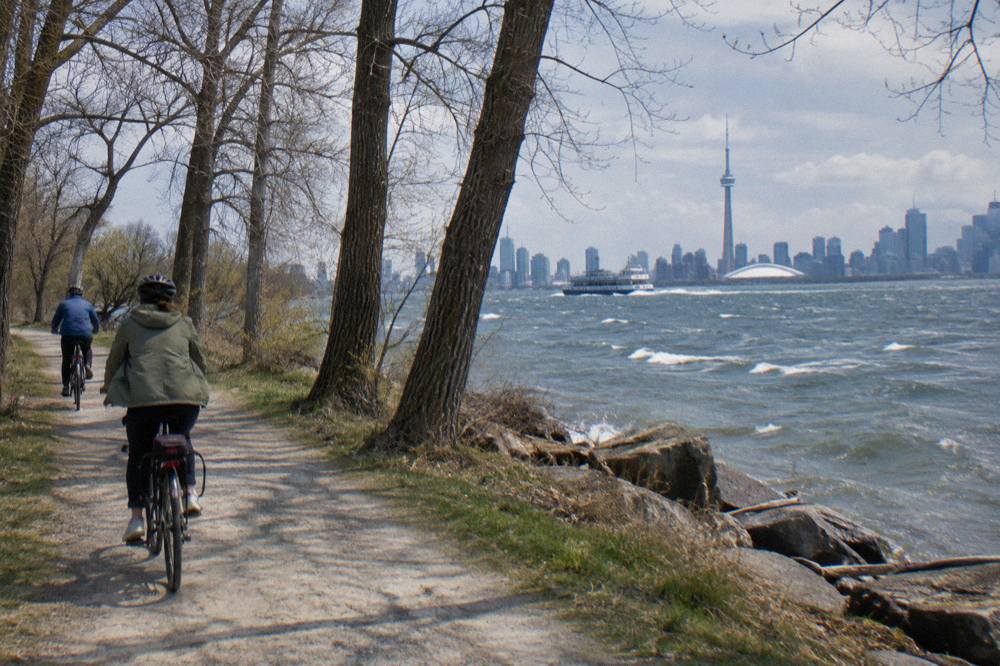
Fabric matters more than style. A cotton t-shirt that soaks through stays wet and cold when the wind picks up off the lake; a synthetic or merino base layer dries while you ride. Shorts or trousers should be comfortable on a bike seat for three-plus hours: seams that feel fine on a park bench can feel very different at kilometre twenty. Gloves are optional in summer and genuinely useful in spring and fall, when steady lake airflow cools your hands on descents.
How Much Sun Protection Do You Need?
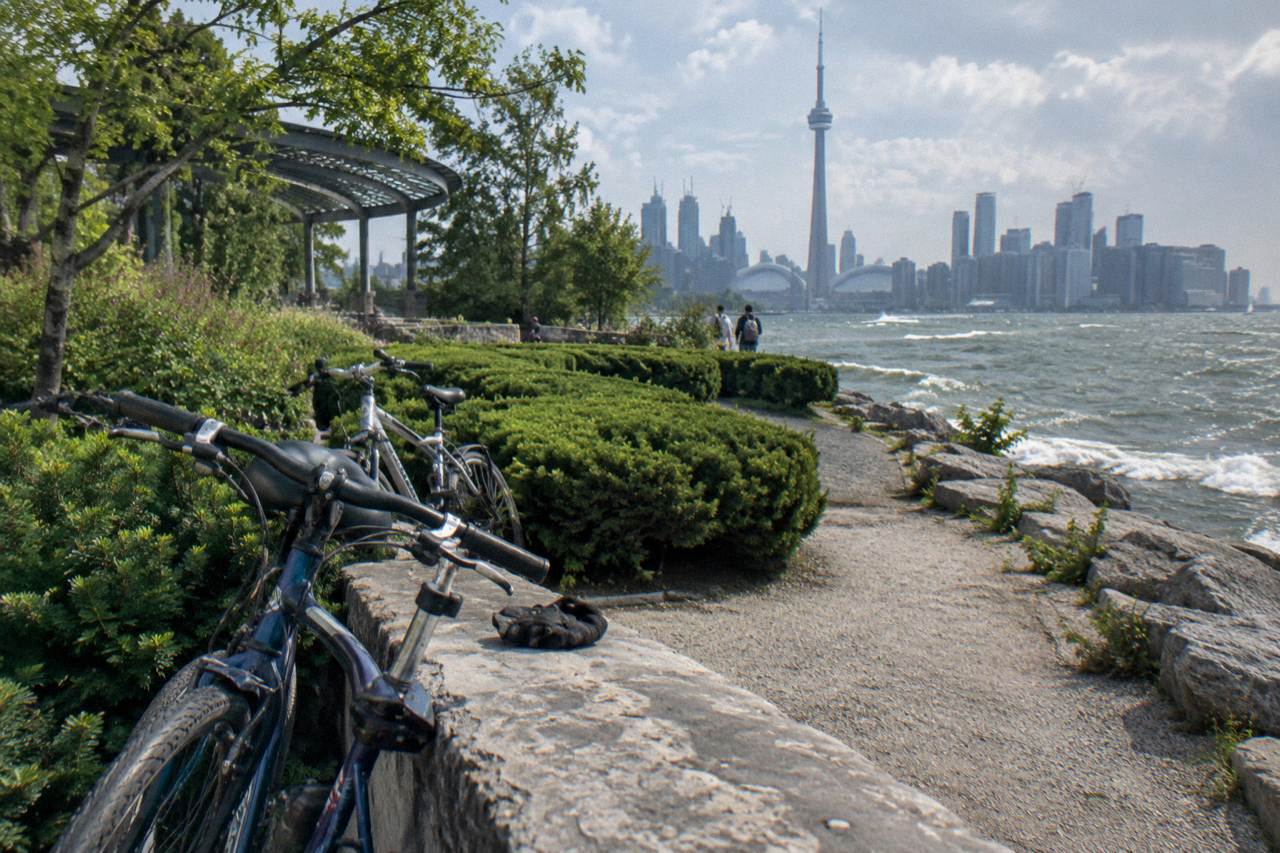
Bring sunscreen applied before the meeting time, sunglasses, and a cap or visor that fits under a helmet. Toronto's summer UV is genuinely strong, and a 3.5-hour ride is long enough to burn, especially on the waterfront and the Islands where shade is patchy. Waterfront routes including the Martin Goodman Trail run for over 20 km along the shore with long exposed sections, and the Islands are famously short on deep tree cover on the main paths. Reapply sunscreen at the midpoint stop if the ride includes one; the back of the neck, forearms and knees take the most punishment in a riding position.
Sunglasses do double duty. Beyond glare, they keep wind, insects and grit out of your eyes at riding speed, which matters more on shared trails where other riders kick up debris. Any pair with decent coverage works; there is no need for cycling-specific eyewear on a casual guided ride. A cap under the helmet shields the forehead and eyes, and a bandana or neck gaiter covers the gap between helmet and collar that riders so often miss with sunscreen.
Sunscreen choice is worth a sentence: a sweat-resistant sport formula stays put where a basic lotion runs into your eyes within the first hour. Lip balm with SPF is the most commonly forgotten item on the whole list, and the one people most regret forgetting halfway across the Islands.
The three rides above all run about 3.5 hours, long enough that every item in this section earns its place. The downtown snack-flagged ride spends much of its time in neighbourhood streets with more shade than the shoreline routes; the waterfront and Islands rides are the ones where sun preparation is non-negotiable.
What Footwear Works Best For A Toronto Ride?
Closed, flat-soled shoes with a firm sole are the right call for any Toronto ride, and they matter more than most riders expect. Sandals, flip-flops and rigid leather soles are the three most common footwear mistakes on a guided ride, and each one causes a specific problem: toes exposed to pedals and gravel, feet slipping at stops, or pedal pressure biting into a soft arch over three and a half hours. Runners, light trail shoes or casual sneakers are all ideal. Any shoe you would wear for a long day of city walking will serve you on a bike. The right shoes let you walk as much as you ride, so if you're still sketching out your itinerary, our guide to how much time Toronto deserves covers how long to give the city.
Sandals deserve a specific warning rather than a shrug. Toes on a pedal at speed, gravel flicked up on the trail, and a foot slipping at a stop light are all minor in closed shoes and painful in open ones. If you must wear sandals because of a foot condition, a closed-toe sport sandal with a heel strap is the least-bad option. For winter or early-spring riders, waterproof shoes matter more than anything else: a damp foot in a 7 C wind stays cold for hours.
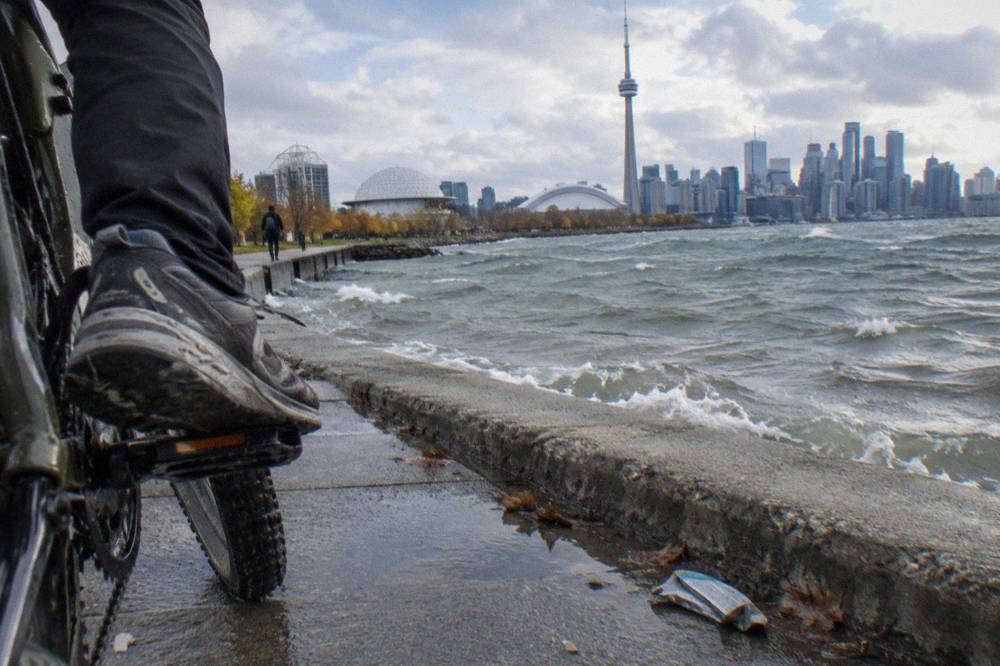
Sock choice is quietly important. Thin cotton socks that stay damp cause blisters on longer rides; a synthetic or wool blend manages moisture much better. Bring a spare pair rolled into the bottom of your bag: they weigh nothing, and fresh socks after an unexpected rain or a splash through a puddle reset the whole day's comfort.
What Should You Carry In Your Bag?
Carry water, sunscreen for reapplication, any personal medication, a phone with charge for photos, and a light layer you can shed or put back on; skip the laptop, the full-size camera kit and anything you would be upset to leave in a basket at a stop. A small backpack or crossbody bag that zips shut is the right container, because most guided rides supply only a modest place to stow items on or near the bike. The details of that storage vary by operator and bike, so check the booking page rather than assuming a large pannier awaits you.
Water is the item riders most often under-bring. A 3.5-hour ride in summer conditions is real exertion even at a casual pace, and the midpoint stops are not always next to a shop. Two smaller bottles balance better in a backpack than one large one. If the tour's inclusions list water, you can lighten up, but read the booking page to confirm what the operator actually states rather than assuming. Our broader rundown of kit choices for independent riders sits in cycling in Toronto as a visitor, but the short version for a guided tour is: less than you think, more water than you think.
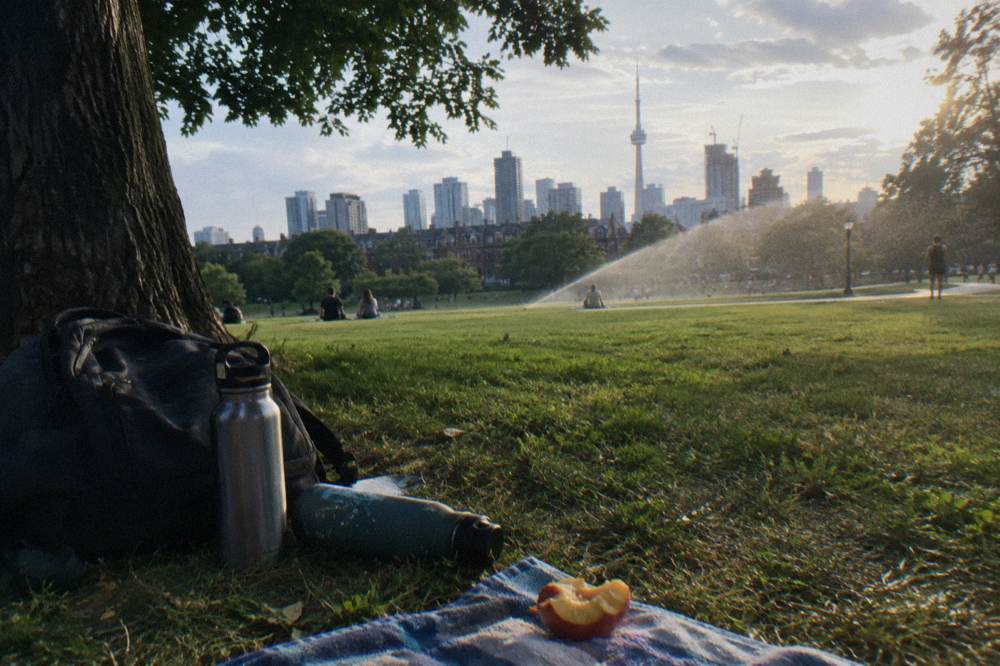
A few small items earn their space repeatedly: a tissue or small towel for sweat and wind-blown eyes, lip balm, a card or small amount of cash for the snack stop, and a hair tie for anyone with longer hair, which is the single most requested forgotten item at ride briefings. If your ride crosses to the Islands, your ferry fare is a separate cost, paid in Canadian dollars: adult round-trip $9.57, with older adult and youth at $6.15, junior $4.51 and infants free. Some guided rides include the ferry and some do not, so confirm on the booking page before you queue at the terminal.
| Item | Bring It? | Why |
|---|---|---|
| Water bottle (1 to 2) | Yes | 3.5 hours of riding in summer is enough to dehydrate |
| Sunscreen, sport formula | Yes | Exposed waterfront and Islands sections, patchy shade |
| Sunglasses | Yes | Glare off the lake plus wind and grit at speed |
| Light wind shell | Yes | Lake breeze cools the first and last hours |
| Spare socks | Yes | Tiny, weightless, resets the day after rain |
| Ferry fare (Canadian dollars) | If Islands-bound | Adult round-trip $9.57 unless the ride includes it |
| Full camera kit | No | Weight and theft exposure in an unattended basket |
| Laptop or valuables | No | Nothing on a bike ride needs them |
| Umbrella | No | Does not survive riding speed; the shell does that job |
The downtown ride above is the one most first-time visitors book, and its snack flag means one of the classic packing-list items, the energy bar, is already handled. Packing for it is genuinely simple: layers, shoes, water, sun.
What Does The Operator Supply On A Guided Ride?
Every guided ride supplies the bicycle, and the listings flag snacks on the downtown snack-included and e-bike rides, plus breakfast on the sunrise Islands ride. Helmets, water and storage vary by operator, so read the booking page before you pack around them rather than after. The tour names on their booking pages state what is included, and that is the only reliable source: the downtown Heart of Downtown ride and the two e-bike neighbourhood rides carry a snacks-included flag, while the sunrise Islands ride states breakfast is included. No listing detail should be assumed beyond what it states.
This matters because it changes your bag. If the ride includes snacks, you carry less food. If the booking page lists a helmet, you leave your own at home, which for most travellers flying in is a relief since a helmet is the bulkiest item in any cycling packing list. If water is not listed, you bring it. The pattern to avoid is packing for a ride you imagined rather than the one you booked; two minutes on the operator's page answers every one of these questions.
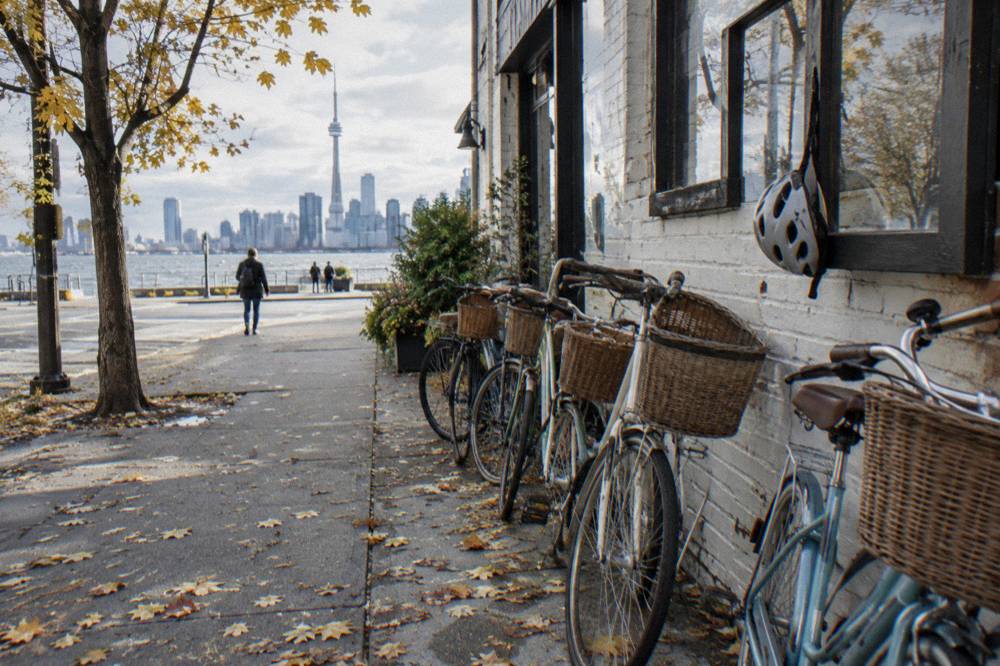
Ontario law adds one fixed point to this section: cyclists under 18 must wear an approved bicycle helmet, so a family booking a guided ride should expect helmets for the kids regardless of what the listing says about adults. Bikes must also carry a bell or horn, and lights at night, which is the operator's responsibility, not yours. The rules are laid out on Ontario's official bicycle safety page, and our plain-language summary of helmet, light and sidewalk rules is in Toronto cycling rules, helmets and e-bike law.
The waterfront and Islands ride above covers the trail network most exposed to weather, and its booking page is the one to read most carefully for ferry inclusion, since the crossing fare and schedule shape the whole day. Winter ferry service from 14 October 2026 to mid-April 2027 runs to Ward's Island only, with the first departure from the city around 6:30 a.m.; confirm current sailings on the City's ferry pages before an off-season booking.
What Should You Leave At The Hotel?
Leave anything valuable, anything rigid in a backpack, and anything you would not happily carry up three flights of stairs. The reason is not crime, it is physics and logistics: on a guided ride your bag spends hours either on your back in a riding position, or off the bike at stops where the group is spread out and attention is elsewhere. Laptops, tablets, jewellery, passports and large cameras are the classic mistakes. A phone and a card cover every realistic need on a 3.5-hour ride.
Rigid items are the underrated category. A hard water bottle pressing into your spine, a book at the wrong angle, a spare pair of real shoes: each of these turns a pleasant ride into an endurance event by hour two. Soft, flat and small is the test. Umbrellas belong on this list too, since they are useless above walking pace and the wind shell replaces them entirely.
There is one exception worth naming: medication you might need on the ride itself, an inhaler or allergy medication, should always be on your person, never in the hotel safe. Beyond that, the hotel room is the right place for almost everything. If your packing list for the ride does not fit in two hands, it is probably too long.
| Month (normals) | Avg Low / High C | Layering Plan For A 3.5-Hour Ride |
|---|---|---|
| May | 10.0 / 18.8 | Base layer plus light fleece plus wind shell, full morning |
| June | 15.3 / 24.2 | Base layer plus packable shell for the ferry |
| July | 18.1 / 27.0 | Single layer, arm sleeves or light shirt for sun |
| August | 17.7 / 26.1 | Single layer, emphasis on sunscreen and water |
| September | 13.8 / 22.0 | Two layers, shell for evening rides |
| October | 7.7 / 14.6 | Three layers, gloves, warm socks |

How Do You Pack Differently For An Islands Ride?
Pack for a ferry crossing and stronger wind: an extra layer for the open deck, your fare in Canadian dollars unless the ride includes it, and nothing you cannot carry up a gangway yourself. The Islands are a car-free park reached by the City ferry from the Jack Layton Ferry Terminal, and the rules for bikes are specific. Bicycles are welcome on board, you walk them when boarding and disembarking, and Bike Share bicycles are not permitted on the ferries at all. E-bikes are welcome at staff discretion, must be fully powered off on board, cannot be charged on the ferry or at the terminal, and riders with larger e-bikes, roughly 40 kilograms and over, may be directed to the vehicle ferry. The fare and rules come straight from the City's ferry ticketing page.
The deck is where the extra layer pays off. Even on a warm afternoon the crossing is windy and a few degrees cooler than shore, and rides that include the ferry usually cross once out and once back. For morning and twilight Islands rides the temperature at the dock can feel like a different season from mid-ride. Our dedicated pages on the crossing and the ride options cover the scheduling side in depth: start with the ferry with a bike and sunrise, morning and twilight rides on the Islands.
The morning or twilight Islands ride above is the format where packing matters most: the listing states 3.5 hours, and the twilight departure in particular spans the warmest and coolest parts of the day. A light layer you can tie around your waist is the single highest-value item in the bag.
| Ride Context | The One Extra Item That Matters Most |
|---|---|
| Downtown neighbourhood ride | Nothing extra; a card for the snack stop |
| Waterfront trail ride | Wind shell for the exposed shoreline sections |
| Islands ride with ferry | Layer for the deck crossing plus ferry fare |
| Morning or twilight departure | Warm layer you can shed and tie on |
| E-bike neighbourhood ride | Gloves, since more distance means more wind |
| Spring or fall any ride | Warm socks and gloves, not more torso layers |
What About Rain And Riding Home Damp?
Accept that Toronto averages 8 to 10 days per month with 1 mm or more of rain year-round, pack a light shell rather than a forecast-dependent attitude, and know that operators cancel for genuinely unsafe weather rather than a drizzle. The normals show precipitation days spread evenly across the seasons: 8.2 in July, 9.3 in May, 8.3 in October. That means a sunny-morning ride has a real, routine chance of a shower somewhere in its three and a half hours, and a wind shell with some water resistance handles most of what actually falls.
Cotton is the enemy once rain enters the picture. A denim jacket that gets damp stays damp for the rest of the ride and chills you on every descent toward the lake. Synthetics dry while you pedal. If you are caught properly wet, the spare socks from earlier in this guide become the difference between finishing the ride and merely enduring it, and the plastic bag you brought for a damp phone is the cheapest bit of insurance on the whole list.
Cancellation policy is the other half of the rain question. Weather calls belong to the operator, and guided rides in Toronto typically reschedule or refund when conditions are unsafe, but the exact terms are on the booking page, and it is worth reading that section before a grey-sky morning rather than after. Do not promise yourself a refund the listing does not state.
Common Questions About What To Bring On A Toronto Bike Ride
What Should You Wear On A Bike Tour In Toronto?
Two to three light layers with a wind shell, closed flat-soled shoes, and sun protection. Toronto's July normals run 18.1 to 27 C, and the lake breeze cools the start and end of a ride, so dress for a range, not the forecast high.
Do I Need To Bring A Helmet On A Guided Ride?
Usually not for adults, but check the booking page, since helmet supply varies by operator. Ontario law requires an approved helmet for every cyclist under 18, so children on a family ride need one regardless.
Do Guided Rides Include Water And Snacks?
It varies. The downtown snack-included ride, the e-bike neighbourhood rides and the sunrise breakfast ride flag food in their listings; water is not stated on every booking page. Bring your own unless the operator's page says otherwise.
Is The Ferry To The Islands Included In My Ride?
Some Islands rides include the ferry and some do not; confirm on the booking page. If it is not included, the round-trip fare is $9.57 for adults in Canadian dollars, $6.15 for older adults and youth, $4.51 for juniors, free for infants.
Can I Bring A Backpack On The Ride?
Yes, and a small zipped one is ideal. Keep it light and soft: it rides on your back for about 3.5 hours and sits off the bike at stops. Skip rigid items, laptops and valuables.
What Shoes Should I Not Wear On A Bike Ride?
Flip-flops, open sandals without a heel strap, and rigid leather soles. A firm-soled closed shoe protects your feet from pedal pressure and trail debris over a multi-hour ride.