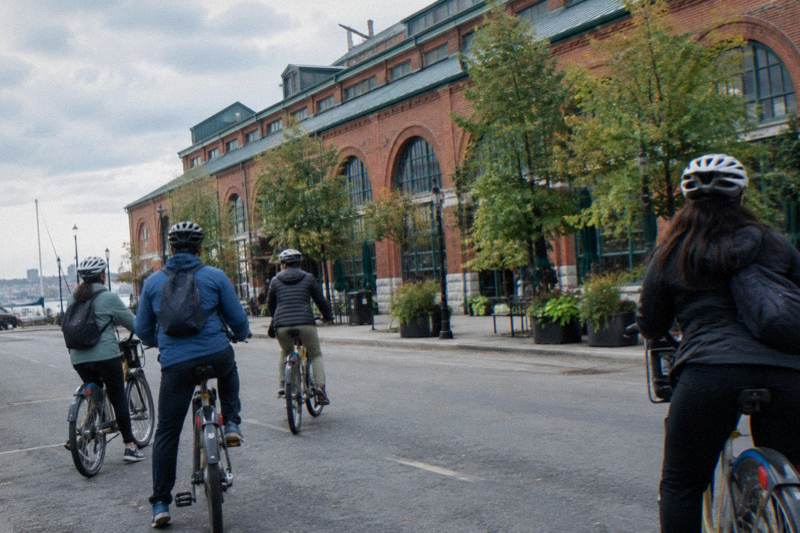
Kensington Market And Downtown Neighbourhoods By Bike
Kensington Market is the street-art, food and second-hand heart of downtown Toronto, and the downtown neighbourhoods around it sit on one of the flattest, most rideable grids in Canada. Here is how to see them by bike, guided or on your own.
Short answer
Kensington Market sits about 2 km west of the downtown core, reachable on Toronto's 346 km of on-street cycling infrastructure and 399.3 km of multi-use trails. Two guided rides cover the downtown neighbourhoods in about 3.5 hours, one on a regular bike with snacks, one on an e-bike. Prices are on the booking pages.
Kensington Market packs more per block than almost anywhere else in Toronto: vintage storefronts, murals, coffee roasters, empanadas, and a street culture that changes with every Pedestrian Sunday. The neighbourhoods around it, Chinatown, the Annex, Little Italy and the Entertainment District, are the reason so many visitors end up on a bike here. Everything is close, the terrain is flat, and the fastest way to string four neighbourhoods together in one afternoon is on two wheels.
This guide, from Bike Tours Toronto, walks through what Kensington and the downtown neighbourhoods actually offer a cyclist, which guided rides cover this territory, what the e-bike option changes, and how to plan a self-guided loop using the city's cycling network. Facts here come from the tour booking pages, the City of Toronto, and the Province of Ontario, and where a detail is not confirmed, the answer is to check the booking page rather than guess.
What Makes Kensington Market Worth The Ride?
Kensington Market is a compact, car-light grid of vintage shops, food stalls and murals about 2 km west of downtown, at its best on Pedestrian Sundays, when the last Sunday of each month from May to October closes the streets to cars between noon and 7 p.m. The Kensington Flea Market runs weekends from May to September, and the riding around it is flat, slow and made for stopping often.
The market's calendar shapes when a bike visit feels best. Pedestrian Sundays in 2026 fell on the last Sunday of each month from May through October, with the streets car-free from noon to 7 p.m. and evening closures on Augusta Avenue extending later. Those days are crowded in the best way: performers, food carts and the whole neighbourhood out on foot, which means you park the bike at the edge and walk the core. On any other day, the market's side streets are rideable, and the Kensington Flea Market at 216 Augusta Avenue ran Saturdays and Sundays, 11 a.m. to 7 p.m., from May 2 to September 27, 2026, free to enter, with rotating local vendors.
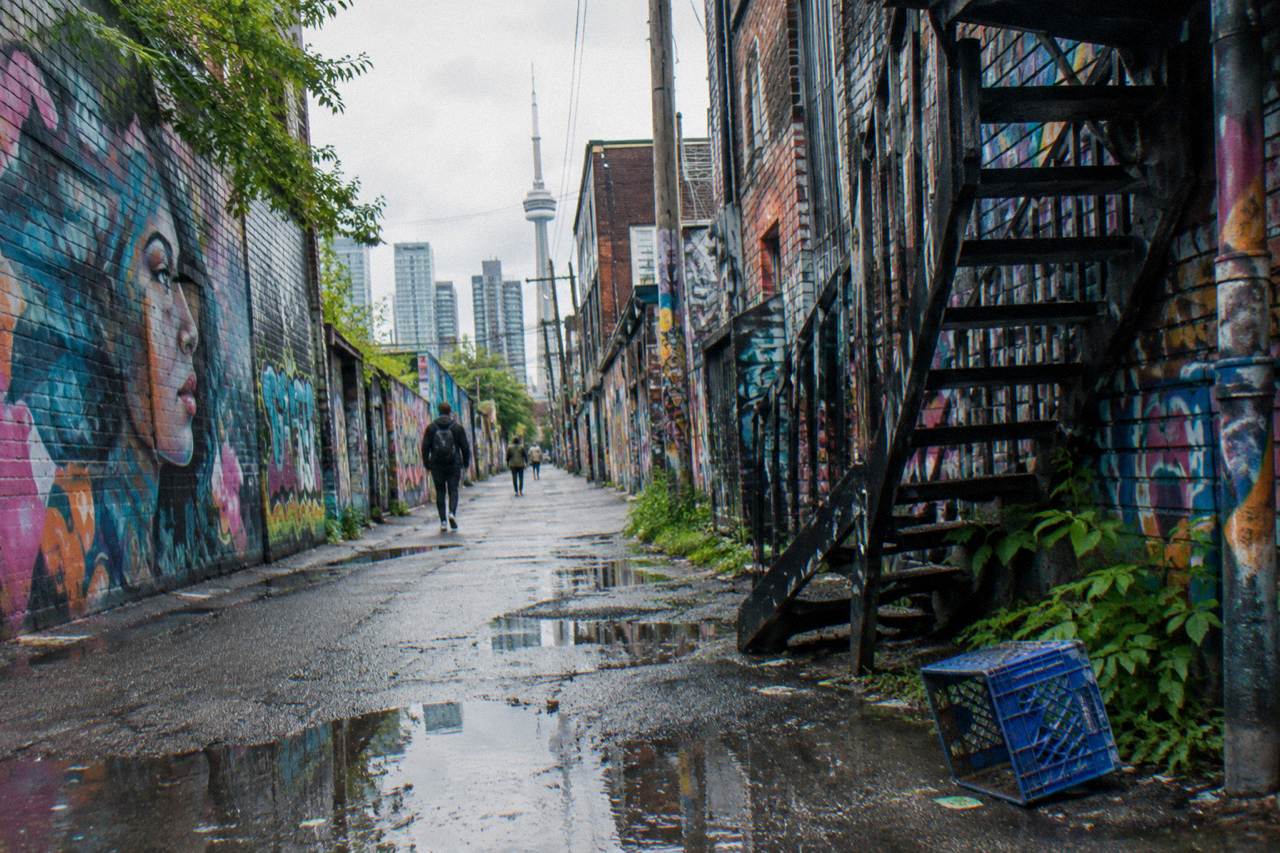
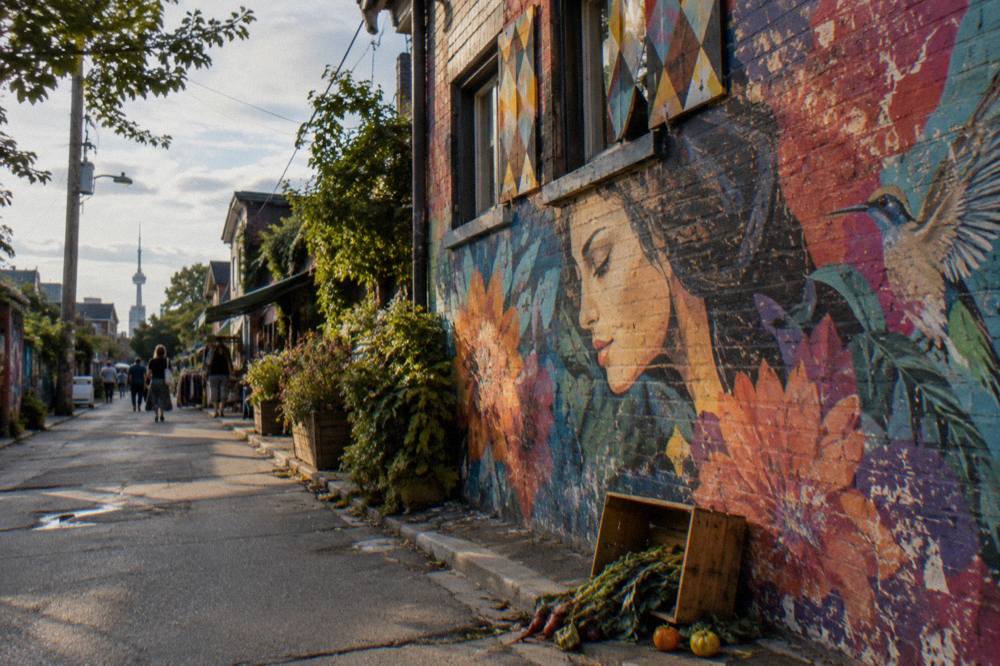
What surprises many first-time visitors is how much of the market's character is visual. Mural art covers the back walls and shutters, and the light on Victorian brick changes the whole street from morning to late afternoon. A bike lets you circle the grid, find the angles a walker misses, and move on to Chinatown or the Art Gallery district when you have had your fill.
The practical case for biking here is distance. The market sits at the centre of a ring of downtown neighbourhoods, and the connections between them are short city rides rather than commutes. Toronto's cycling network, as of December 2025, included 110.1 km of cycle tracks, 143.8 km of bicycle lanes and 399.3 km of multi-use trails, per the City's network status page. Not all of that is downtown, but enough of it is that a rider can reach Kensington, Chinatown, the Distillery District and the waterfront mostly on painted or separated infrastructure.
Which Guided Ride Covers The Downtown Neighbourhoods?
Two shared guided rides cover the downtown neighbourhoods in about 3.5 hours each: the Heart of Downtown ride on a regular bike with snacks included, and the E-bike Neighbourhoods ride covering similar territory with pedal assistance. Both are shared group tours, and both list their current prices on the booking page rather than in fixed print.
The Heart of Downtown ride is the natural match for a reader whose goal is the neighbourhoods without watching traffic. The listing states 3.5 hours, a regular bike, snacks included, and a shared group format. Where a detail such as the exact route or today's price is not in the listing, the booking page is the source; do not count on any specific stop unless the listing names it.
The e-bike option, the E-bike City and Neighbourhoods listing, is also listed at 3.5 hours and shared. The e-bike format matters downtown for one concrete reason: assisted speed caps at 32 km/h under Ontario law, which flattens the difference between a strong rider and a casual one, so a mixed group stays together more easily. If your party includes someone who worries about keeping up, that is the format difference to weigh, more than any route difference.
A third listing, the Downtown Ride, Snacks Included version, is a separate listing of the same operator product as the Heart of Downtown ride, listed at 3 hours 30 minutes. Treat it as a booking-page choice, not a different tour, and compare whichever price and cancellation terms each page shows on the day you book.
Whether guided is right for you comes down to one honest trade-off. A guide handles the route, the traffic decisions and the bike logistics, and snacks are included on the downtown listing. Riding yourself is free of a booking and lets you linger an hour in one bookshop. What a guided ride is not is a promise: what the guide shows varies with weather, construction and the group, and the listings themselves describe itineraries in general terms.
The neighbourhood context around these rides has one caveat worth knowing. None of the downtown listings reviewed here can be confirmed to enter Kensington Market itself unless the booking page names it among the stops. Where the listing names no stops, ride with the expectation of downtown neighbourhoods generally, and visit Kensington on your own before or after, which is easy given the distances involved.
What Does A Downtown Guided Ride Actually Include?
The Heart of Downtown listing states 3.5 hours, a regular bike, snacks and a shared group format; the e-bike listing states the same duration with pedal assistance. Meeting points, exact stops and current prices live on the booking pages, and where a listing names no stops, no stop should be assumed. Confirming the meeting point before booking is the single most useful thing you can do.
Here is the honest comparison of the three downtown-neighbourhood listings as they stand:
| Listing | Duration | Bike | Format | Snacks | Stops named |
|---|---|---|---|---|---|
| Heart of Downtown Ride | 3.5 hours | Regular | Shared | Included | Check the booking page |
| E-bike City and Neighbourhoods | 3.5 hours | E-bike | Shared | Check the booking page | Check the booking page |
| Downtown Ride, Snacks Included | 3 hours 30 minutes | Regular | Shared | Included | Check the booking page |
The differences that matter after that are small: departure times, group size and the cancellation window, all of which the booking pages state and none of which should be assumed.
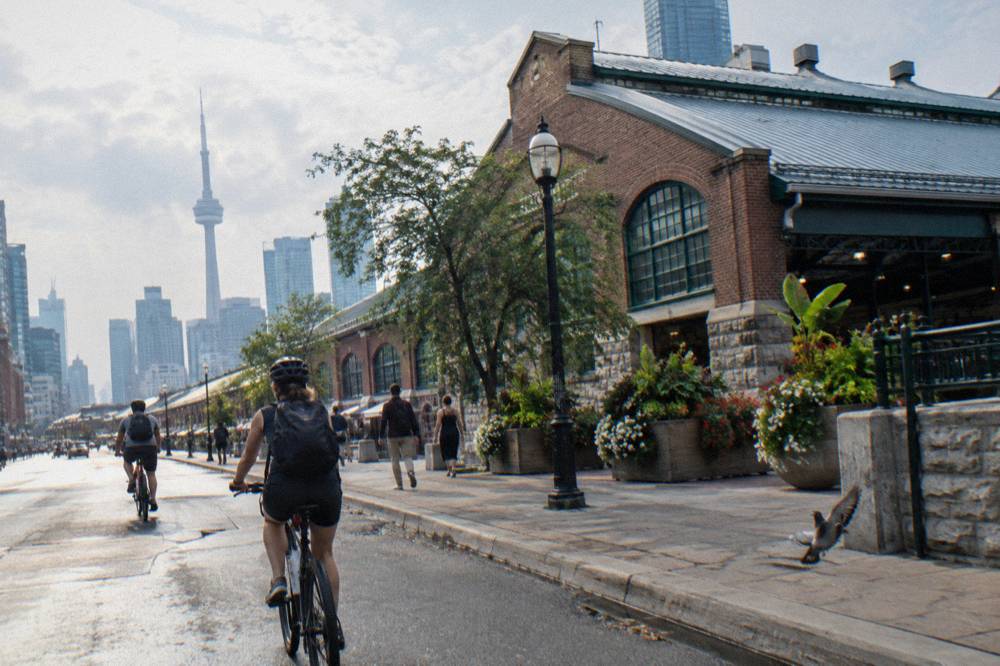
What a 3.5-hour downtown ride feels like, in planning terms, is one long morning or afternoon with breaks. The listings describe relaxed pacing with stops for photos and snacks, and the snack inclusion on the downtown listing means you are not hunting for food mid-ride. Wear layers, bring water, and check the meeting point address on the booking page the day before; downtown construction can shift pick-up spots, and the operator's page is where a change would appear.
Is The E-bike Version Better For Downtown Neighbourhoods?
The e-bike version is not better, it is easier: same 3.5 hours, same shared format, with a motor capped at 32 km/h under Ontario law keeping mixed groups together. Riders must be 16 or older and helmeted on an e-bike, and e-bikes over 40 kg face restrictions on ferries and in island parks, which matters only if you extend your trip.
Ontario's e-bike rules set the frame: a rider must be 16 or older, must wear an approved helmet, the motor cannot exceed 500 watts, and assisted speed tops out at 32 km/h, per the Province's e-bike page. Downtown, that legal ceiling means the e-bike is not about speed, it is about effort. Hills barely exist between the market and the lake, but headwind off the water in spring and fall is real, and assistance removes it as a factor.
Who should pick which? A reasonable split: if anyone in your group rides rarely, or if a hot July day is in the forecast, the e-bike listing reduces the odds of someone finishing tired. If you ride weekly at home and enjoy the workout, the regular bike is simpler, cheaper where the pages show a difference, and the snack stop structure gives enough rest either way. Our longer comparison, e-bike or regular bike on a Toronto tour, works through the trade-offs in more depth.
How Do You Ride Into Kensington On Your Own?
A self-guided loop from the downtown core to Kensington is a short, flat city ride of a couple of kilometres each way, using cycle tracks and bicycle lanes where they run, with the market's side streets best ridden slowly or walked on busy days. The trip costs nothing beyond a bike rental or a Bike Share pass, and the market itself is free to enter.
The honest route advice is that downtown Toronto rewards indirectness. The direct arterials carry the traffic; the parallel residential streets one block over carry the murals, the cafés and the calm. Kensington's grid of Augusta, Kensington Avenue and Nassau Street is best treated as a place to amble, not to traverse: arrive by bike, lock up, and walk the market itself, especially on Pedestrian Sundays when the streets are closed to cars anyway.
Three free anchors make a self-guided afternoon easy to structure:
| Stop | What It Is | When | Cost |
|---|---|---|---|
| Kensington Flea Market | Rotating local vendors, handmade and vintage goods, at 216 Augusta Ave | Weekends, May to September season, 11 a.m. to 7 p.m. | Free |
| Pedestrian Sundays | Car-free market streets with performers and food carts | Last Sunday monthly, May to October, noon to 7 p.m. | Free |
| St. Lawrence Market | Historic food market, a short ride east of the core | Tue-Fri 9-7, Sat 7-5, Sun 10-5, closed Mondays | Free to enter |
St. Lawrence Market hours above are the regular South Market schedule; holiday weeks bring modified hours and closures, so check the market's own site near your travel date. Combining Kensington in the west with St. Lawrence in the east makes a natural downtown loop, and the Distillery District sits a few minutes further east if you want the full sweep. Our Distillery District by bike guide covers that leg, including the Winter Village timing that takes over the district from mid-November.

For renting, the practical options are a shop rental or Bike Share Toronto, and Bike Share is not free: reported pricing puts a day pass at $15 for unlimited 90-minute classic bike rides, with e-bikes extra, though those figures are reported rather than confirmed on the official site, so check the Bike Share Toronto site before relying on them.
When Is The Best Season To Ride The Neighbourhoods?
May through October is the riding window for the downtown neighbourhoods, matching the Kensington Flea Market season and Pedestrian Sundays; July and August average highs of 27.0 C and 26.1 C, while November's average high drops to 8.1 C with about 70.8 mm of rain. Winter riding in Toronto happens, but the market's street life largely moves indoors.
The climate normals tell the story plainly. These are 1991 to 2020 averages from Environment and Climate Change Canada for the Toronto City station, not forecasts, but they size the season well:
| Month | Avg high C | Avg low C | Precip mm | Days with 1 mm+ |
|---|---|---|---|---|
| May | 18.8 | 10.0 | 76.4 | 9.3 |
| June | 24.2 | 15.3 | 81.6 | 8.4 |
| July | 27.0 | 18.1 | 76.5 | 8.2 |
| August | 26.1 | 17.7 | 71.9 | 7.2 |
| September | 22.0 | 13.8 | 69.4 | 7.7 |
| October | 14.6 | 7.7 | 69.1 | 8.3 |
| November | 8.1 | 2.3 | 70.8 | 9.0 |
July and August are warm and comparatively dry by day count, but they are also the crowded months, and a hot afternoon in a market grid is better spent early or late. September is arguably the sweet spot: the flea market still runs through September 27, Pedestrian Sundays run through October, and the average high of 22.0 C is kind to a 3.5-hour ride. Our best time of year to cycle in Toronto guide extends this month by month.

Shoulder-season riders should also know the current infrastructure picture. The Martin Goodman Trail is closed on Parliament Street from April 22 to December 31, 2026, replaced by a temporary two-way protected lane during Queens Quay construction, and the province completed removing the 1.2 km protected bike lanes on Bloor Street West in Etobicoke on October 30, 2026. Neither closure touches the Kensington-to-core rides directly, but both shape waterfront and west-end links, and route conditions change, so a current map is worth a minute before you set out.
What Rules Apply To Riders Downtown?
Ontario law requires helmets only for riders under 18, bans sidewalk cycling with an exception for children under 10, and requires a bell or horn plus lights and reflectors at night; e-bike riders must be 16 or older and helmeted. A rental bike from a tour operator should meet the equipment rules, but a quick bell-and-brake check takes ten seconds.
These are the full rules as stated by the Province's bicycle safety page: approved helmets for anyone under 18, a bell or horn, a white front light and red rear light or reflector when riding between a half hour before sunset and a half hour after sunrise, and reflective tape on the forks. Sidewalk riding is not allowed, except children under 10. Downtown, the sidewalk rule matters most around Kensington and Chinatown, where foot traffic is heavy and the temptation to hop a curb is real.
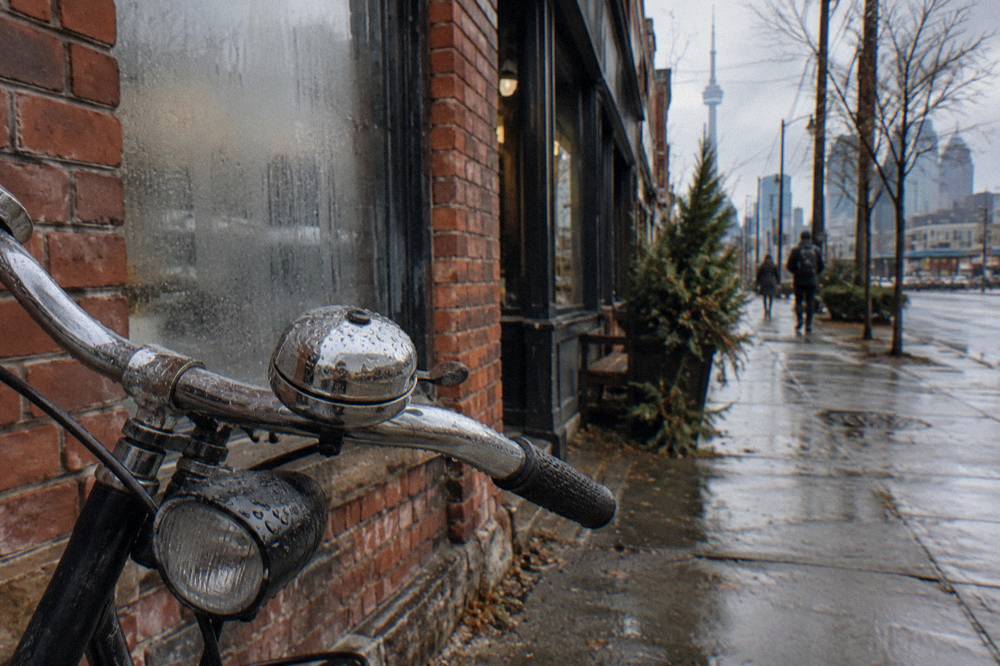
Locking up is the other downtown habit. The market area has bike parking, but on Pedestrian Sundays and flea market weekends it fills; arriving before noon makes both the parking and the pastry lines easier. Carry what you buy rather than leaving bags on an unattended bike, and plan the ride back before the light fades if you are out past late afternoon from October onward.
One more planning note for anyone combining the neighbourhoods with the lake: the Toronto Island ferry is not free, with adult round-trip fares of $9.57 in Canadian dollars, and bikes are welcome on board but must be walked on and off. If the island leg appeals, our Toronto Island ferry with a bike guide covers fares, seasons and the winter Ward's Island-only schedule.
Should You Combine Kensington With A Waterfront Or Islands Ride?
Yes, easily: the market sits a short flat ride from the waterfront trail, and a morning islands ride followed by an afternoon in Kensington is a realistic one-day plan. The guided islands options run about 3.5 hours as well, so the combination works best on separate days or with a very early start, and ferry fares and seasonal schedules apply.
The pairing that fits most trips is one guided neighbourhood day and one islands or waterfront day. The Morning Islands Ride listing is set at 3 hours 30 minutes, which leaves an afternoon free for Kensington at your own pace. The full Waterfront and Islands Ride is the other natural complement, covering the lakefront and island territory the downtown rides leave out.
Between the two, self-guided riders can link the market to the waterfront on the Martin Goodman Trail, the 20-plus kilometre lakeside spine described by the City as part of a network of over 300 km of trails. Watch the Parliament Street closure noted above if your route runs through the east waterfront this year.
The honest planning frame for a first visit is two wheels, two days: day one downtown for the neighbourhoods, the market and the food, day two the lake. Riders with one day only should pick the neighbourhoods and save the islands for a return trip, because the ferry queue, the crossing and the island grid eat hours that Kensington deserves.
Common Questions About Kensington Market And Downtown Neighbourhoods By Bike
Can You Bike Through Kensington Market Itself?
The market's side streets are rideable on ordinary days, but they are narrow and busy with foot traffic, so ride slowly or walk the core. On Pedestrian Sundays, held the last Sunday of each month from May to October, the streets are closed to cars entirely and best explored on foot.
Do The Guided Downtown Bike Tours Go Into Kensington Market?
Only if the booking page lists Kensington among the stops; where a listing names no stops, assume downtown neighbourhoods generally rather than any specific market entry. Kensington is a short ride from the core, so visiting it before or after a tour is straightforward.
How Long Does A Downtown Neighbourhoods Bike Ride Take?
The guided downtown listings state 3.5 hours each, regular or e-bike, in a shared group format with snacks included on the regular-bike downtown listing. A self-guided loop from the core to Kensington and back is much shorter, a few kilometres each way at an easy pace.
Is The E-Bike Tour Worth It For Downtown Toronto?
Downtown is flat, so the e-bike's value is comfort rather than climbing: assistance caps at 32 km/h under Ontario law and keeps mixed-ability groups together, and it blunts waterfront headwind in spring and fall. Riders must be 16 or older and wear a helmet on an e-bike.
When Is Kensington Market Best For A Bike Visit?
May through October aligns with the flea market season and Pedestrian Sundays. September is the comfortable middle, with an average high of 22.0 C per the 1991 to 2020 climate normals, while July averages 27.0 C and is best ridden early or late in the day.
Do I Need A Helmet To Ride Downtown Toronto?
Ontario law requires an approved helmet only for riders under 18, though it is sensible at any age in traffic. E-bike riders of every age must wear one, along with being at least 16 years old.