Is Toronto Worth Visiting?
An honest look at whether Toronto is worth the trip, using 2026 visitor numbers, real costs, seasons and neighbourhoods, plus how a guided bike ride fits the day.
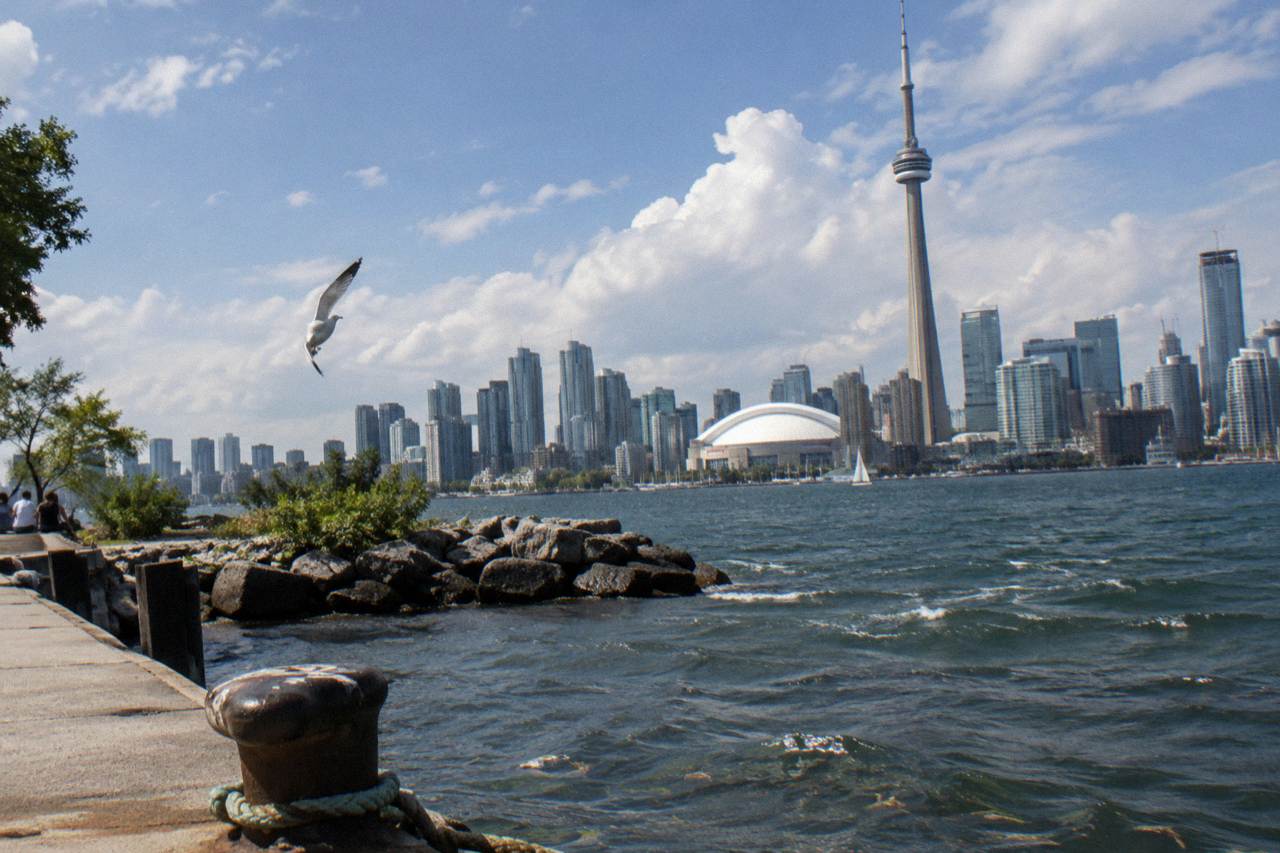
Yes, for most travellers Toronto earns the trip, and the 2026 numbers back that up. International visits rose 17 percent between May and July 2026 against the year before, with UK visits up 46 percent and German visits up 59 percent. Nine in ten surveyed World Cup visitors said they would come back within two years. The honest caveats are cost and hotel pricing, both of which rose after the tournament.
The question usually comes from people weighing Toronto against Montreal, New York or Chicago, and the honest answer depends on what you want. Toronto is not a postcard city. Its appeal is layered: a waterfront that keeps getting better, more than 70 distinct neighbourhoods, a food scene that reflects one of the most diverse populations of any city in the world, and islands a ten minute ferry ride from the financial district. What it lacks is a single overwhelming monument, so the payoff comes from moving through it rather than ticking off one landmark.
The summer of 2026 changed the calculus a little. Toronto hosted six FIFA World Cup matches and a 23 day Fan Festival, and the city has since published what actually happened: roughly 250,000 fans passed through Toronto Stadium across six match days, more than 350,000 people visited the Fan Festival at Fort York and The Bentway, and about 60,600 watched live broadcasts at Nathan Phillips Square. Those crowds have gone home. What remains is the infrastructure, the momentum and a city that proved to itself it can host the world.
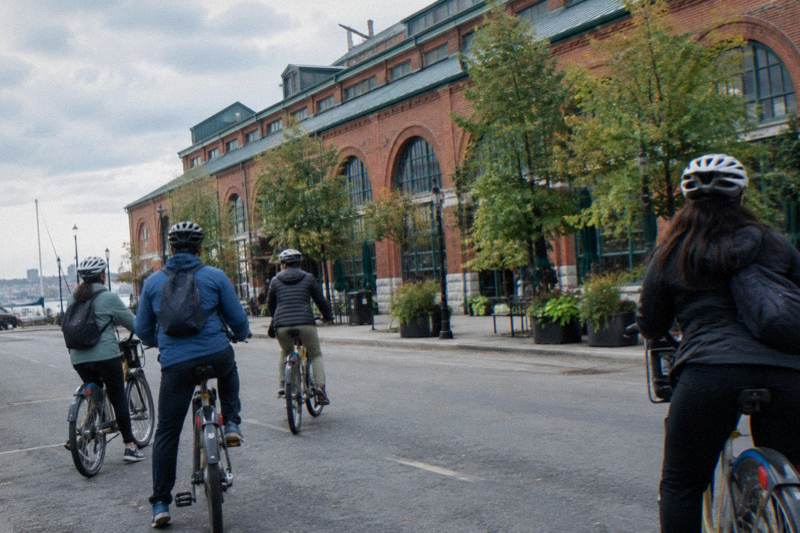
For a first visit, three days covers the core: downtown, the Distillery District, Kensington Market, St. Lawrence Market and the Toronto Islands. If you would rather compress the orientation into a single morning, the Heart of Downtown Ride does the downtown neighbourhoods by bike in 3.5 hours with snacks included, which is one efficient way to see the shape of the place on day one. The current price is on the booking page. Since the Distillery District is the stop first-timers most often second-guess, our honest take on the Distillery District and its Winter Village explains what deserves your time and how to see it by bike.
If you are still deciding, the rest of this page goes through the evidence: who came in 2026, what they spent, what the city feels like season by season, and the genuine arguments against going. The short version is that Toronto rewards travellers who like cities as living things and mildly frustrates travellers who want a tidy greatest hits list.
What The 2026 Visitor Numbers Show
Toronto's 2026 tourism data is unusually strong and unusually well documented. International visits grew 17 percent from May to July compared with the prior year, domestic visits rose 25 percent in June, and overnight World Cup visitors spent an average of $1,033 each in Ontario over stays of nearly seven nights. Not every indicator was positive: downtown hotel occupancy fell 7 percent in June even as rates rose sharply.
The Destination Ontario intercept study of World Cup visitors found that more than four in five came primarily for the tournament, drawn from 25 U.S. states, nine Canadian provinces and 57 countries. That is a tournament effect, not a durable tourism base, but the follow through matters: nine out of ten surveyed visitors said they were likely to return for leisure within two years, which is the strongest repeat intent signal a host city can ask for. The Destination Ontario report publishes the full methodology.
Payments data tells the same story from the merchant side. International visitor spending at Toronto bars and restaurants rose 34 percent during the tournament window, even as total spending rose only 3 percent, meaning locals stayed home while visitors filled the gap. Foot traffic shifted too: Liberty Village, next to the stadium, saw visits up 9.7 percent overall and 57.9 percent on match days, while Little Portugal, further from the action, actually declined 10.6 percent. The City of Toronto impact summary is the primary source for the crowd and mobility figures.
Here is the data in one place.
| Indicator | 2026 result | Source period |
|---|---|---|
| International visits, May to July | Up 17 percent year over year | Destination Toronto, reported October 2026 |
| UK visits | Up 46 percent | Same reporting period |
| Germany visits | Up 59 percent | Same reporting period |
| Overnight World Cup visitor spend | $1,033 average per person in Ontario | Destination Ontario intercept study |
| Average stay of World Cup visitors | Nearly 7 nights | Same study |
| Stadium attendance, six matches | About 250,000 fans | City of Toronto |
| Fan Festival attendance | More than 350,000 over 23 days | City of Toronto |
| Downtown June hotel occupancy | Down 7 percent, with average daily rate up 21 percent | CBRE Hotels |
The Great Lakes cruise season adds a quieter strand. The Port of Toronto logged 43 cruise calls and more than 18,600 passengers in 2026, with a regional economic impact above US$310 million, up 25 percent from 2025. Small ship cruising is a niche, but it signals that Toronto now works as a destination people build entire itineraries around, not just a business travel hub.
None of this guarantees you a good trip. It does establish that a lot of people voted with their wallets in 2026, that they stayed longer than a weekend, and that the city held together under peak load, which is a reasonable proxy for how it handles ordinary August crowds.
What A Day In Toronto Actually Looks Like
A good first day runs from St. Lawrence Market in the morning to the Distillery District and the waterfront by early afternoon, then across to the Islands on the ferry for the evening light on the skyline. That single day touches a Victorian market hall, a preserved whisky district and a car free archipelago, which is Toronto's argument in miniature: not one masterpiece, but many complete scenes packed close together.
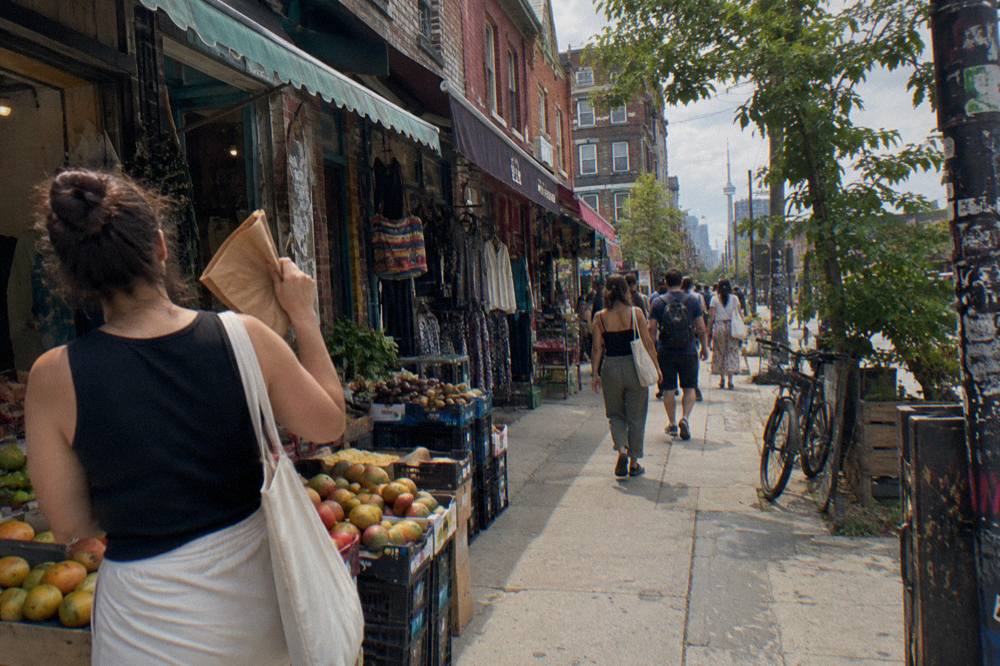
St. Lawrence Market opens Tuesday to Friday from 9 a.m. to 7 p.m., Saturdays from 7 a.m. to 5 p.m. and Sundays from 10 a.m. to 5 p.m., closed Mondays. The Distillery District sits a short ride east, a pedestrian only collection of Victorian industrial buildings that holds its own year round; the Winter Village runs November 12, 2026 to January 3, 2027, with the tree lighting on November 12 at 6 p.m. Kensington Market, west of downtown, runs its car free Pedestrian Sundays on the last Sunday of each month from May to October, and its Flea Market every Saturday and Sunday from May 2 to September 27, 11 a.m. to 7 p.m. at 216 Augusta Ave, free to browse.
The Islands are the day's finale and the city's best trick. The ferry terminal sits at the foot of Bay Street, the adult round trip is $9.57 in Canadian dollars, and bicycles are welcome on board, walked on and off. The summer schedule runs all three routes from mid May to mid September; from October 14, 2026 through mid April 2027 only Ward's Island is served, so winter visitors should confirm the sailing on the City's ferry pages. New electric ferries, the Lady of the Quays and the Toronto Islander, are arriving through 2027, the first new vessels in more than 60 years.
Linking the waterfront and the Islands in one guided loop is the Waterfront and Islands Ride, a 3.5 hour classic bike tour that also takes in the Distillery, which covers the whole first day arc above with a guide handling the ferry logistics. Whether the Islands, the market neighbourhoods or the water views rank first is genuinely a matter of taste; all three are covered in how do you spend a day on Toronto Island if the ferry leg is your priority.
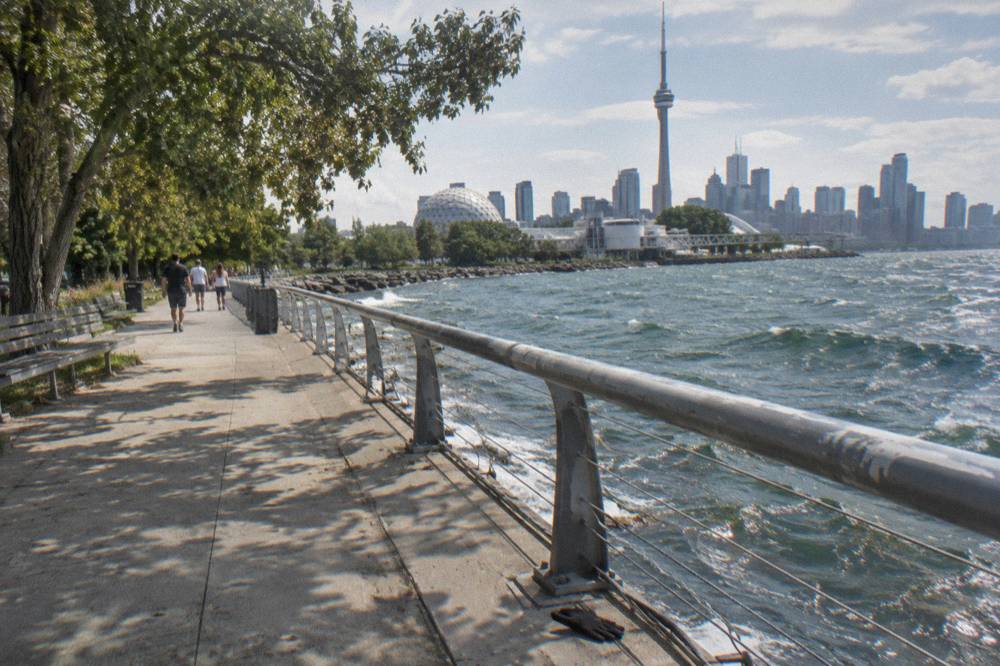
Two practical notes shape the day. Toronto is large and the good stuff is spread across neighbourhoods that take time to walk between, which is exactly why the bike tours here exist. And the city's riding infrastructure is real, 346 km of on street cycling facilities and 399.3 km of multi use trails as of December 2025, though recent lane removals on Bloor Street West mean route conditions change; the cycling in Toronto as a visitor guide covers the current picture.
How Much A Toronto Trip Costs
Toronto is a mid to high cost North American city, and 2026 pushed hotel prices up further: average daily rates rose 21 percent in June even as occupancy fell, and revenue per room rose 10 percent. Food and transit are moderately priced, the ferry to the Islands is $9.57 Canadian round trip for an adult, and the biggest free attractions, the trail network and the markets, cost nothing to enter.
Accommodation is the budget variable. The CBRE Hotels data for June 2026 shows the World Cup effect clearly: fewer rooms sold, but each sold for much more, and post tournament rates have not collapsed back. Visitors who want the downtown core should budget for it, or look at the west end along the waterfront trail where rates are lower and the riding is better. The where to stay in Toronto for a cycling trip guide sorts the neighbourhoods by access rather than by price alone.
Day to day costs behave like any large Canadian city. A market lunch is reasonable, dinner in the Distillery or on King West is not, and transit fares are unverified here, so check the operator's pages before budgeting. The genuinely free list is long for a city this size: the Martin Goodman Trail runs more than 20 km along the waterfront from the western to the eastern beaches, the Toronto Music Garden hosts free summer concerts on Thursdays at 7 p.m. and Sundays at 4 p.m. from June 21 to August 27, and Kensington's Pedestrian Sundays cost nothing. Evergreen Brick Works runs a pay what you can Winter Market on four Sundays from November 29 to December 20, 2026.
For guided experiences, prices sit in a narrow band. The three rides featured here all list their current per person prices on the booking page, and all include the bike; some include snacks as flagged on the listing. Compared with entry fees and tours in comparable U.S. cities, a half day guided ride is one of the cheaper structured activities in Toronto per hour, which is a fair point in the city's favour when the rest of the budget is stretching.
When To Go
The sweet spot is late May through September, when the average high climbs from 18.8 C in May to 27.0 C in July, the Islands ferry runs all three routes and the free outdoor programming is in full swing. September is the connoisseur's pick: 22.0 C average highs, 7.7 days of meaningful rain and thinner crowds after Labour Day. Winter is viable only if the Distillery Winter Village or skating is the point of the trip.
The climate record, the Environment Canada 1991 to 2020 normals for the Toronto City station, gives the honest baseline rather than a forecast. Rain is spread evenly through the year, with summer months each bringing roughly 70 to 82 mm, so no month buys you a dry guarantee; you simply get around eight wet days a month from June through August. Winter visitors face average highs below freezing in January, and the island ferry drops to Ward's Island only from mid October, which changes the Islands itinerary. Everything else covered here is indexed on Bike Tours Toronto.
| Month | Average high C | Average low C | Precipitation mm | Days with 1 mm+ |
|---|---|---|---|---|
| May | 18.8 | 10.0 | 76.4 | 9.3 |
| June | 24.2 | 15.3 | 81.6 | 8.4 |
| July | 27.0 | 18.1 | 76.5 | 8.2 |
| August | 26.1 | 17.7 | 71.9 | 7.2 |
| September | 22.0 | 13.8 | 69.4 | 7.7 |
| October | 14.6 | 7.7 | 69.1 | 8.3 |
Timing interacts with the events calendar. The Winter Village at the Distillery needs timed tickets on weekend evenings from mid November, so a November or December visit should book ahead. Summer visitors get the music garden series, Pedestrian Sundays and full ferry service. The deeper comparison of shoulder seasons, including the November mild spells Toronto increasingly records, is in the best time to visit Toronto guide.
One dated note for cyclists: late October 2026 brought a record breaking warm day near 22.2 C at Pearson, and the riding season on the waterfront trails now stretches later into autumn than the normals suggest. That does not make November a summer month, but it means the shoulders are wider than they were a decade ago.
Seeing The City By Bike
Cycling is the fastest honest way to form a verdict on Toronto, because the city's character is spatial and the distances between neighbourhoods defeat walking. A 3.5 hour guided ride reaches the downtown core, the waterfront and the Islands in one morning, with the bike, the route and the ferry handled by the operator. Toronto's 399.3 km of multi use trails make the riding itself pleasant, not just efficient. For a quieter ride through green space rather than pavement, our guide to cycling the Don Valley trails out to Evergreen Brick Works covers route options, trail surfaces, seasonal timing, and what to do once you arrive.
The guided options fall into a clear pattern. The Heart of Downtown Ride covers the downtown neighbourhoods with snacks included. The Waterfront and Islands Ride adds the ferry crossing and the Distillery. The Islands Morning or Twilight Ride stays on the Islands for the quieter hours, and the Sunrise Ride adds breakfast on the listing, though it carries only a handful of reviews so far, too few to treat as a rating signal. E-bike versions of the downtown and neighbourhoods rides exist for riders who want the assist; the e-bike or regular bike on a Toronto tour guide breaks down that choice. If you would rather ride without a guide, the Kensington Market and downtown neighbourhoods by bike comparison lays out a self-guided route alongside the guided and e-bike options.
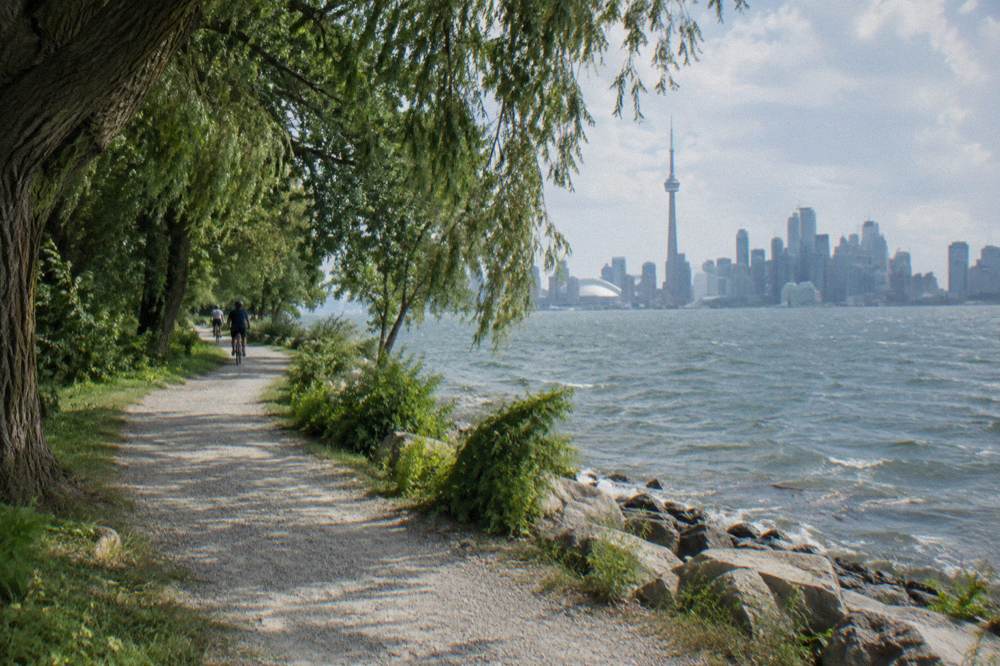
The Islands rides deserve special mention in a "worth visiting" discussion because they are the part of Toronto that most surprises first time visitors. A car free park chain with beaches, gardens and a lighthouse, sitting directly opposite the financial towers, is rare among major cities, and the ferry fare is trivial in Canadian dollars. Going with a guide solves the one friction point, the ferry schedule, and morning or twilight departures dodge the midday family crowds.
Ontario's rules make this straightforward for visitors. Helmets are mandatory for riders under 18, riding on sidewalks is not allowed except for children under 10, and e-bike riders must be 16 or older with an approved helmet, a 32 km/h assisted speed cap and a 500 watt motor limit. Operators supply the required bell and lights. The full legal picture, including what the ferry staff can ask of e-bike riders, is in the Toronto cycling rules, helmets and e-bike law guide.
The Honest Case Against
Toronto has real weaknesses worth stating plainly: it is expensive and getting more so, it has no single iconic landmark, its headline architecture is inconsistent, and the distances between its best neighbourhoods make a walking only trip disappointing. The June 2026 hotel data, occupancy down 7 percent while rates rose 21 percent, is the cost problem in one line. If you want a compact, walkable, monument dense city, Toronto is not it.
Critics also point to the ongoing bike lane disputes, and the facts are what they are: Ontario completed removing the 1.2 km Bloor Street West protected lanes in Etobicoke on October 30, 2026, the first removal under the provincial plan, with a court fight continuing. The Martin Goodman Trail on Parliament Street is closed with a temporary bi directional lane until the end of 2026. None of this touches the core waterfront riding or the Islands, but a visitor cycling downtown should expect a mixed network rather than a fully protected one. This City network status page tracks what actually exists, kilometre by kilometre.
Weather is the other honest objection. A city where the January average high is below freezing and rain falls on eight to ten days a month year round demands seasonal planning. Summer humidity is real, with July lows averaging 18.1 C, and the winter visitor gets a narrower version of the city: Ward's Island ferry only, markets moved indoors, the Winter Village as the headline.
Finally, Toronto does not perform itself for you. Unlike cities with an obvious stage set, it asks you to move between scenes, and travellers who will not do that legwork often leave underwhelmed. That is the real answer hiding inside the question: Toronto is worth visiting exactly in proportion to how much you enjoy cities you have to explore rather than observe.
So Should You Book The Trip?
Book it if you like layered, food driven, waterfront cities and can travel between late May and September, when the ferry, the trails and the free programming all peak. Skip it if you need monuments, bargain prices or a compact walking city. The 2026 evidence, 17 percent international visitor growth and nine in ten World Cup visitors planning a return, says the city is doing something right for the kind of traveller who goes.
A reasonable first itinerary is three nights: one for downtown and the markets, one for the waterfront and the Islands, one spare for the Distillery or a neighbourhood you stumble into. Folding the orientation into a single guided ride on day one is the move this site exists to recommend, and it is also the cheapest hour for hour structured activity in a city where hotels will absorb the rest of your budget quickly. Check the booking pages for current prices, meeting points and the inclusions each listing flags.
Common Questions About Toronto
Is Toronto Worth Visiting?
For most travellers, yes. International visits rose 17 percent between May and July 2026, overnight World Cup visitors stayed nearly seven nights and spent an average of $1,033 each in Ontario, and nine in ten surveyed visitors said they would return within two years. The tradeoffs are cost, spread out neighbourhoods and no single landmark.
How Many Days Do You Need In Toronto?
Three days covers the core: downtown and the markets, the waterfront and the Islands, and the Distillery District with room to wander. Travellers who want a slower pace, day trips or deep neighbourhood exploration stretch to four or five.
What Is The Best Month To Visit Toronto?
September, for 22.0 C average highs, the year's fewest rainy days with 1 mm or more at 7.7, and thinner crowds. Late May through August brings the full ferry service and free outdoor programming at the cost of peak prices and larger crowds.
Is Toronto Expensive To Visit?
It is a mid to high cost city and 2026 pushed hotel rates up sharply, with June average daily rates up 21 percent. The offset is a long free list: the waterfront trail network, the music garden's free summer concerts, Pedestrian Sundays in Kensington and the island ferry at $9.57 Canadian round trip for an adult.
Do You Need A Car In Toronto?
No. The core neighbourhoods, the waterfront and the Islands are reachable by bike, ferry and transit, and a car mostly adds parking cost. Getting around by bike is the fastest way to cover the spread out neighbourhoods that define the city.